Black comedy 'Suneung, Chuljeui Bimil' and Tving crime thriller 'Daeri Suneung' approach Korea's high-stakes exam from opposite ends
A banner reading "2027 College Scholastic Ability Test" hangs above the main gate of Yongsan High School in Yongsan-gu, Seoul. Camera crews from Japanese, Chinese and British broadcasters line up outside, and when the English listening section begins, even air traffic briefly halts.
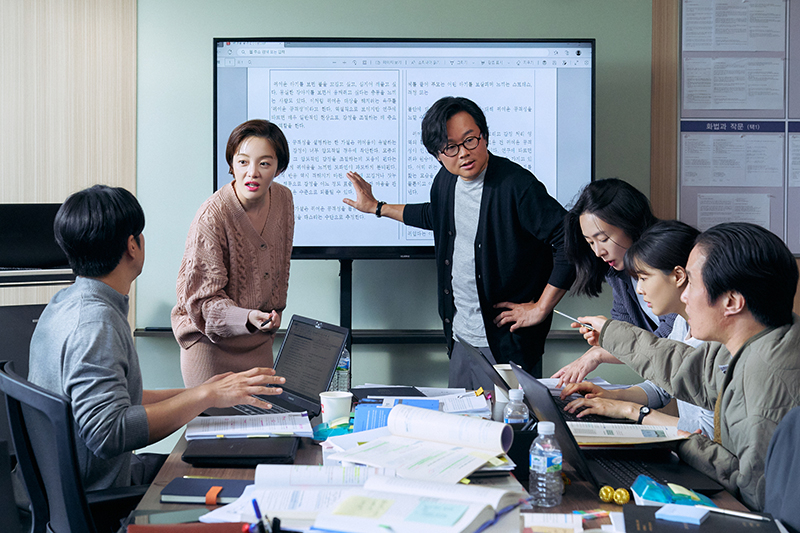
On the morning when hundreds of thousands of test-takers open the same exam paper at the same moment, the film "Suneung, Chuljeui Bimil" (The Secret of the Exam, opening Nov. 19) winds the clock back 40 days — to the moment the test was born. Inside the question-setting headquarters, examiners have surrendered their phones and been cut off from the outside world, tasked with producing a "problem-free exam" that tolerates no typos and no disputes. In reality, hundreds of examiners and reviewers spend nearly 40 days in a sealed residential facility each year crafting the test. That process is under way right now.
Four days after the exam ends, a second test site opens in living rooms across the country. "Daeri Suneung" (Proxy Exam), a Tving original crime thriller directed by Park So-yeon of "Pyramid Game" fame and written by Choi Su, premieres Sunday. In the trailer, OMR answer sheets are torn apart and stacks of cash pile up as the voice of top-ranked scholarship student Kang Geon-tae (played by Cha Gang-yun) drops low: "I just wanted to go to college." What follows is a blood-soaked scream and a wall of flames.
One work trains its lens on the room where adults make the exam; the other on the desk where students receive it. The two arrive in opposite genres — black comedy and crime thriller — but both land around the Nov. 19 college entrance exam, and both grip the same question: Is the suneung truly fair?
A hierarchy drawn across the exam paper
The moment the door locks, the question-setting headquarters becomes a society in miniature. That is the premise of "Suneung, Chuljeui Bimil."
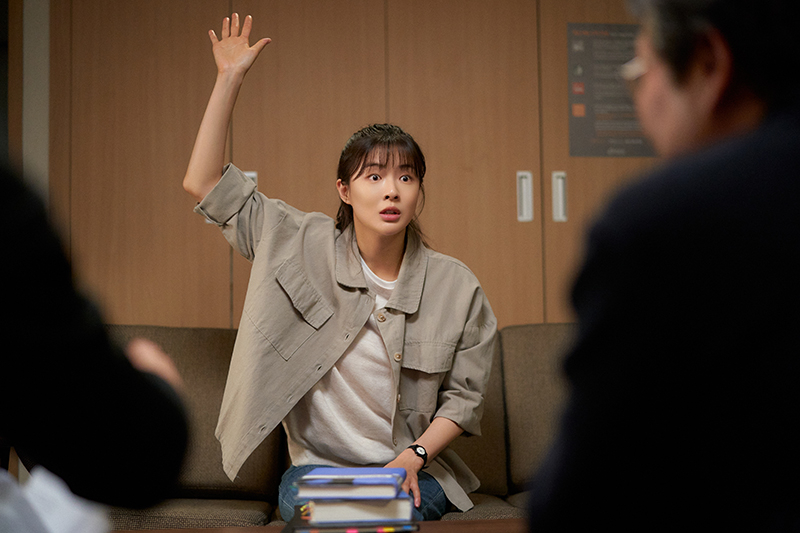
Maeng Bo-ram (played by Lee Sun-bin), a Korean-language teacher from a small provincial city, ends up inside the facility through an administrative mix-up — the lowest rung in a double hierarchy of academic pedigree and professional rank. The clique of professors and teachers who graduated from "S University" openly look down on anyone who did not, and on teachers who are not professors. The film calls them the S University "mafia."
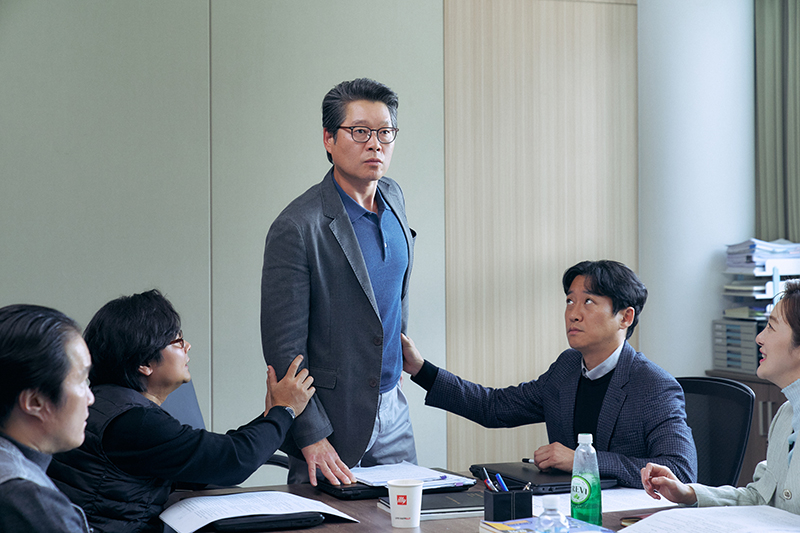
Moon Ju-yeol (played by Yoo Jae-myung), the head examiner for the Korean-language section, and review committee chair Park Gyeong-tae (played by Kim Young-min), rivals since their university days, clash over a single question in a battle of egos, while operations manager Gi Jun-su (played by Jeon Seok-ho) sweats between them. In the middle of it all, Maeng Bo-ram stubbornly speaks her mind, oblivious to the politics. Lee said she understood the character as someone who, "when it comes to setting questions, thinks about the students more than anyone else in the film."
The detail that Moon Ju-yeol is a celebrity who appeared on the variety show "You Quiz on the Block" carries its own real-world footnote. In December 2020, a former examiner who had participated in setting the suneung five times actually appeared on that program and shared behind-the-scenes stories from the residential facility. Director Lee Yong-jae said he drew on accounts examiners had shared publicly on television and in books, as well as the experiences of personal acquaintances. He added that the real-world pool of 30 to 40 examiners was condensed to about 10 for the film, and that 40 days of events were compressed into 99 minutes, requiring some exaggeration and omission. Kim Young-min, who plays review chair Park Gyeong-tae, called the film "a work that courageously asks a question our era needs to hear."
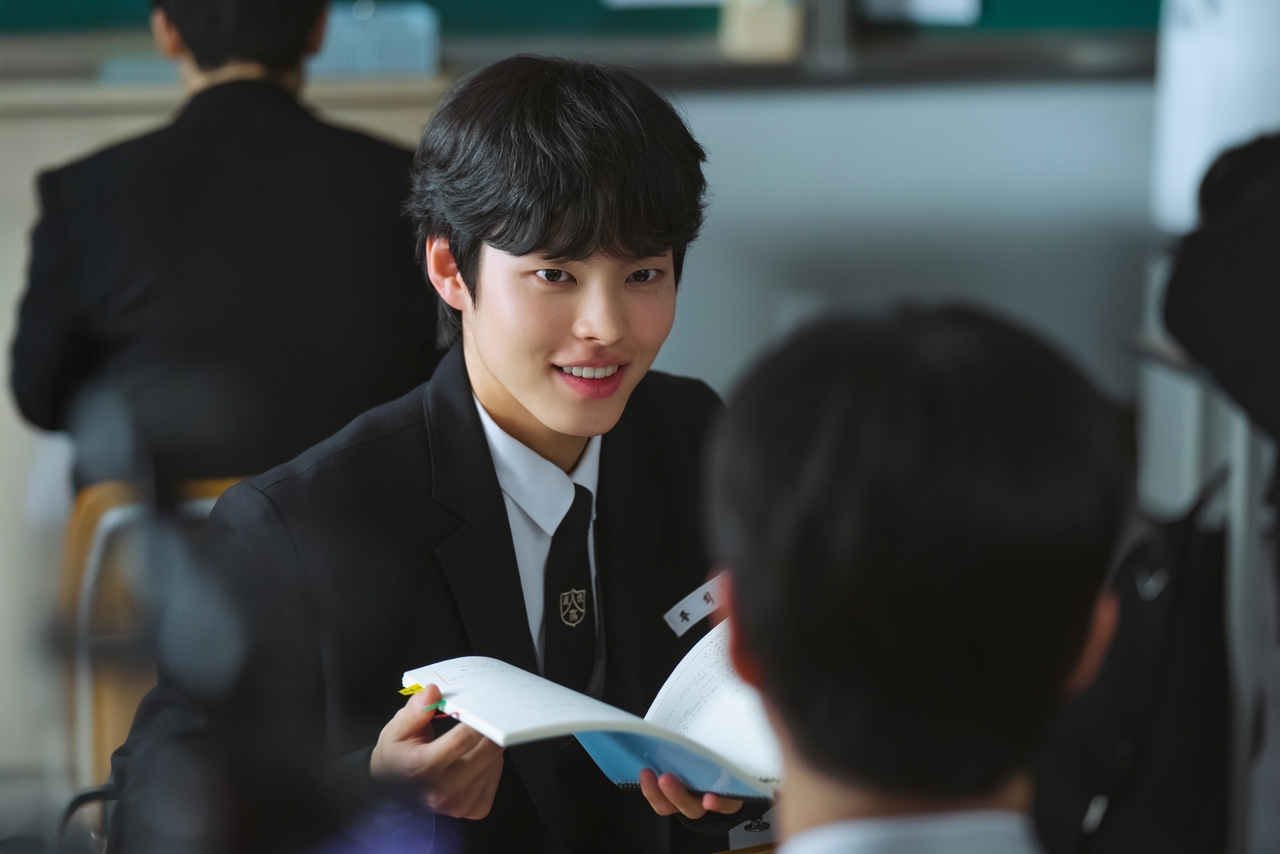
In "Daeri Suneung," hierarchy at the elite private high school Jeonggyeong High is determined by class. Kang Geon-tae, a low-income scholarship student, holds the top rank among wealthy classmates, yet his wish to escape poverty and live an ordinary life remains perpetually out of reach. Cha Gang-yun described the character as someone who "wants more than anyone to live a normal life, but at that age goes through an almost unbearable amount."
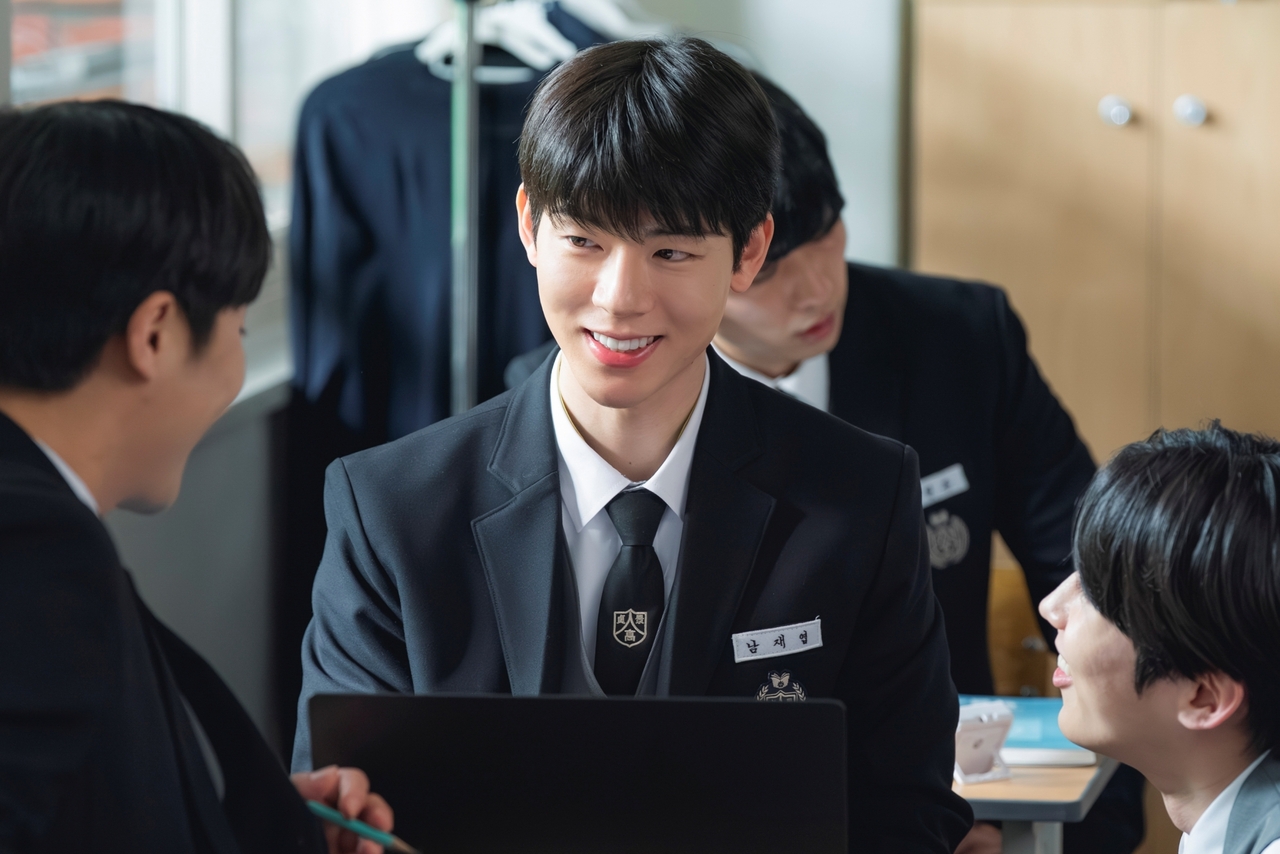
Nam Jae-yeop (played by Bae Hyeon-seong) — blessed with family wealth, looks and grades — crumbles at the top of the social ladder. Slipping off the "life plan" his father drew up, Nam calls himself a "defective product" and confesses he "always felt broken." Bae said he wanted to show that "Nam Jae-yeop only looks strong on the outside — underneath, he is just an unavoidable 19-year-old, a high school senior."
Geon-tae cannot afford to lose first place if he wants out of poverty; Jae-yeop has everything yet cannot escape the life his parents designed. Their starting points differ, but both are trapped by conditions they never chose. It is Nam's single word — "Deal?" — that sets their dangerous bargain in motion.
In both works, the adults are the ones who rig the game. While the film's examiners squabble over questions in a contest of pride and self-interest, the drama's parents — Nam Jae-yeop's mother and father (played by Park Hyeok-gwon and Baek Ji-won) and Ye-jun's mother (played by Eom Ji-won), who becomes fiercer than anyone when her child's university entrance is at stake — treat their children's admissions as extensions of their own lives. The adults who make the exam and the adults who stake their children's futures on its results occupy different spaces, but within the suneung system, each reveals their own desires.
Real-world scandals — leaked questions and proxy test-takers — shadow both works
When a scene in the film shows a finalized exam passage overlapping with one from a private mock test, audiences laugh — but the gag mirrors a real incident. The reading passage in question 23 of the English section of the 2023 suneung was nearly identical, save for one sentence, to a mock exam distributed by a well-known instructor at a major private education company. The Korea Institute for Curriculum and Evaluation called it a coincidence, but the Board of Audit and Inspection said in March 2024 that the institute had removed the question from its objection review process to minimize the controversy.
When police completed their investigation the following year, no collusion between the question's author and the instructor was confirmed — but a separate irregularity came to light. A high school teacher in Daegu had formed a "question-writing team" with eight other teachers who had experience as suneung examiners or reviewers, selling 2,946 questions to private education companies and receiving about 620 million won ($449,000) in return.
The crime at the center of "Daeri Suneung" is no fiction either. During the 2020 suneung, held in November 2019, an Air Force soldier sat the exam in place of a superior from the same unit. The superior's photo was on the admission slip, yet not one proctor noticed. The superior was admitted to a nursing program at a Seoul university on the strength of those scores. A court sentenced the superior to one year in prison at the first trial. The suneung's foundational premise — that hundreds of thousands of students compete under identical conditions — collapses the moment someone walks into the exam hall under another person's name.
Both works ultimately arrive at the same question: fairness at the starting line. The film's examiners say questions must be made difficult in order to identify students who will reach the top grade — and ultimately a seat at S University. When a passage then overlaps with a private mock exam, only students who could afford to practice with that material in advance — those with access to Daechi-dong hagwon and private tutors — benefit. A decision made inside the question-setting room widens the gap between children who had access to private education and those who did not.
The drama illuminates that gap from the student's seat. For Kang Geon-tae, who cannot afford to lose first place if he is ever to escape poverty, the gap is a reality he faces every day. In both works, the suneung appears as more than a test — a microcosm of Korean society where class mobility, family ambition and educational inequality all converge.
The system itself is also changing. Starting with the 2025 suneung, examiners and reviewers have been selected at random from a pool of candidates. After the 2026 suneung's English section drew controversy when only 3.11 percent of test-takers achieved the top grade, South Korea's Ministry of Education announced it would raise the share of schoolteachers among English-section examiners from 33 percent to around 50 percent beginning with this year's exam.
At this very moment, hundreds of examiners and reviewers are in a residential facility refining this year's questions. They will not be allowed to leave until the final session ends Thursday. Director Lee borrowed a line from the film to send them a message: "I firmly believe that this year, too, you will produce a problem-free exam." Yoo Jae-myung, who plays Moon Ju-yeol, said of the film: "I felt that the secrets of the exam are not really secrets at all — they are a cross-section of our society. I hope this becomes a world where parents and teachers alike talk more about what we adults, each in our own place, should do so that our children can dream freely."
shee@heraldcorp.com