Rattle returns to Korea with the Bavarian Radio Symphony Orchestra after two years
Schubert and Mahler on the program at Seoul Arts Center on Nov. 12 and 13
Next tour to feature 'Das Lied von der Erde,' Symphony No. 9 and No. 10 as a cycle
"Mahler never heard these works in his lifetime. And there I was, listening to two of them at the same time."
It was the day Rattle conducted Mahler's Symphony No. 9 with the Vienna Philharmonic for the first time. Wanting to preserve the performance, he pleaded with the broadcaster to make him a copy of the recording — "even if it's illegal." When he pressed play on the tape he received, another Mahler flowed beneath the strains of the Ninth. The broadcaster had recorded the symphony over a tape that already held "Das Lied von der Erde." Two works whose composer never lived to see their premieres sounded together, layered on a single reel.
That accidental collision became the blueprint for his next visit to Korea. Rattle, 71, returned to the country after two years at the helm of the Bavarian Radio Symphony Orchestra (BRSO), and at a press conference Wednesday afternoon at Lotte Art Center in Seocho-gu, Seoul, he said the memory of that tape had given him an idea. "I thought: let's perform the three late masterpieces Mahler never heard — 'Das Lied von der Erde,' Symphony No. 9, and the Tenth completed by Deryck Cooke — as a single cycle," he said. "That will be the foundation of the next tour."
The songs Mahler never heard — a journey stretching to 2033
Mahler died in May 1911. "Das Lied von der Erde" received its premiere in Munich that November, and the Ninth followed in Vienna the next year. The Tenth survived only as an unfinished sketch until British musicologist Deryck Cooke shaped it into a performable score. Rattle's plan is to bring Korean audiences all three at once — the final utterances of a composer who died before any of them could be heard.
The idea of grouping the Mahler works came from the concert promoter Vincero. Rattle recalled with a laugh that he was asked to bring a Mahler program because of his special bond with the composer and the orchestra — and that the memory of the tape immediately came to mind. He did not underestimate the weight of the undertaking. "It will be an emotionally overwhelming journey, but it will tell an intense story," he said. "I just hope everyone is emotionally ready." He did not announce a specific date for the return visit. The BRSO first performed in Korea in 2012 under Mariss Jansons and has toured here every two years since, apart from the COVID-19 hiatus.
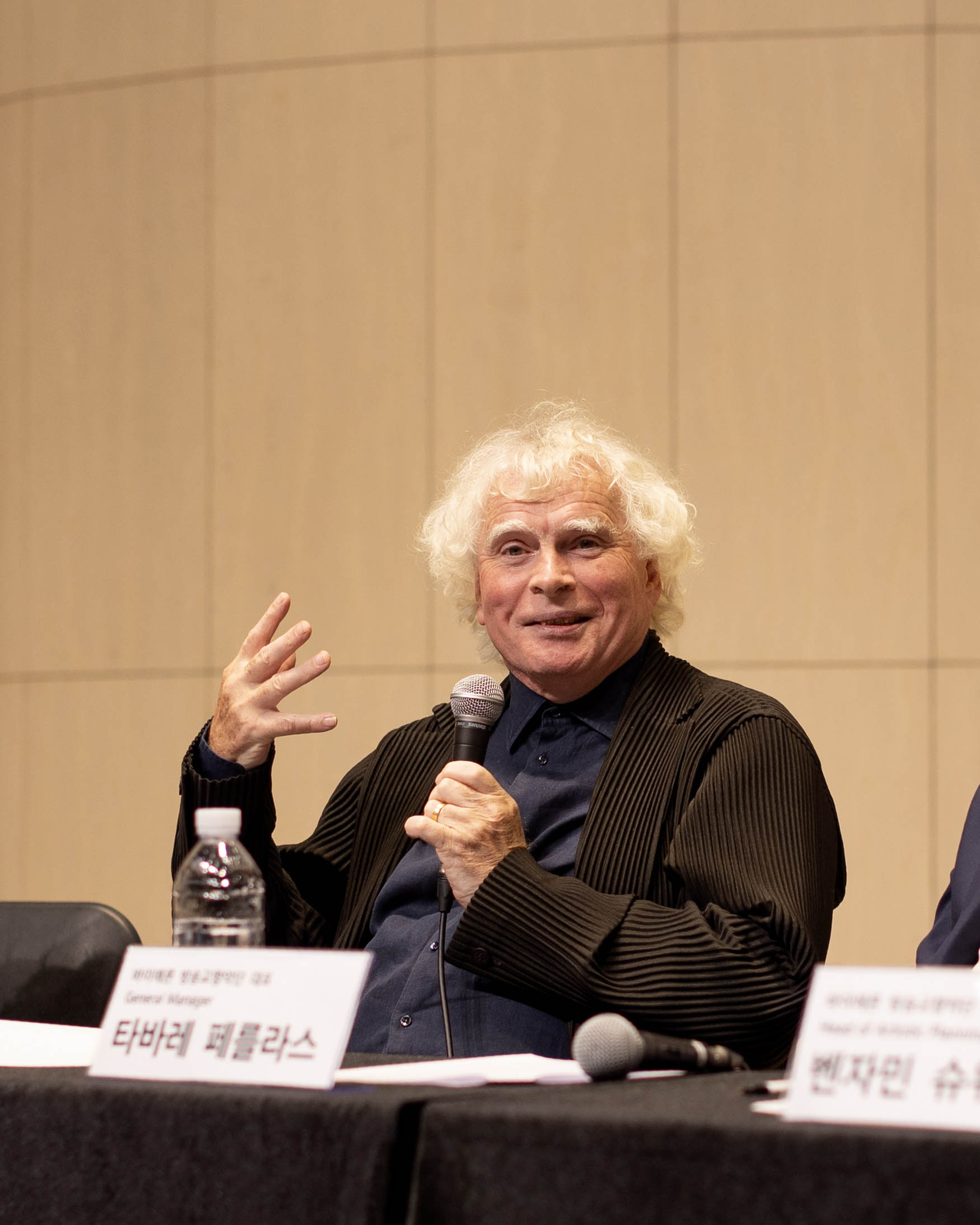
Rattle will be on the podium for that future visit as well. He took up the post of chief conductor of the BRSO in the 2023/24 season, and last month extended his contract through 2033. The five-year extension beyond his original term through 2028 brings his total tenure with the orchestra to a decade. "I am happier than I have ever been," he said. "I am so satisfied that I have no desire to go anywhere else." What Rattle has been expanding at the BRSO is the breadth of the repertoire. Over the past two years he established a period-instrument ensemble, BRSO Baroque, and this season opened with Bach cantatas performed on period instruments. "Playing a great deal of Bach changes the way an orchestra approaches Schumann or Bruckner," he said. The contemporary music series Musica Viva, he added, reaches all the way to works composed as recently as Tuesday.
Rattle, who grew up in Liverpool, said he had shed one misconception about German orchestras. London alone has five or six outstanding symphony orchestras, each with a distinct history and a distinct sound. The ensembles in Boston and Cleveland that he has conducted regularly also play the same repertoire in entirely different ways. "I naively assumed German orchestras all sounded alike," he said. "There is no single 'German orchestra' sound." He added, however, that there is a distinctly German musical philosophy that prizes depth of tone. Within that tradition, what sets the BRSO apart, he said, is collaboration — from founding conductor Eugen Jochum through Rafael Kubelik to Mariss Jansons, conductors and musicians have always sat down together from the outset to shape the music.
"More than with any other orchestra, I feel here that we are all in the same boat, moving forward together. How do I help these wonderful musicians play even better? That, ultimately, is the important question for a conductor."
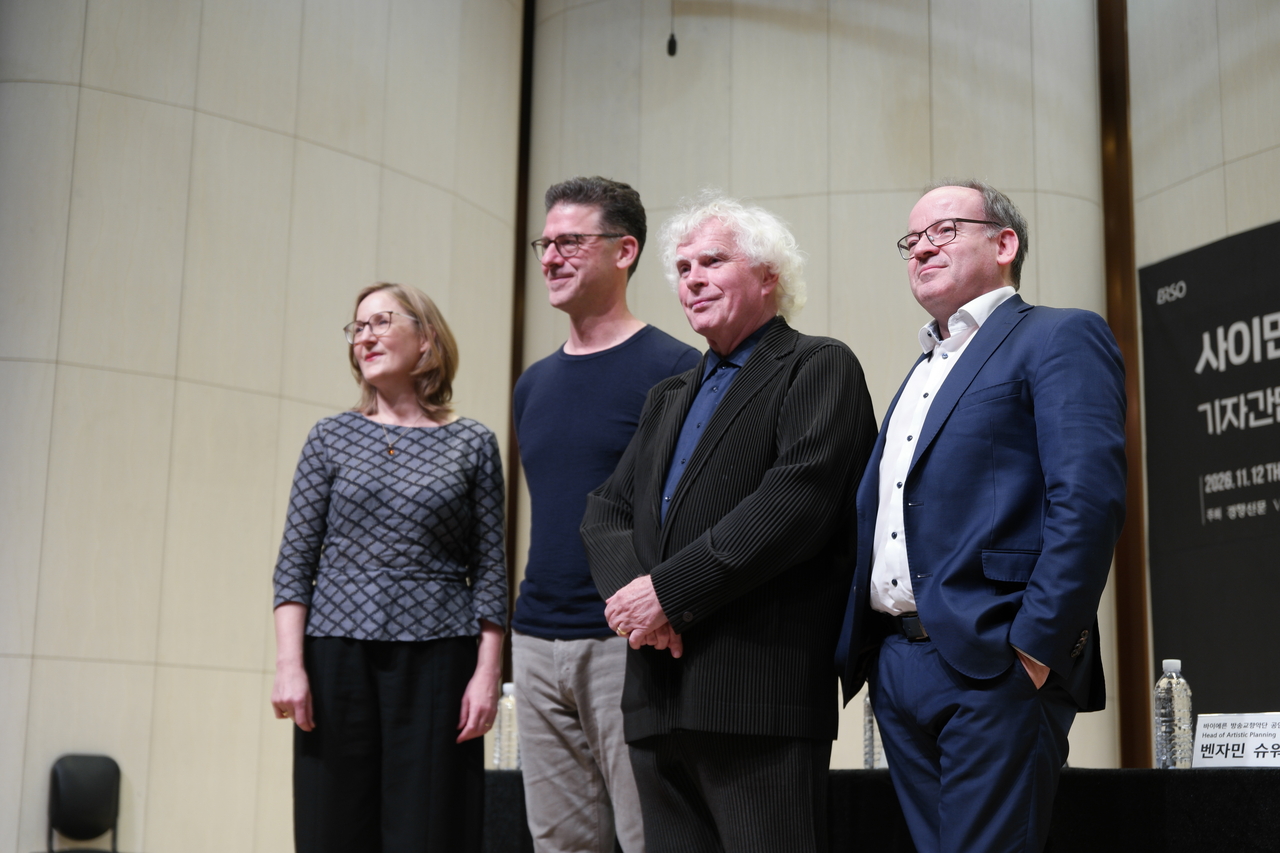
The orchestra has welcomed the extended partnership. When the extension was announced, a joint statement from representatives of the BRSO and the BR Choir said they were "overjoyed to continue walking this path with Rattle." Tabare Perlas, who took over as chief executive in April, said Wednesday that he was "delighted and reassured to be able to work with Rattle through 2033." Flutist Natalie Schwabe, who attended the press conference as a representative of the musicians, said Rattle's defining quality is his willingness to push boundaries. "Every performance with Rattle is a different experience — he drives us to our musical limits and pulls us out of our comfort zone," she said. "That is very valuable to us." She drew laughter when she noted that the musicians' English has improved so much over the past two years that they can now follow Rattle's jokes.
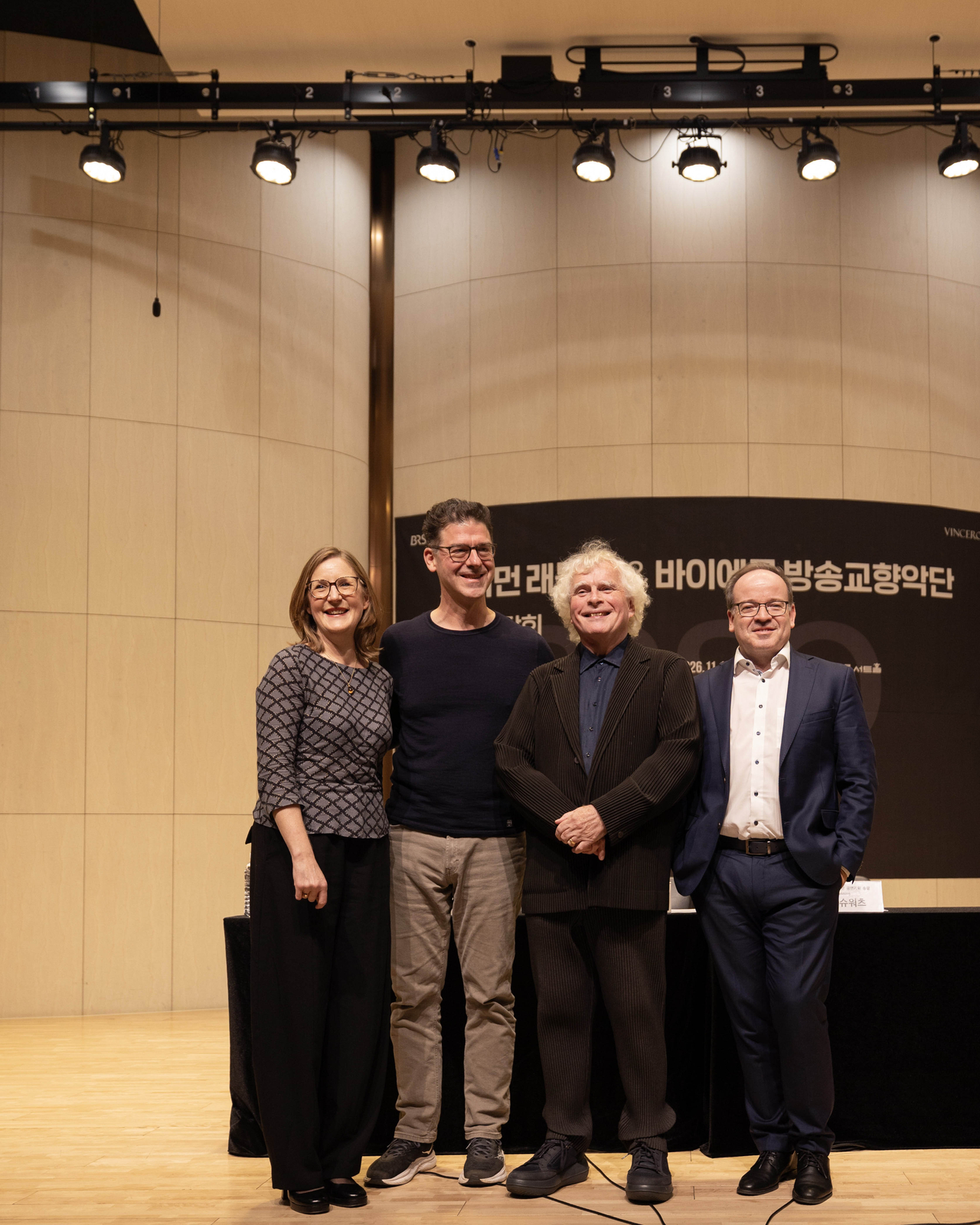
Rattle's gifts extend to programming. Benjamin Schwartz, the BRSO's head of concert programming, said he runs into the same problem every time he plans a season. "Simon has so many ideas that we can never fit them all into one season — there are never enough weeks," Schwartz said. "Now that we have five more years, we are a little closer to having room for all of them."
Schubert and Stravinsky: two dances in the face of death
The current Korea visit runs for two evenings at Seoul Arts Center Concert Hall on Thursday and Friday. Seoul is the first stop on an 11-concert Asian tour that continues to Taiwan and Japan. Thursday's program pairs Schubert's Symphony No. 9, "The Great," with Stravinsky's "The Rite of Spring" — a combination available only at the Korea concerts among all the Asian tour dates, according to Vincero.
Even for Rattle, the pairing was unexpected. The two works had been prepared separately for different stops on the tour, but because the Korea engagement was only two nights, he was asked to place them on the same program. "I never imagined putting the two pieces together," he said, "but the more I thought about it, the more interesting it became." The thread connecting them is death.
In "The Rite of Spring," the chosen maiden dances until she breathes her last. Rattle does not read that dance as pure tragedy. "There is a kind of wild joy in it," he said. For Schubert's slow movement, he reached for "Winterreise" as a reference — a winter journey walking into a very dark place. The interpretation grows more precarious toward the end. "By the time the piece is over, you can no longer tell whether Schubert is dancing for joy or merrily dancing his way toward hell," he said.
His choice of the Schubert was also an act of trust in the orchestra. "From the very first moment of the first rehearsal, I could tell how deeply this music is encoded in the orchestra's DNA," he recalled.
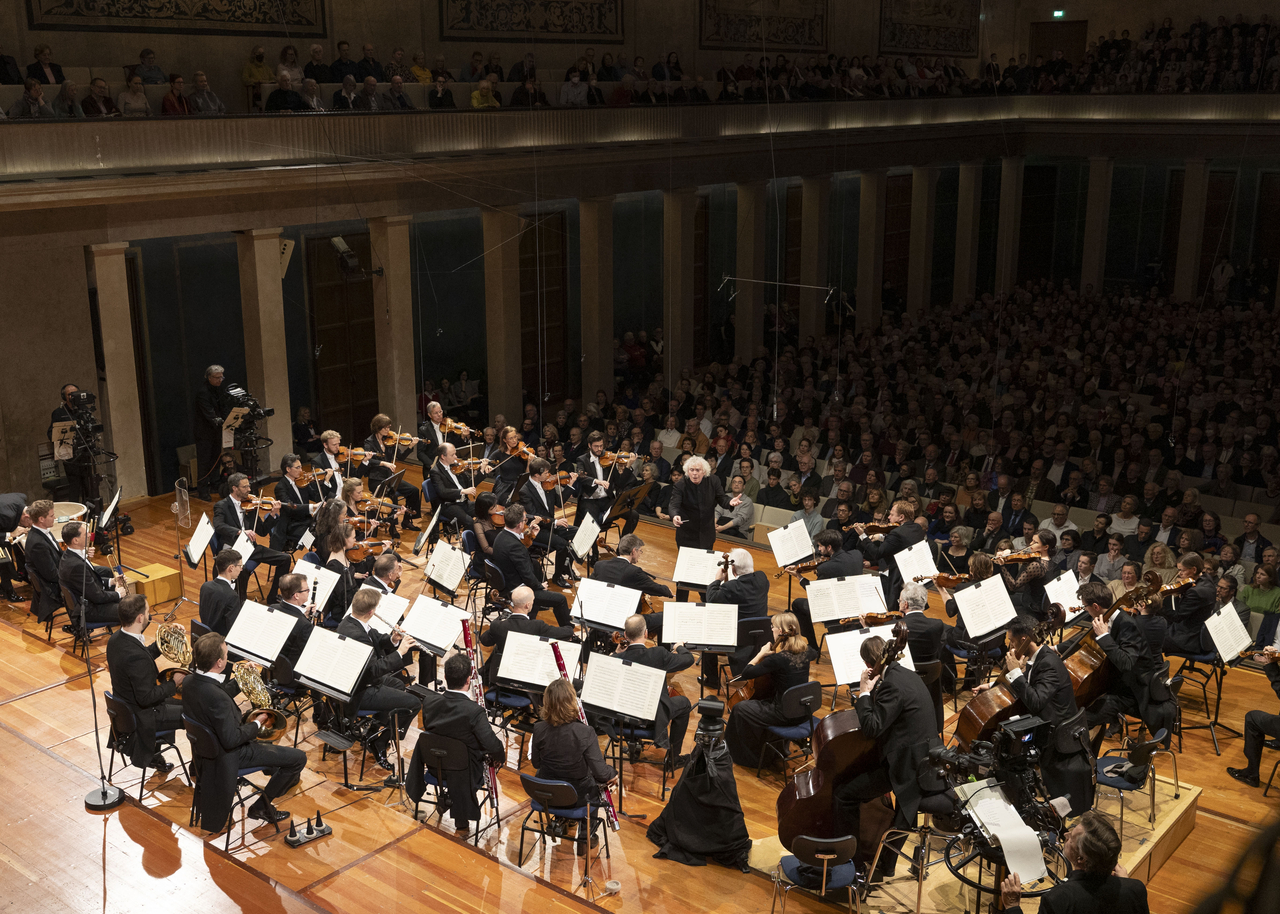
The 'Resurrection' that led an 11-year-old boy to the podium
Friday's concert is devoted entirely to Mahler's Symphony No. 2, "Resurrection," with soprano Lucy Crowe, mezzo-soprano Karen Cargill, the National Chorus of Korea and the Seoul Motet Choir. Schwabe said the collaboration with the two Korean choirs makes this visit especially meaningful. "Music is a universal language, and that allows us to create this profound work together across any language barrier," Schwabe said. "Resurrection" is the piece that set Rattle on his path: he heard it in Liverpool in 1966 at the age of 11, conducted by George Hurst, and left the hall wanting to become a conductor. His 1988 recording of the symphony with the City of Birmingham Symphony Orchestra won the Gramophone Record of the Year award, and a more recent recording with the BRSO was named Gramophone's Recording of the Month. Though Rattle has visited Korea many times, this will be his first time conducting "Resurrection" in the country.
Even after six decades with the work, Rattle refused to speak with certainty about it. "Experience can help, of course. I just hope I haven't gotten worse." The key to conducting Mahler, he said, is structure. Mahler's world holds beauty and grotesquerie and strangely jagged edges all at once; the conductor must embrace all of it while drawing a classical line that holds everything in a single architecture, so that the whole feels like one journey. He then borrowed a line from the playwright Samuel Beckett: "Even if you fail, just try to fail better next time."
The BRSO has its own deep ties to Mahler. Under its second chief conductor, Rafael Kubelik, the orchestra recorded the complete Mahler symphonies. Rattle called the BRSO "a treasure of an orchestra that is willing to embrace not only the beauty of this music but its strangeness as well."
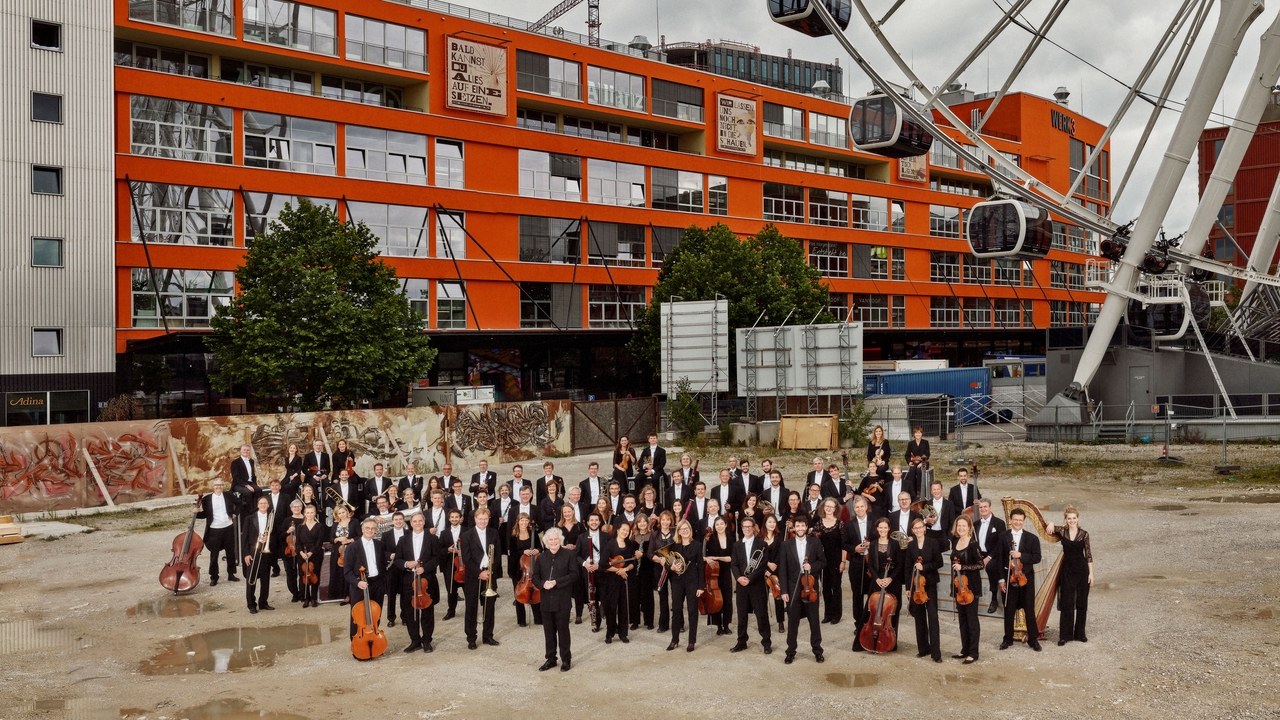
'In Korea, the meaning of music travels further'
There was no grand reason Seoul became the first city on the tour. "The dates simply worked out that way," Rattle said. "I wish I could give a better reason, but I cannot." His tone shifted when the conversation turned to Korean audiences.
"When you tour, the atmosphere in the hall is different in every country. I don't know how I know, but I feel it. In Korea there is a depth. I can feel that the meaning of the music travels further here than elsewhere."
Rattle was careful to distinguish that depth from mere silence in the hall — it is not simply that audiences are quiet, he said, but that the emotional response to the music itself is profound. The age of the audience is another thing the orchestra appreciates. Perlas said he was "very glad" to see so many young concertgoers in Asia, and particularly in Korea. Cultivating younger audiences has long been a challenge for European orchestras. The BRSO invites thousands of children to rehearsals each year and sends its musicians to schools across Bavaria. "Ultimately, the key is how much music education exists in schools," Perlas said. "Society as a whole must step in to make sure music becomes part of children's lives."
For Rattle, Mahler remains a score that is never fully solved. "Great music reveals something you did not know every time you open it," he said. "These works are always full of vitamins and still surprise me. I am happy to wrestle with them until the end of the world."
shee@heraldcorp.com