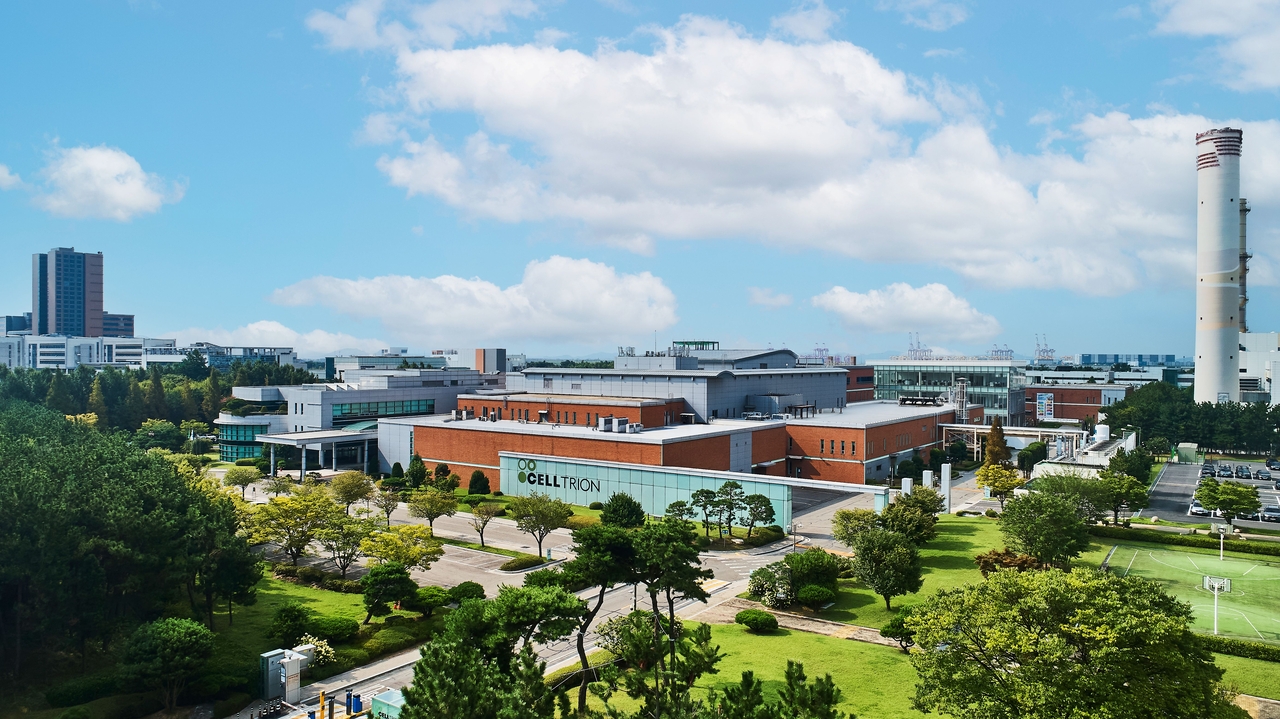
From urban waste wood to unused forest biomass — building a 1-million-ton annual recycling infrastructure
Replacing 4 million tons of imported pellets while preventing wildfires and powering AI data centers
Amid RPS sunset talks, CEO warns of supply chain collapse and calls for 30-year guarantees and a just transition
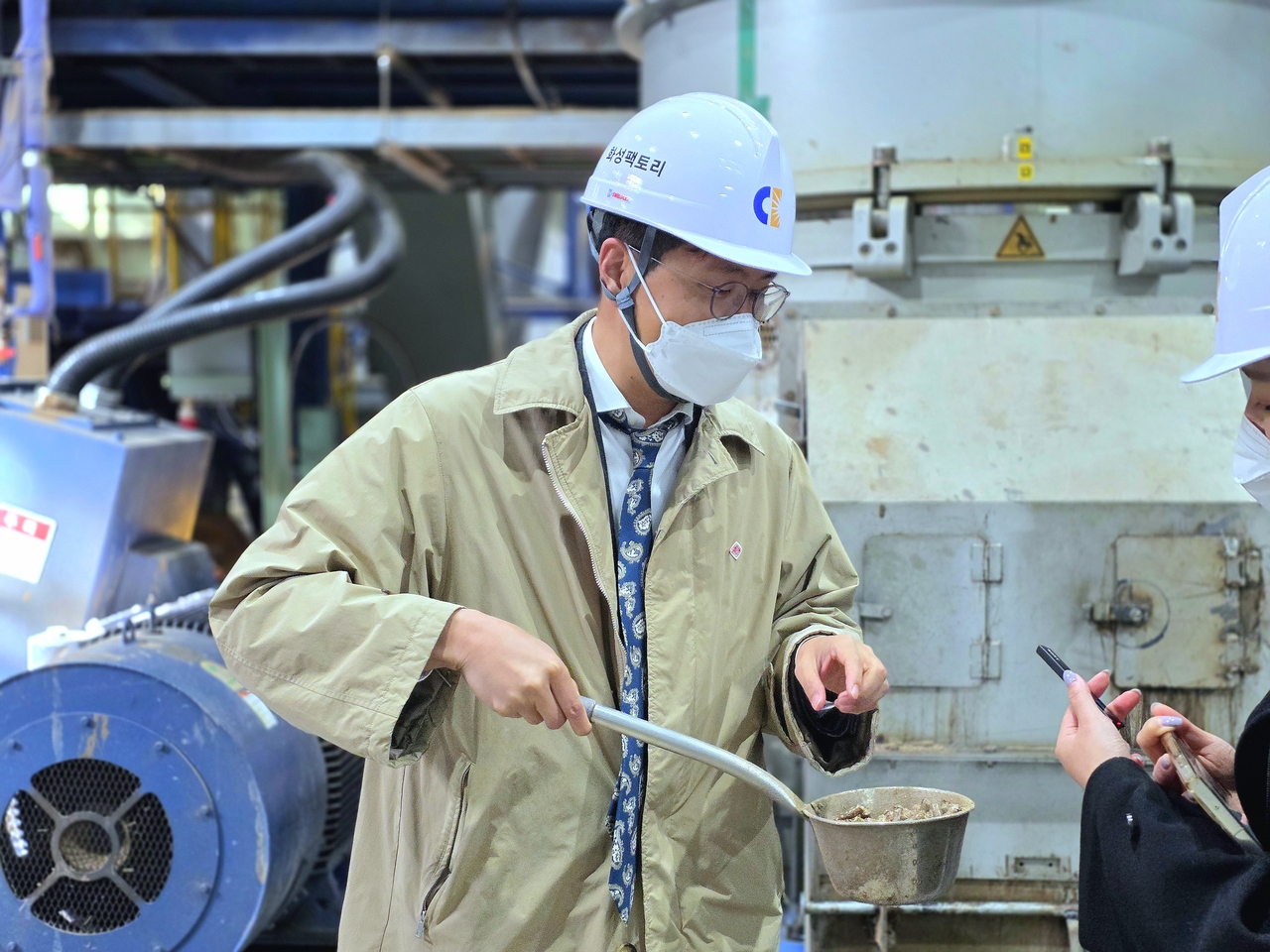
"Once we had collected all the discarded furniture and waste wood from cities, we could see the 2 million tons of timber left to rot in the mountains. Left there, it tangles with pine wilt disease and becomes kindling that feeds wildfires — but harvest it and turn it into standardized fuel, and it becomes national energy that replaces coal."
Park Sang-won, CEO of Cheonil Energy, sat down with The Herald Business on Friday at the company's Hwaseong factory in Hwaseong, Gyeonggi Province, to explain how the company moved beyond its position as the top player in the urban waste-wood market and pushed into the forest biomass sector.
A 50 billion won project in his early 30s — how a 'free disposal model' built an industry leader
Born in 1980, Park learned the trade in his late 20s on the floor of his family's lighting business before taking on a 50 billion won ($37.2 million) heat-supply facility project in Pocheon in 2011 — his entry into the waste-processing industry. Exposure to business came early, shaped by the family's founding chairman who had built the lighting company Cheonil Lighting. The early years were far from smooth: Park took on debt and traveled the country calling on local governments, and out of that grind he pioneered a "free waste-wood disposal model."
After signing agreements with local governments across the country, starting with Jongno-gu, the challenges kept coming — but Park eventually established "Jiguha-da," a waste collection and transport brand. By introducing integrated ERP management and a GPS-based collection system, the company brought data transparency to an industry that had long operated in the shadows.
Today, Cheonil Energy has grown into the country's largest wood resource-recycling company, layering 500,000 tons of unused forest biomass capacity on top of the 500,000-ton urban waste-wood infrastructure it built over 15 years — recycling a combined 1 million tons of timber annually. Ten factories nationwide, including five urban waste-wood facilities and five unused forest biomass plants in Hwaseong, Chungju, Pocheon, Gangneung and Gunsan, each process more than 1,500 tons a day.
"Freshly felled timber is half water, so hauling it long distances means spending all your transport budget moving moisture," Park said. "The only way to survive on price against imported fuel is to place factories and large open-air drying yards at regional hubs close to the forests, then combine natural drying with mobile chippers."
Replacing 5 million tons of imported pellets — a two-for-one win against pine wilt and wildfires
Park doubled down on his argument that forest biomass goes far beyond simple eco-friendliness, calling it directly tied to national energy security and disaster prevention. About 4 million tons of the wood pellets used annually by domestic power plants are currently imported from Southeast Asian countries such as Vietnam, leaving the domestic self-sufficiency rate at around 16 percent.
"When the exchange rate weakens and maritime freight routes are disrupted, power plants grind to a halt — yet millions of tons of timber in our own mountains are simply rotting away," Park said. "We need to stop spending enormous amounts of foreign currency buying overseas pellets and achieve energy self-reliance using domestic resources."
He added that pine wilt disease has spread across the entire country, leaving dead pines that act as massive kindling for landslides and wildfires. "Once a pine tree — with its high resin content — catches fire, extinguishing it is nearly impossible," Park said. "The only way to prevent South Korea from becoming a sea of flames is to quickly collect the infected trees and logging residues left unattended due to budget and manpower constraints, convert them into energy, and replant with broadleaf species more resistant to fire."
'Quality logs go to sawmills' — breaking the 'raw-log incineration' myth with data transparency
Park rebuffed criticism from some environmental groups over alleged raw-log incineration, arguing from a straightforward economic standpoint. "High-quality logs that can be made into furniture or plywood sell for several times the price of fuel on the sawmill market — there is simply no reason for them to end up at a fuel plant," he said. "What we handle is only substandard residues, branches and pine-wilt-infected timber that would otherwise be abandoned, and every incoming load is rigorously verified from the point of entry using Korea Forest Service collection permits and weigh-bridge data."
Park also sees forest biomass as part of the answer to the surging power demand from AI data centers. "When AI data centers come into full operation, electricity demand will rise sharply, but the limits of transmission networks and community acceptance make building large-scale power plants increasingly difficult," he said. "A model in which each of the country's 226 basic local government units builds small-scale distributed generation using timber from its own forests and achieves local energy self-sufficiency is the most suitable structure for a country with limited land and abundant forests."
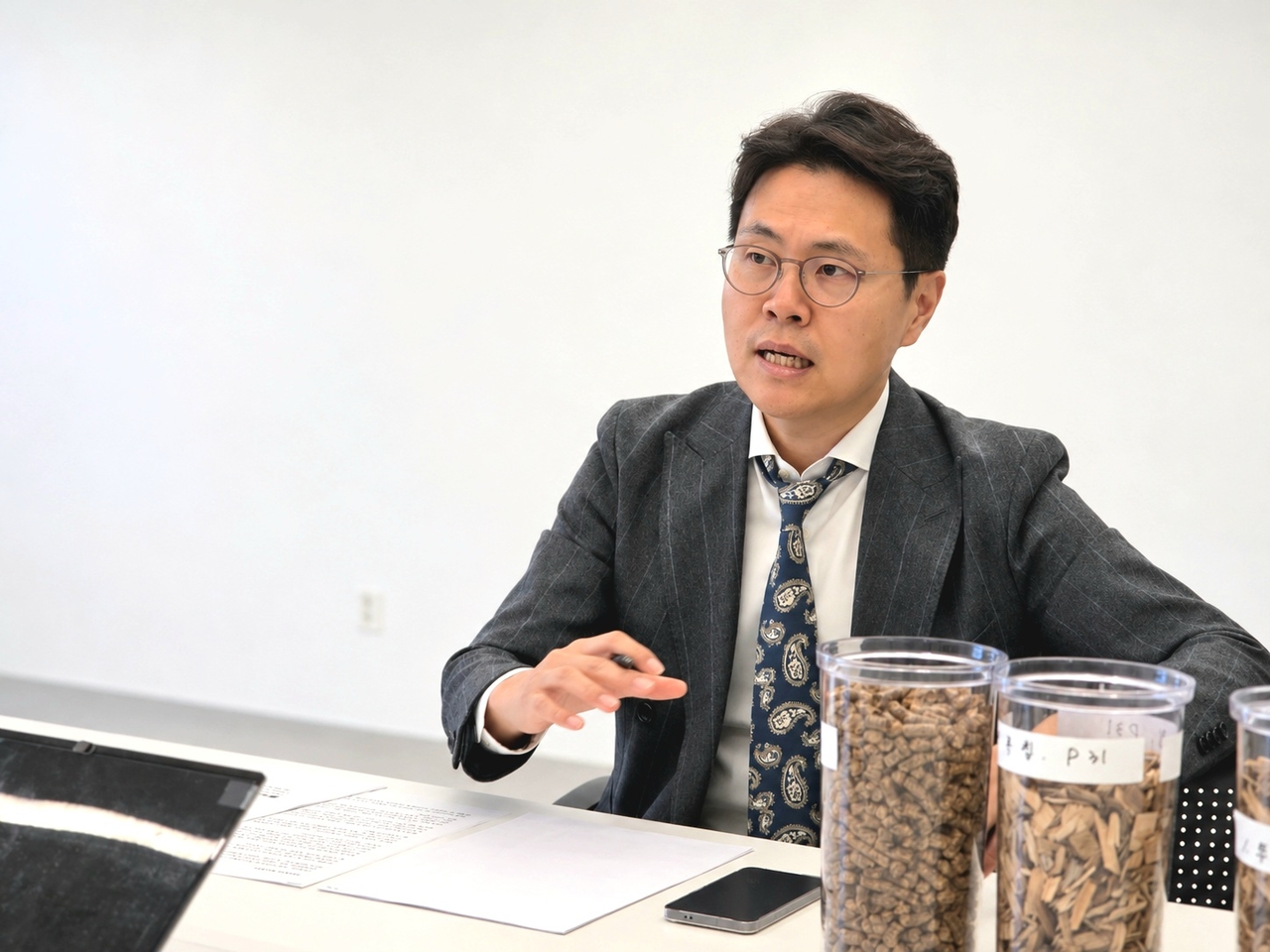
RPS sunset threatens ecosystem collapse — CEO urges 30-year REC guarantees and a just transition
Park, who serves as vice chairman of the Korea Forest Biomass Energy Association, urged the government to provide substantive support as discussions over sunsetting the Renewable Portfolio Standard continue, expressing deep concern about the direction of policy. While he said he understands the rationale behind phasing out the RPS, he argued that the unique nature of forest biomass — an industry whose entire supply chain is sustained by local jobs, unlike other renewable energy sources that rely on equipment — has been overlooked.
According to the association's estimates, the direct and indirect benefits of forest biomass reached 3.2 trillion won last year, with an employment-generation effect of 669,000 person-years. "This is an industry where the entire value chain — felling, collection, transport, chipping — runs on the labor of local residents," Park warned. "If the Renewable Energy Certificate weighting subsidy system is cut off when the RPS sunsets, the funding that pays for felling and collecting timber will dry up and the entire supply chain faces the risk of collapse."
He urged the government to guarantee REC trading for at least 30 years across the board, calculated from the date the spot market is abolished, taking into account power plant design lifespans and community impacts — or, as was done when the coal industry was wound down, to prepare a "just transition" support package for supply chain workers. "Major economies including the EU, the US state of California and China have incorporated bioenergy into their national roadmaps as a key distributed energy source capable of output adjustment and storage," he said. "South Korea must do the same."
Combining platform and finance to bring a shadow industry into the light — 'We will build a national backbone industry'
Park's goals extend beyond expanding the company's factory infrastructure. He aims to attract large-scale investment in "Jiguha-da," a digital logistics platform that makes the entire waste-processing chain transparent, and to modernize the industry through a waste-specialized asset management firm.
"I want to strip away the information asymmetry that has long plagued a waste industry prone to concealment and tax evasion, and transform it into a national backbone industry — as stable and dividend-generating as roads or ports," Park said. "I will work to reduce the burden on the national budget through discarded resources, and to complete a sound industrial ecosystem where young people can work with pride using domestic capital and technology."
silverpaper@heraldcorp.com