Semiconductor export prices surged 145.3 percent in the first three quarters, but consumer spending benefits lag by a year
KDI projects chip boom to add 0.6 percentage point to consumption growth next year, while oil drag eases to 0.2 percentage point

High oil prices driven by the Middle East conflict have weighed on private consumption this year even as South Korea's semiconductor exports boomed, the Korea Development Institute said.
While rising chip prices have lifted corporate profits, the transmission of those gains to households — through performance bonuses and dividends — takes time. Oil price increases, by contrast, push up consumer prices and erode household purchasing power almost immediately.
KDI estimated that high oil prices reduced private consumption growth by about 0.4 percentage point this year, while the semiconductor boom is expected to lift consumption growth by about 0.6 percentage point next year.
In a policy analysis report released Thursday titled "The Effects of the Recent Semiconductor Boom and Rising Oil Prices on Private Consumption," KDI put the impact of this year's semiconductor price increases on private consumption growth at 0.003 percentage point, and the drag from higher oil prices at minus 0.360 percentage point. Private consumption had been recovering since the second half of last year, but the pace of growth has recently slowed again, widening the gap with the overall economic growth rate.
Chip gains take a year to reach consumers; oil hits spending immediately
Semiconductor export prices rose 145.3 percent in the first three quarters of this year compared with the same period last year.
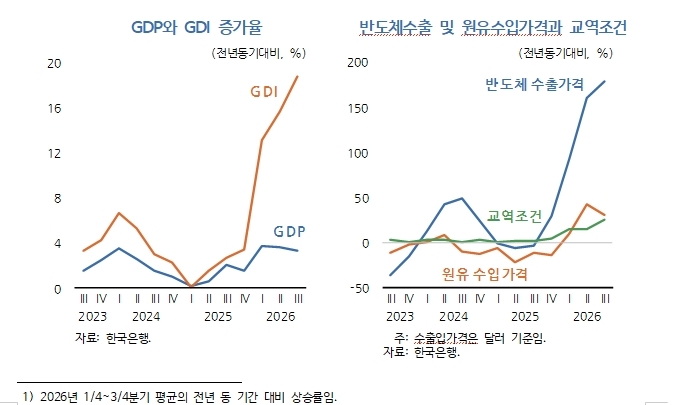
Expanding global AI infrastructure investment has boosted semiconductor demand, improved the terms of trade and raised the economy's overall real purchasing power. However, KDI said it takes time for export companies' profits to flow back to households through bonuses and dividends, and for the resulting income gains to translate into spending.
Meanwhile, crude oil import prices surged 43.4 percent in the second quarter and 31.3 percent in the third quarter compared with the same periods last year, following the escalation of the Middle East conflict at the end of February. Although the government's petroleum price cap partially contained the rise in domestic fuel prices, costs for related items such as travel and air services climbed, adding to the burden on households.
With nominal wage growth stagnant and inflation accelerating, real wages fell in the second quarter. KDI separately estimated that the price cap, in effect from March through October, held the monthly average rate of increase in petroleum product prices down by about 12 percentage points and kept the consumer price inflation rate about 0.6 percentage point lower than it otherwise would have been.
In KDI's model, a one-standard-deviation shock to semiconductor prices begins to lift private consumption after four quarters, with the effect peaking at a maximum increase of about 0.3 percent after seven to eight quarters.
A one-standard-deviation oil price shock, by contrast, begins to depress private consumption immediately, with spending falling about 0.5 percent after three quarters. The impact of an oil price shock was no longer statistically significant after six quarters.
Chip boom to benefit consumers next year; KDI urges broader employment, income gains
KDI estimated that the semiconductor price shock will add 0.588 percentage point to private consumption growth next year, while the oil price shock will subtract 0.184 percentage point.
If major chipmakers significantly increase performance bonuses and dividends beyond historical norms, consumption could rise more than the estimates suggest. Conversely, an escalation of the Middle East conflict that sends oil prices higher again, or a continued rise in market interest rates, could constrain household spending capacity.
KDI said that because consumption is expected to improve more broadly next year, there is limited need for additional economy-wide demand stimulus. It cautioned, however, that if income gains remain concentrated in the semiconductor sector and a few others, the consumption recovery could become heavily dependent on the chip industry's business cycle. The institute recommended improving employment and wage conditions to broaden the foundation for a more durable consumption recovery.
fact0514@heraldcorp.com