About 2,500 members gather to press for wage normalization and staffing budget in next year's spending plan; 94.93% vote in favor of industrial action ahead of planned Nov. 26 joint strike of 6,000
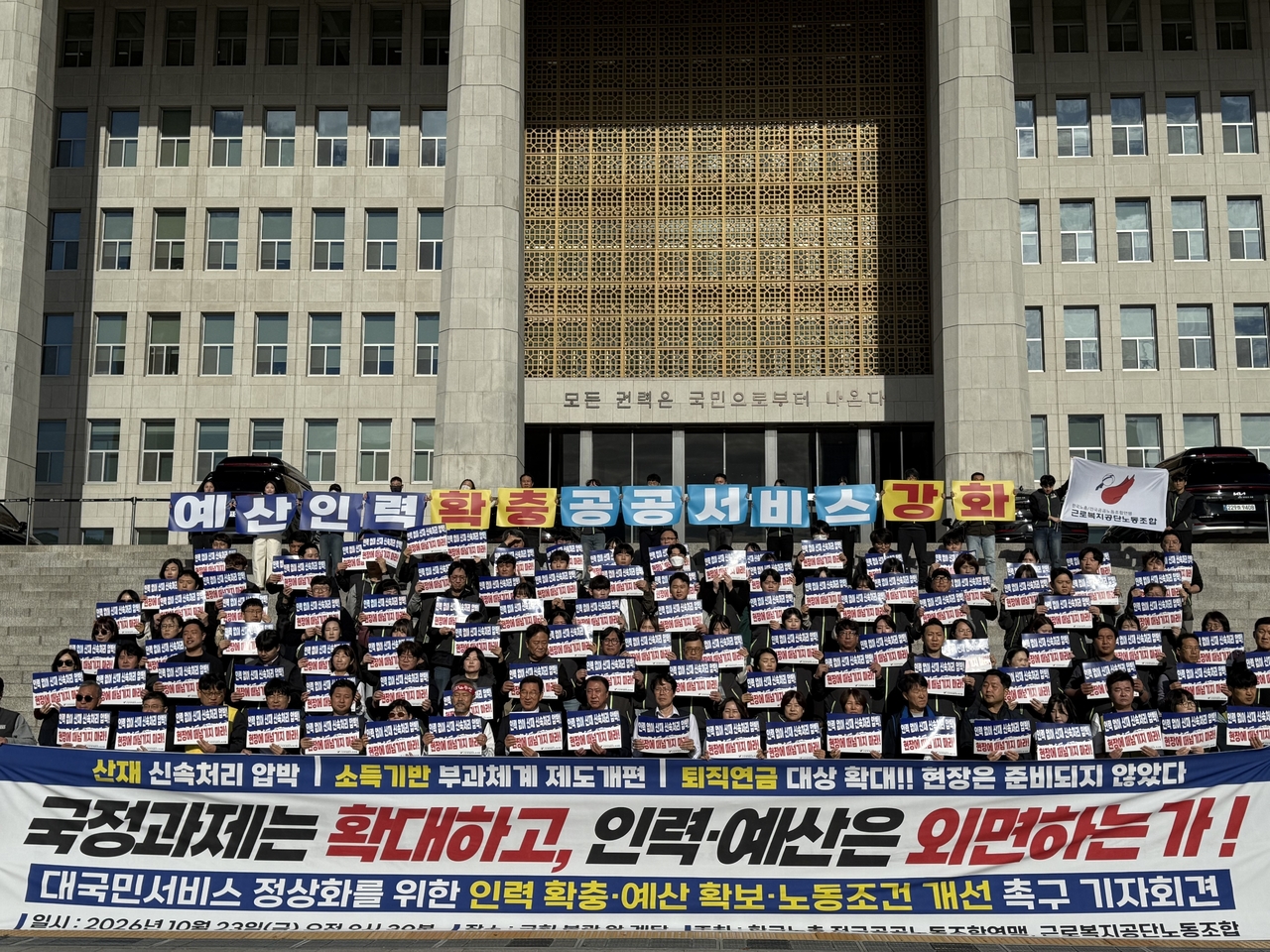
Seven labor unions at the Korea Workers' Compensation and Welfare Service are holding a rally outside the National Assembly on Thursday, demanding that the government close wage gaps and expand staffing and budgets.
The unions are calling for next year's budget to include adequate funding to match the expansion of public services — including employment and industrial accident insurance, and treatment and rehabilitation for injured workers.
The Joint Struggle Headquarters of the Korea Workers' Compensation and Welfare Service unions said it would hold a full-force rally of about 2,500 members Thursday. The headquarters represents seven unions within the agency, with a combined membership of about 9,000. It was launched on Oct. 29 and held its first rally outside the Ministry of Employment and Labor on Wednesday, stepping up pressure to coincide with the National Assembly's deliberations on the government's 2027 budget proposal.
The central demand is a revision to the fund management plan and next year's budget to normalize wages. The headquarters said workers at the agency carry out major public services — including employment and industrial accident insurance and labor welfare — yet face an unreasonable wage gap compared with other social insurance institutions and suffer from structural low pay. It said the chronic shortage of wage funding means internal efforts alone cannot bring about fundamental improvement.
"The unreasonable wage gap faced by workers responsible for public services must be corrected, and fair treatment must be guaranteed," the unions said. "The government and the National Assembly must secure the funding needed to resolve the structural wage problem."
The unions also called for more frontline staff and project budgets commensurate with the agency's expanding workload. The agency handles employment and industrial accident insurance, treatment and rehabilitation of injured workers, and labor welfare and counseling services. The headquarters said that while the government's policy agenda and expanding programs have increased workloads and responsibilities in the field, staffing and budgets have not kept pace.
"Expanding public services without the necessary personnel and budget will not only burden frontline workers but could also inconvenience the public," the headquarters said. "If the government is to pursue its policy agenda, it must also take responsibility for providing the staffing and funding required."
Labor-management negotiations broke down at the third round of formal talks on Sept. 9. The dispute then went through mediation at the National Labor Relations Commission, which issued a decision to suspend mediation on Sept. 28. A strike ballot held Oct. 27 and 28 returned an overall approval rate of 94.93% across all seven unions.
Following Thursday's rally outside the National Assembly, the headquarters plans a second full-force action on Tuesday and a first joint strike and nationwide general rally on Nov. 26, with about 6,000 members expected to participate. Medical workers at industrial accident hospitals and other healthcare facilities will follow a separate action schedule to minimize disruption to the public; the medical workers' union has announced a second strike for Dec. 1.
"The 9,000 members of seven labor unions will continue their struggle until our shared goals — closing the unreasonable wage gap, securing frontline staffing and budgets, and strengthening the public character of employment and industrial accident services — are achieved," the headquarters said.
fact0514@heraldcorp.com