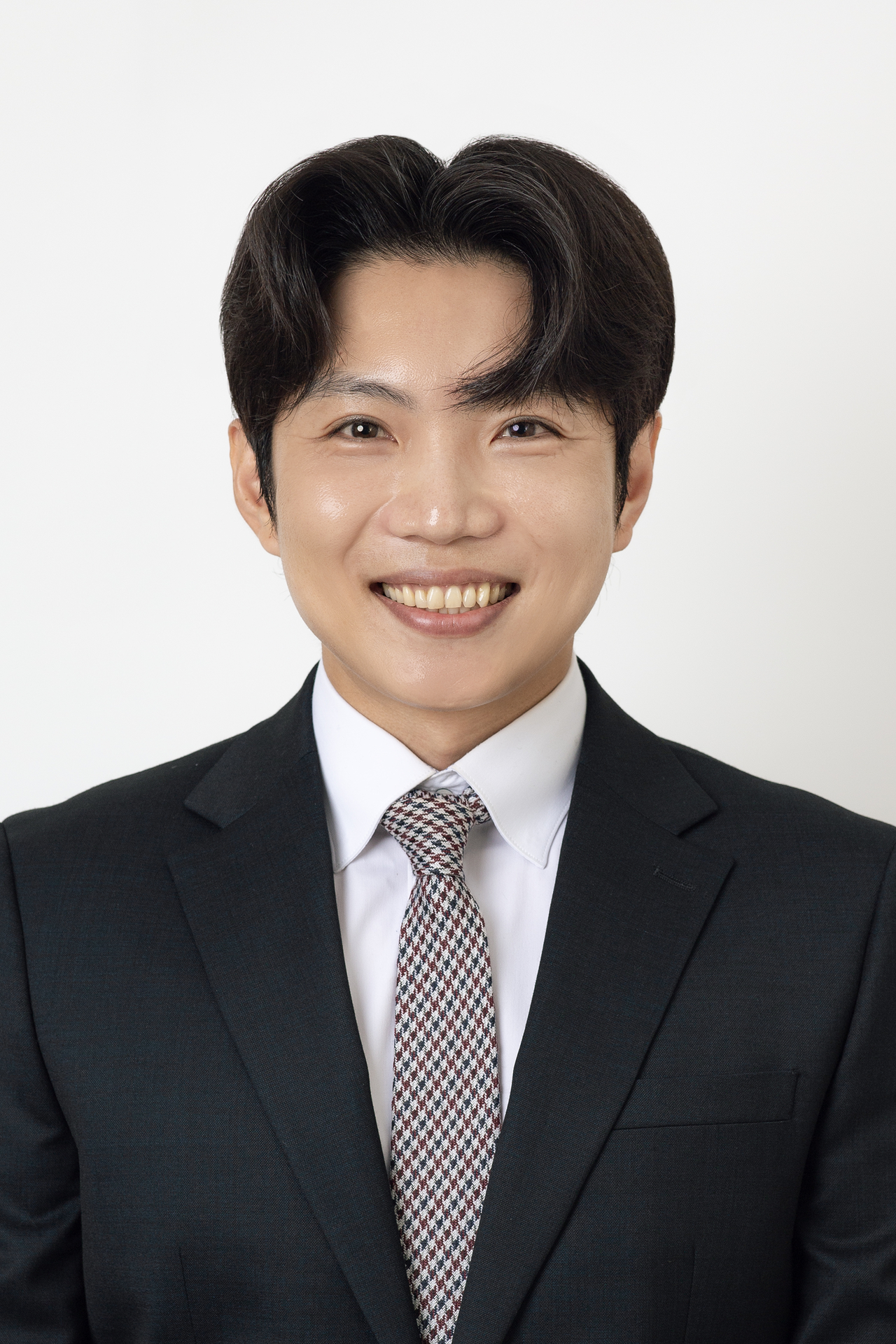
A second-generation member of a separated family, Choi Kwang-chul leads Korean American civic engagement to advance peace legislation in the US Congress. He calls for upgrading the US-Korea alliance beyond security to industry, economy and culture, and envisions solidarity with Koreans in Japan and beyond.
"My father was from Hwanghae Province. He passed away in loneliness, without a single meeting or exchange with his family there."
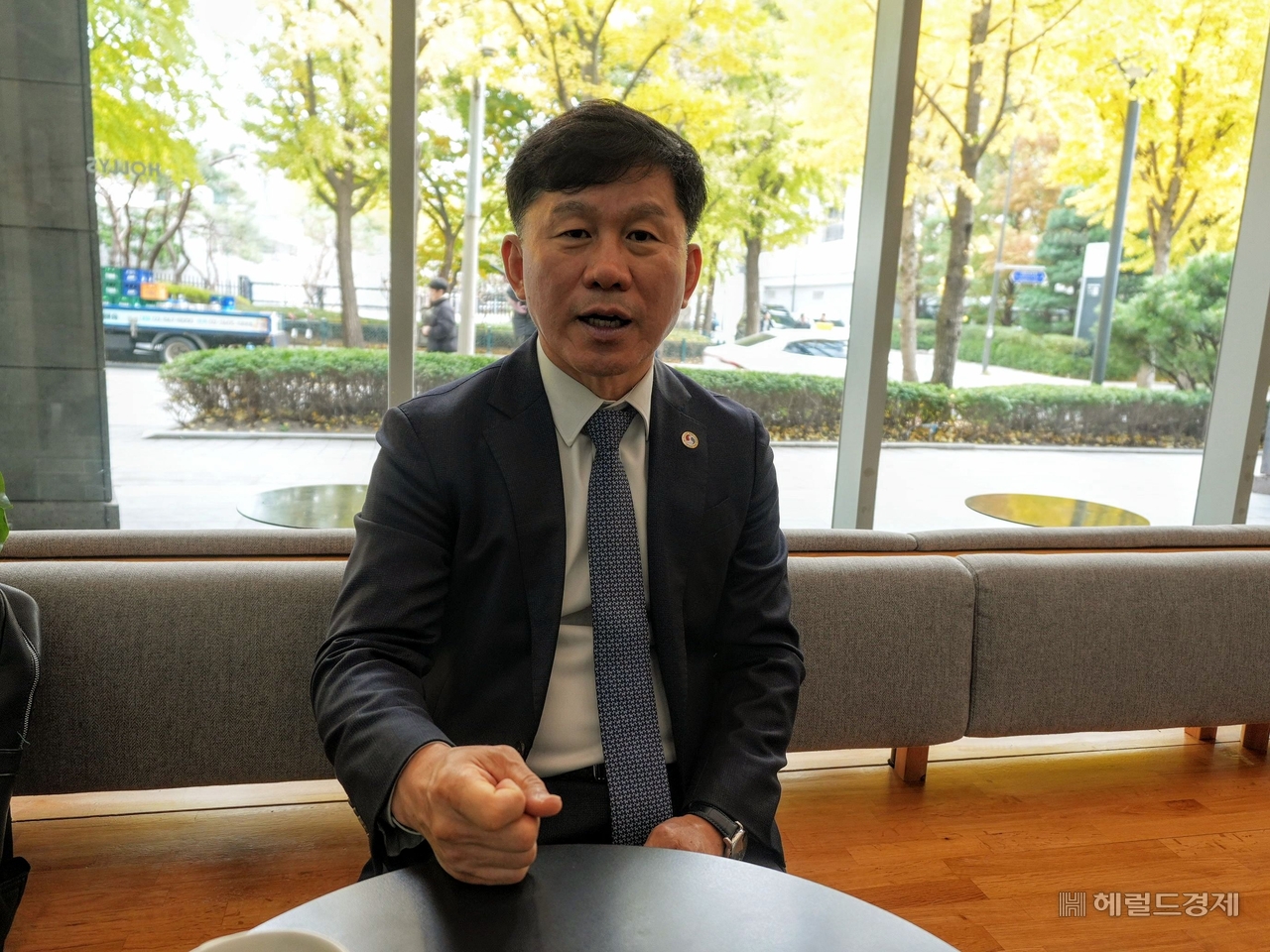
For Choi Kwang-chul, chair of the Korean American Political Action Committee (KAPAC), the division of the Korean Peninsula has always been a family wound before it was ever a matter of diplomacy or security. A second-generation member of a separated family, Choi said the issue of divided families was the starting point of his peace activism, recalling his father, who died about five years ago. The conviction that the pain of families kept apart must not be passed down to the next generation drove him to engage the US Congress.
"War means mutual destruction," Choi said in an interview Wednesday. "Normalizing relations among South Korea, North Korea and the United States can benefit all three countries — and the surrounding nations as well." He said Korean Peninsula peace should not be treated as a subject of partisan rivalry, but viewed as a challenge that shapes both corporate growth and the future of young people.
Choi, who runs a business in the United States and leads a Korean American civic organization, traveled to South Korea to speak at an international seminar on Korean Peninsula peace and tourism cooperation, held Tuesday at Seoul Central Post Office. The event, organized by the Inter-Korean Exchange and Cooperation Support Association and sponsored by the Ministry of Unification, brought together discussions on people-to-people exchanges and tourism experiences in divided regions, as well as the challenges of inter-Korean tourism cooperation.
The central message he carried on this visit was that the range of actors engaged in diplomacy must be broadened. He said that in addition to government-to-government negotiations, overseas Koreans who understand the language and institutions of their countries of residence must participate actively — as model citizens and voters — to widen the foundation for resolving Korean Peninsula issues.
"We must shift our perception and see overseas Koreans not merely as passive recipients of support, but as invaluable diplomatic actors and diplomatic assets," Choi said. "Only by becoming model citizens, taxpayers and engaged voters in our countries of residence can we truly contribute to those countries and to our homeland, South Korea."
What he calls "diaspora new public diplomacy" is precisely this kind of participation — overseas Koreans building trust as active members of their local communities, explaining Korean Peninsula issues to their district lawmakers and policymakers, and expanding cooperation. His view is that concern for Korea and civic responsibility in one's country of residence can be practiced together.
KAPAC's work has focused on connecting the political participation of Korean Americans to the agenda of Korean Peninsula peace. Its signature activities include broadening support for Korean Peninsula peace legislation introduced in the US Congress and making the case for separated-family exchanges and improved relations among South Korea, North Korea and the United States.
Choi said a vision for peace is needed from both the ruling and opposition parties in South Korea. Noting that significant agreements — including the July 4 South-North Joint Statement and the Inter-Korean Basic Agreement — emerged even under conservative governments, he said improvements in inter-Korean relations should not be seen as the achievement or exclusive domain of any single political force.
"The founding principles of KAPAC — justice, fairness, peace, reunification, democracy and participation — belong neither to the progressive camp nor to the conservative camp. Any political force that seeks to govern must have a vision and a message for peaceful coexistence and shared prosperity on the Korean Peninsula."
Choi also said cooperation should be expanded between US lawmakers who take an interest in Korean Peninsula issues and South Korea's National Assembly. He said the sustained engagement of South Korean politicians must complement the efforts of Korean American voters to persuade their local representatives.
On the US-Korea alliance, he said both the scope and depth of cooperation must grow together. "We need to raise the quality of the alliance itself," Choi said. "If security and defense have been the main focus until now, it is time to look beyond that."
Citing semiconductors, batteries and shipbuilding, he said South Korea's industrial capabilities and its contributions to the US economy should be recognized as part of the alliance relationship. His argument is that industrial and economic cooperation must be added to military and security cooperation, and that contacts between the political communities and civil societies of the two countries must also expand.
His perspective on Korean Peninsula peace also reflects the concerns of a businessperson. Choi sees military tension and the severing of exchanges as factors that increase uncertainty for the South Korean economy. He said that if improved inter-Korean relations created conditions for people-to-people and commercial exchanges, new business opportunities could be found in tourism, logistics and other sectors.
"This is not a matter of conservative versus progressive," he said. "It is about the future growth engine for our companies and the future of our young descendants." He noted, however, that these economic possibilities are contingent on improved US-North Korea relations and the creation of conditions for exchange.
Choi also described the progress of a planned civilian peace delegation to North Korea for separated families and people-to-people exchanges. According to Choi, KAPAC recruited participants for a proposed "civilian inter-Korean peace pilot delegation for separated families," and about 100 people expressed interest over roughly a month and a half.
He said KAPAC had also explored ways for Korean Americans to show support for peace and dialogue on the ground in Pyongyang if a US-North Korea summit were held there. He expressed hope that if a first civilian exchange were realized, it could expand into family reunions and other forms of exchange.
On tourism cooperation, Choi raised the possibility of the two Koreas working together to grow each other's visitor numbers. He said that if the itineraries of the roughly 23 million foreign tourists who visit South Korea each year could be linked to visits to North Korea, it could enhance the tourism competitiveness of the peninsula as a whole. He added that North Korean tourism could also achieve greater results in infrastructure, transportation and services through cooperation with the South.
Choi was careful to note that his advocacy for exchanges does not amount to a positive assessment of the North Korean system. While expressing a negative view of North Korea's hereditary regime, he said persuasion and diplomatic dialogue to prevent military conflict must continue. His position is that criticism of the other side and the necessity of dialogue must be addressed together.
On KAPAC's political independence, he said the values the organization has pursued since its founding have not changed. Responding to perceptions that the group leans toward a particular party, he said any political force should be able to join the agenda of peace and democratic participation.
He drew a line at suggestions that his activities were connected to a future entry into South Korean politics. Choi said he is a US citizen working in the United States and has no intention of entering South Korean politics. He said he has forgiven those responsible for past injustices against him and will continue to focus on his mission of advancing the political empowerment of overseas Koreans and Korean Peninsula peace.
Looking ahead, he identified the participation of the younger generation and the expansion of solidarity among overseas Koreans as key priorities. He said the goal is to build an organization that the next generation can carry forward, moving beyond activities that depend on any one person's time and will.
"An organization like KAPAC — a large-scale, nonprofit voter organization — cannot be built with the money or power of any particular government," he said, stressing the importance of trust accumulated among people over a long period and of voluntary participation. He added that the younger generation must take an active role in operations and carry the work forward.
Choi also expressed his intention to build mutual cooperation with overseas Koreans outside the Americas. Rather than transplanting the KAPAC name directly, he envisions creating participation organizations suited to the institutions and environments of each region — such as Japan and Europe — and building solidarity around the shared agenda of peace.
"Peace is a universal value shared by all humanity," Choi said. "What we need now is not commentators but organizers who act." He said it is important to cultivate leaders in every region of the world who can connect and organize people who are willing to work together. Though he began with the pain of a separated family, what he hopes to leave for the next generation is an organized, systemic foundation for the Korean diaspora community to raise its voice — so that the wounds of divided families are never repeated.
sjkim@heraldcorp.com