Seoul sales prices up 0.07%; Seongbuk-gu leads district gains
Songpa-gu widens decline to -0.35% as Gangnam-area weakness persists
'Semiconductor belt' stays strong; balloon effect seen in unregulated zones
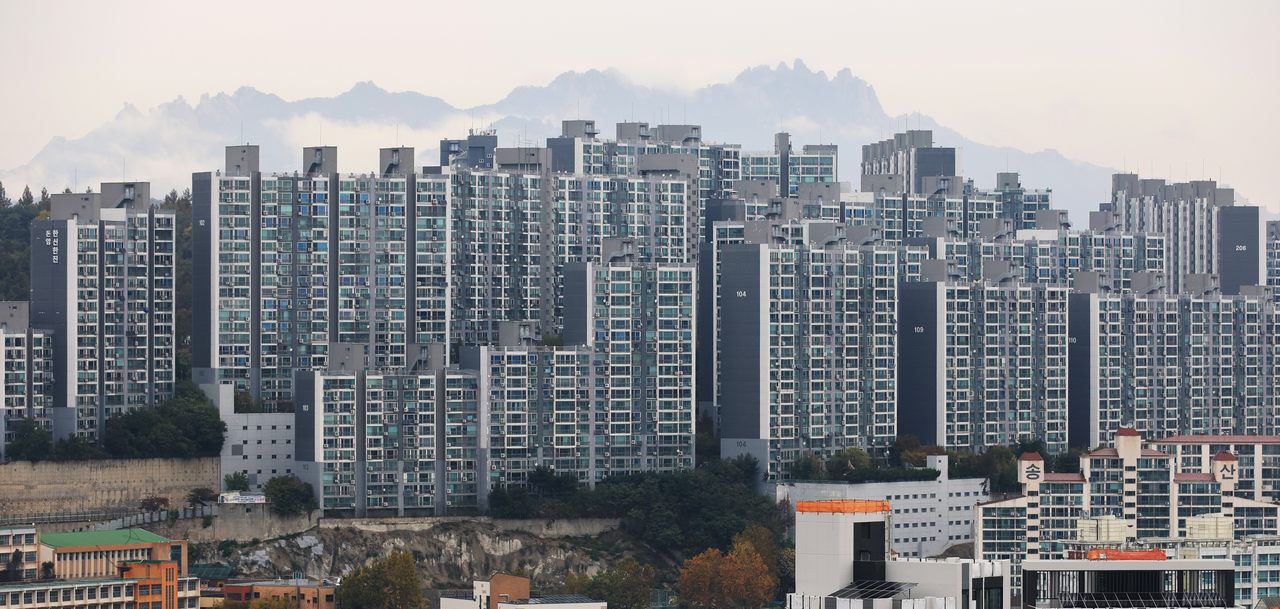
Seoul apartment prices rose for the 92nd consecutive week, even as Gangdong-gu and Seongdong-gu joined the three Gangnam-area districts in turning negative, with outer districts driving the overall gain. In Gyeonggi Province, areas within the so-called semiconductor belt — including Giheung in Yongin, Yeongtong in Suwon and Gunpo — posted some of the sharpest increases.
According to the Korea Real Estate Board's weekly apartment price survey for the second week of November 2026 (based on Monday's data), Seoul apartment prices rose 0.07% this week — the same pace as the previous week and the 92nd straight week of gains.
While the decline in Seoul's southeastern districts continued, outer areas led the price increases. Seongbuk-gu recorded the highest gain in Seoul at 0.39%, driven by transactions in large transit-oriented complexes in the Jeongneung and Donam-dong areas. Gangbuk-gu rose 0.32%, led by large complexes in Mia and Beondong; Seodaemun-gu gained 0.29%, centered on Hongjae and Namgajwa-dong; and Dongdaemun-gu climbed 0.28%, led by Jeonnong and Jangan-dong. However, Seongdong-gu (-0.02%) in northern Seoul turned negative for the first time in six weeks.
Among the three Gangnam-area districts — Gangnam-gu, Seocho-gu and Songpa-gu — the pace of decline eased in Gangnam-gu and Seocho-gu. Songpa-gu deepened its fall to -0.35% from -0.17%, led by declines in the Jamsil and Garak-dong areas, marking its steepest drop in six weeks. Gangdong-gu (-0.01%), also part of the southeastern zone, turned negative. Seocho-gu and Gangnam-gu, however, narrowed their declines from the previous week's -0.37% and -0.39%, respectively, posting their smallest drops in six weeks.
A Korea Real Estate Board official said transactions at preferred large complexes and transit-oriented developments continued to close at higher prices, while some areas saw downward adjustments and a wait-and-see mood persisted. "Mixed trends of gains and declines are appearing by district, but Seoul as a whole rose," the official said.
In Gyeonggi Province, the semiconductor belt remained strong. Giheung in Yongin rose 0.63%, led by Yeongdeok and Dongbaek-dong. Yeongtong in Suwon gained 0.60%, centered on major complexes in Yeongtong and Mangpo-dong, while Gunpo climbed 0.56%, led by Sanbon and Geumjeong-dong. Dongan in Anyang also rose 0.50%. Gains slowed in higher-priced southern Gyeonggi areas, including Bundang in Seongnam (0.26%), Jungwon (0.25%) and Sujeong in Seongnam (0.16%).
Analysts said overheating in southern Gyeonggi Province and unregulated areas continues to intensify.
Nam Hyeok-woo, a real estate researcher at Woori Bank, said a chain of upgrade moves — sellers in southern Gyeonggi trading up to higher-tier properties within the same region — is sustaining price strength in those premium submarkets. "The possibility of Samsung Electronics resuming its second round of in-house loans, along with potential additional liquidity from 2027 performance bonuses, could further reinforce price floors across the greater Seoul area," Nam said.
Nam added that as the jeonse and monthly rent crunch drags on, lower-income owner-occupiers are moving to nearby unregulated areas, fueling strength in the market for properties priced around 600 million won ($432,000) that forms the lower end of the greater Seoul price range.
Meanwhile, Seoul jeonse prices rose 0.17% this week, matching the previous week's pace. Dobong-gu led with a 0.37% gain, driven by large complexes in Chang and Dobong-dong, followed by Gangbuk-gu at 0.35%, centered on Mia and Beondong, and Seongbuk-gu at 0.34%, led by major complexes in Jeongneung and Gireum-dong. Mapo-gu rose 0.28%, driven by large complexes in Sangam and Yonggang-dong, while Dongdaemun-gu gained 0.26%, led by small- and mid-sized units in Jangan and Jeonnong-dong.
Unlike the previous week, when Songpa-gu (-0.05%) and Seocho-gu (-0.01%) posted jeonse price declines, both districts turned positive this week — rising 0.04% and 0.03%, respectively — as jeonse price indexes climbed across all of Seoul.
Gyeonggi Province jeonse prices rose 0.17%, slightly above the previous week's 0.16%. Giheung in Yongin gained 0.40%, led by small- and mid-sized units in Gongse and Dongbaek-dong; Sujeong in Seongnam rose 0.38%, centered on Changgok and Sujin-dong; and Dongtan in Hwaseong climbed 0.37%, driven by large complexes in Bansong and Sancheok-dong. Icheon fell 0.14%, led by smaller units in Jeungpo and Songjeong-dong, while Manan in Anyang slipped 0.02%, centered on Anyang-dong.
hope@heraldcorp.com