Ministry of Interior and Safety holds inter-agency earthquake preparedness meeting ahead of CSAT
Seismic reinforcement progress and agency readiness reviewed following 2017 Pohang quake
Joint emergency response system to be activated from eve of exam through test day
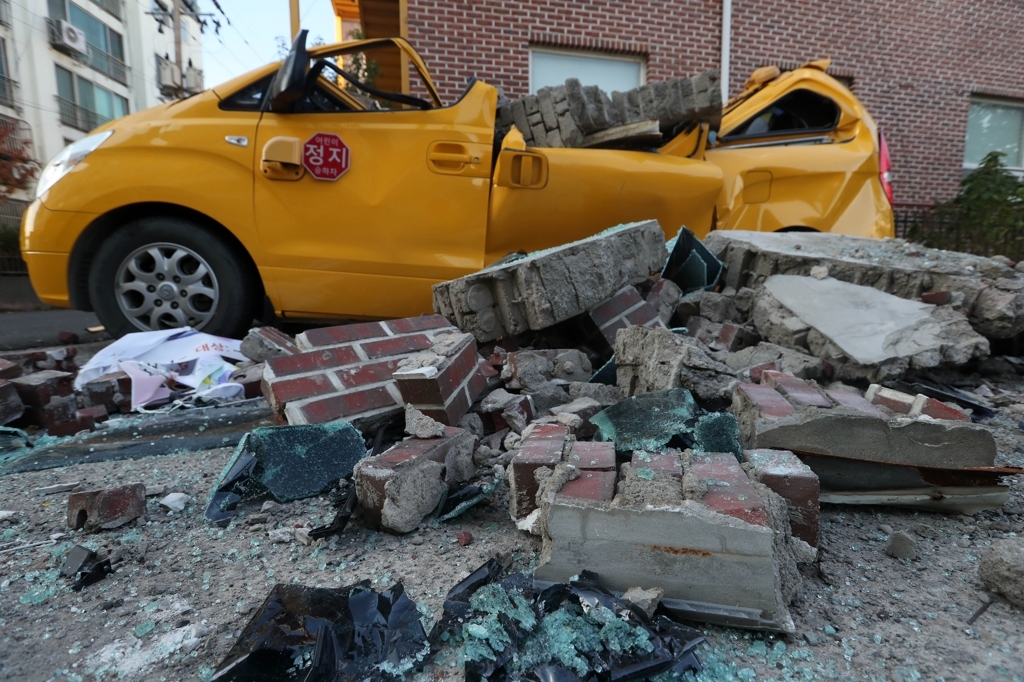
The government has reviewed its earthquake preparedness and response measures to prevent a repeat of the 2017 incident in which a magnitude-5.4 earthquake in Pohang forced a one-week postponement of the College Scholastic Ability Test.
The Ministry of Interior and Safety said Friday it held an inter-agency earthquake preparedness meeting ahead of the CSAT, chaired by Kim Yong-gyun, director general of the ministry's natural disaster management division, with officials from the Ministry of Education, the Korean National Police Agency, the National Fire Agency, the Korea Meteorological Administration and local governments.
The meeting was convened to review institutional improvements made since the 2017 Pohang earthquake and to ensure all agencies are fully prepared for the 2027 CSAT, scheduled for Thursday.
With test-taker safety as the top priority, the meeting focused on each agency's readiness and coordination across the full response chain — from pre-exam safety inspections of test sites and earthquake alert dissemination, to mid-exam evacuation procedures, emergency rescue and first aid, and emergency transport.
Drawing on lessons from the Pohang earthquake that caused the CSAT postponement, the government has since worked to strengthen the seismic safety of public and private buildings and to continuously improve test-site safety management and earthquake response protocols.
The Ministry of Interior and Safety raised the seismic reinforcement rate for existing public facilities to 82.7 percent as of the end of 2025 and is pursuing a project to reach 100 percent by 2035. For private buildings, it has expanded the scope of mandatory seismic design requirements to cover all structures of two or more stories or with a total floor area of 200 square meters or more, as well as all housing.
The Ministry of Education raised the seismic performance compliance rate for school facilities under provincial and metropolitan education offices from 24.9 percent to 80.1 percent as of the end of September, and plans to complete seismic reinforcement of the remaining facilities by 2029.
This year, pre-exam safety inspections were conducted at all 1,312 CSAT test sites nationwide, and any remedial measures identified are to be completed before the exam.
The Korea Meteorological Administration will send text alerts to exam officials in the event of an earthquake and provide instrumental intensity readings and response-level guidance for each test district through a dedicated CSAT support webpage. Since May, the agency has also been operating a "field earthquake alert" system that combines early warning and on-site alerts to issue warnings within three to five seconds of detection in areas near the epicenter.
The Ministry of Interior and Safety will maintain emergency duty and standby communications from Wednesday — the day before the exam — through Thursday. In the event of damage, it will support rapid situation sharing, emergency safety inspections, the securing of alternative and backup test sites, and emergency transport.
The Ministry of Education will complete any remedial safety measures at test sites and conduct pre-exam briefings and simulation drills for exam supervisors and test-takers on earthquake response procedures to strengthen on-site readiness.
Should an earthquake occur during the exam, a tiered response protocol based on instrumental intensity readings by test district will be applied, with final decisions made in consideration of Korea Meteorological Administration guidance and conditions on the ground.
If an earthquake strikes before the exam, authorities plan to assess damage to test sites and, if necessary, arrange alternative venues or consult with relevant agencies on postponing the CSAT.
The Korean National Police Agency, the National Fire Agency and local governments will remain on immediate standby to maintain order around test sites, conduct emergency rescue and first aid, provide emergency transport for test-takers and supervisors, and support safe evacuation.
"Drawing on the experience of the Pohang earthquake, we have steadily improved the seismic performance of public facilities and school buildings, as well as the earthquake information relay system and test-site response protocols," Kim said. "We will keep verifying our state of readiness right up to the exam to ensure the improved systems work seamlessly on the ground, and will prepare thoroughly so that all agencies can respond swiftly with test-taker safety as the top priority, even if an earthquake occurs."
thlee@heraldcorp.com