Public redevelopment of Yongdu District 1, Zone 6 approved, with plans for a mixed-use complex up to 199 meters tall
Lawmaker says livelihood plan for traders at 60-year-old market remains unclear
Calls on Seoul Housing & Communities Corporation to secure alternative and temporary business sites before management and disposal plan
A long-stalled public redevelopment project in Dongdaemun-gu has cleared a key regulatory hurdle after more than two decades of delays, but questions remain over what will become of the traders at Cheongnyangni Fish Market — a 60-year-old institution that sits within the project boundary. Critics say the development cannot claim to serve the public interest unless it also secures space for those traders to continue their livelihoods.
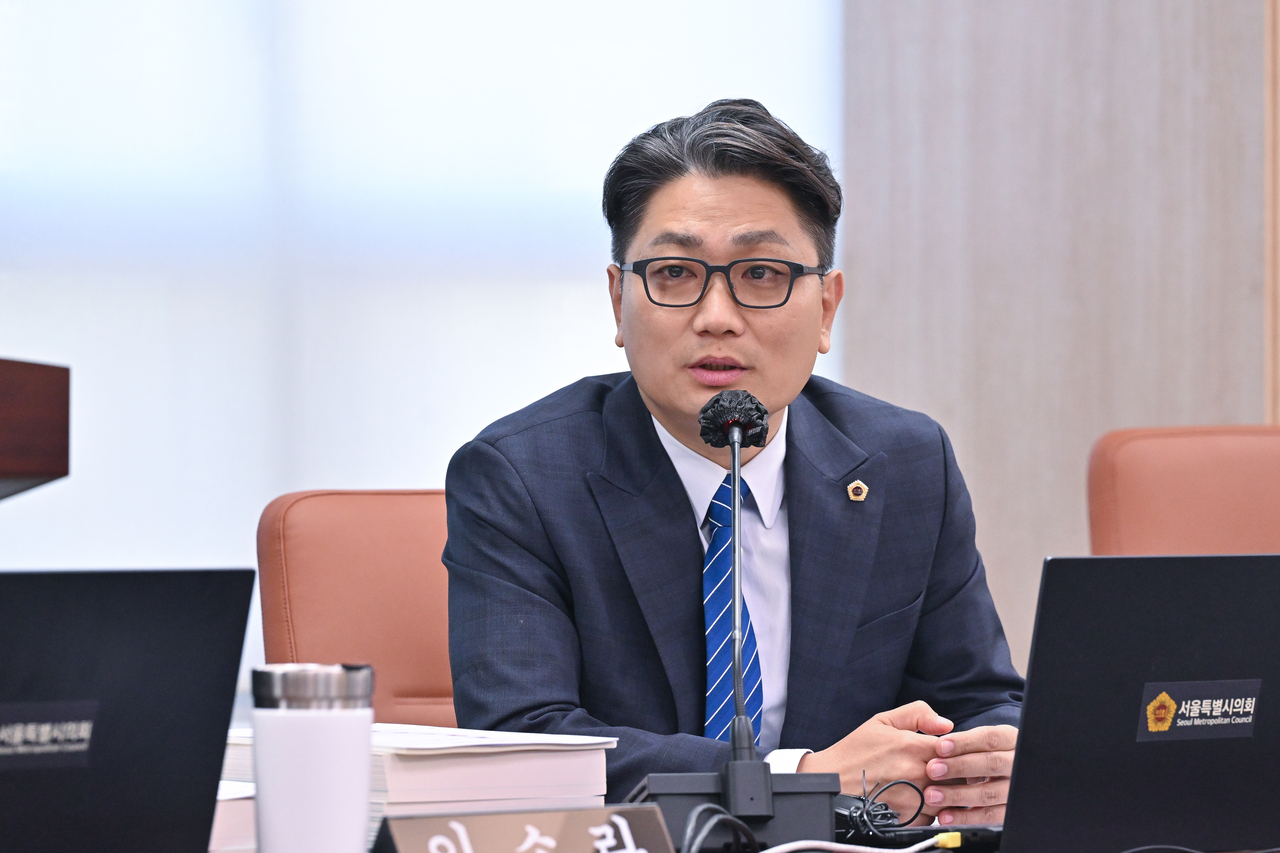
Seoul Metropolitan Council member Oh Jung-seok of the Democratic Party of Korea, representing Dongdaemun District 2, raised the issue Monday during an administrative audit of the Seoul Housing & Communities Corporation at the council's 340th regular session Housing and Space Committee, calling for concrete relocation and alternative business-site plans for the market's traders.
The Yongdu District 1, Zone 6 site was designated a maintenance zone in 2000 but saw prolonged delays. The project gained new momentum in January 2021, when it was selected as a public redevelopment candidate site, and in July of the same year, when the Seoul Housing & Communities Corporation (SH) was designated as the project operator.
The project passed an integrated review in June last year and received project implementation plan approval from Dongdaemun-gu on Oct. 19. Under the plan, the site will accommodate 958 residential units and 138 officetel units in a complex reaching a maximum height of about 199 meters. The implementation period runs 96 months from the approval date.
Oh acknowledged the significance of reviving a long-dormant maintenance project through the public redevelopment framework, but said the benefits of development must extend to protecting the livelihoods of existing traders.
Oh said Cheongnyangni Fish Market, which has anchored the local commercial district for roughly 60 years, requires a different approach from a standard commercial tenant relocation.
Traders at the market have voiced concerns throughout the development process about whether they will be able to continue operating. In 2023, more than 130 traders formed an emergency committee and demanded that the project operator draw up a practical relocation plan.
The traders said at the time that they were not opposed to the development itself, but were asking for realistic alternatives that would allow them to keep their businesses. Options discussed included replacement land, cash compensation and relocation near a neighboring agricultural market, though no specific plan has been finalized.
Some have also raised doubts about whether a traditional fish market — with its characteristic odors and early-morning noise — can coexist with a high-rise residential complex, making the question of how to accommodate the market within the new urban space a central challenge for the project.
Oh said it was problematic that no concrete relocation plan for the market's traders had been presented during either last year's integrated review or this year's project implementation approval process.
He asked SH to provide information on the current number of stalls, the scale of traders and workers, the scope of those eligible for business compensation, and the status of tenants who may be excluded from compensation — as well as whether alternative and temporary business sites have been secured and when relocation is planned.
Oh said compensation payments alone would not resolve the traders' livelihood concerns. While business compensation is calculated through appraisals under relevant laws, securing a space where traders can actually continue operating requires policy judgment and coordination on the part of the project operator, he said.
"I am not asking about the compensation amount — I am asking about a place to keep doing business," Oh said. "The law sets the amount, but the operator can design the alternative site, the temporary site and the timing of the move."
"This is precisely where public redevelopment must differ from private redevelopment," he added, emphasizing the responsibility of a public project operator.
Public redevelopment is an approach in which public institutions participate to strengthen the public character of development and revitalize stalled maintenance projects. Oh said the approach must go beyond accelerating timelines to also address the protection of the livelihoods of existing residents and traders.
He said a market like Cheongnyangni Fish Market, built up over decades, involves not just individual business rights but tightly interconnected supplier relationships, customer bases and retail networks — making continuity of the commercial district during relocation essential.
Oh called on SH to draw up a concrete relocation plan agreed upon with traders before the management and disposal plan is established, warning that leaving the issue until that stage could lead to prolonged business disruptions and conflict.
To that end, he requested that SH submit data including the current status of stalls, traders and workers; records of consultations with traders conducted from 2021 through this year; draft plans and estimated costs for alternative and temporary business sites; business compensation standards; and the management, disposal and relocation schedule.
He also ordered SH to prepare a relocation and alternative business-site plan reflecting the results of consultations with traders, and to report the findings to the Seoul Metropolitan Council's Housing and Space Committee by Dec. 31.
"If public redevelopment displaces the livelihoods that were already there, the justification for calling it public redevelopment weakens," Oh said. "Before the management and disposal plan is drawn up, a relocation plan agreed upon with the traders must come first."
7toy7@heraldcorp.com