Central buildings of temples founded by Buddhist monk Uisang
Dancheong and Yeongnam temple architectural traditions preserved
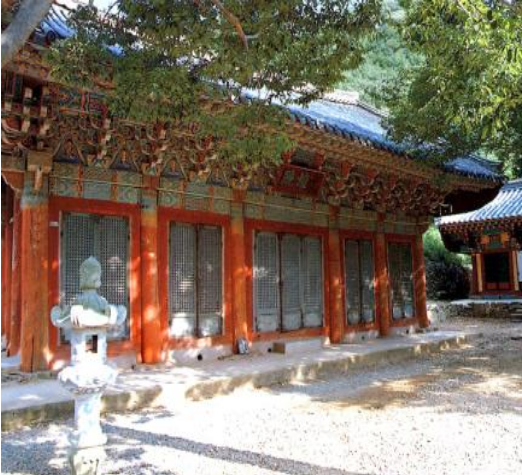
The Cultural Heritage Administration on Friday designated the main halls of Unheungsa temple in Goseong-gun, South Gyeongsang Province, and Geodongsa temple in Yeongcheon, North Gyeongsang Province, as national treasures.
Unheungsa in Goseong-gun is said to have been founded in 676 by the Buddhist monk Uisang (625–702) during the reign of Silla King Munmu (r. 661–681).
During the Imjin War, the temple served as a base for monk-soldiers led by the Buddhist monk Samyeong (1544–1610), but was burned to the ground in the fighting. The main hall was built during subsequent reconstruction and is estimated to date to 1682, based on inscriptions found on structural members and an analysis of roof tiles.
A recent examination of tree rings in major structural timbers confirmed that the wood was felled between late autumn of 1681 and early spring of 1682.
The main hall measures five bays across the front and three bays deep — slightly wider than the typical central worship halls built at temples after the Imjin War.
"The dancheong — traditional multicolored paintwork — applied when the building was repaired and rebuilt in the 17th and 18th centuries has been well preserved, allowing us to trace how the style of dancheong changed over time," a Cultural Heritage Administration official said.
Geodongsa temple in Yeongcheon, also designated a national treasure on Friday, likewise traces its founding to the monk Uisang. The temple is also known as the birthplace of Sannam Uijin, a righteous-army unit organized in Yeongcheon in 1906 that operated across the Yeongnam region, including Daegu and Hyeonpung.
The main hall of Geodongsa — three bays wide and three bays deep — is regarded as a fine example of 17th-century Buddhist temple architecture in the Yeongnam region, reflecting both its distinctive characteristics and historical significance.
Notable interior details include the tall central pillars, which rise higher than ordinary columns and are adorned with carvings of dragon heads and elephant motifs, further embellished with dancheong.
terry@heraldcorp.com