- Human rights-friendly labs promote flexible schedules, open information sharing and pressure-free social events
Researchers set their own hours, no one is pressured to attend social gatherings or drink, and lab information is shared transparently through online platforms. The Gwangju Institute of Science and Technology is working to dismantle the hierarchical culture that has long defined university research labs and build an environment where researchers feel respected.
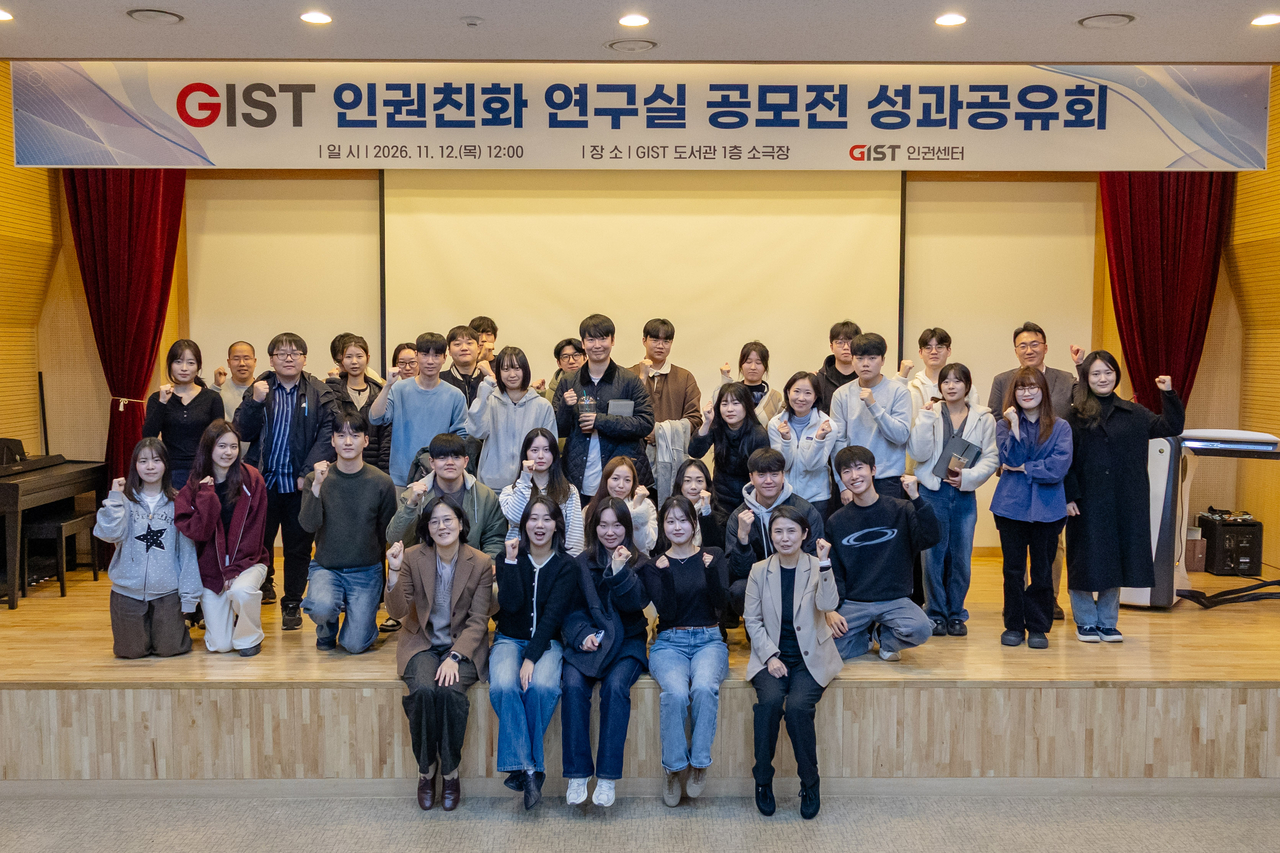
GIST announced Friday that it held an achievement-sharing event for its Human Rights-Friendly Lab Contest at the campus library's small theater on Thursday, presenting the operating practices of six outstanding labs recognized over the past three years.
Organized by the GIST Human Rights Center, the event was designed to spread best practices in mutual respect and horizontal communication among lab members.
GIST has run the Human Rights-Friendly Lab Contest since 2024, selecting a grand prize and an excellence award each year. A total of six labs have been certified through this year. This year, Professor Lee Sang-han's Sustainable Energy, Electronic Materials and Devices Lab took the grand prize, while Professor Park Do-hyeon's AI Law and Policy Lab received the excellence award.
In 2024, Professor Lim Hyeon-seop's Nano Surface Chemistry Lab and Professor Kim Chang-woo's Water Security Lab won the grand prize and excellence award, respectively. Last year, Professor Hwang Eui-seok's Intelligent Information Systems Lab and Professor Lee Dong-seon's Semiconductor Light-Emitting Devices Lab took the two honors.
The human rights-friendly practices common to all six labs include flexible working hours, social events free from pressure to attend or drink, and research information sharing through online platforms. Each lab is run so that all members have equal access to necessary information and can freely voice their opinions.
The labs have continued introducing new systems to improve their research environments even after receiving their awards. The AI Law and Policy Lab launched a mentorship program pairing junior and senior researchers who share common research interests. The Intelligent Information Systems Lab has been expanding its alcohol-free social culture, while the Sustainable Energy, Electronic Materials and Devices Lab is reinforcing its existing culture of mutual respect and exploring additional initiatives.
Participants at Thursday's event also discussed ways to resolve conflicts within labs, agreeing that a communication environment where anyone can comfortably speak up — grounded in mutual respect and understanding — is key to reducing friction among lab members.
"A lab is not only a space for producing research results but also a workplace and educational setting where the human rights and dignity of its members must be respected," said Cha Mi-ryeong, director of the GIST Human Rights Center. "Building on the best practices accumulated over the past three years, we will continue to identify and support human rights-friendly labs where researchers can focus on their work with peace of mind."
GIST plans to hold the fourth Human Rights-Friendly Lab Contest next year to further spread a research culture grounded in autonomy and mutual respect.
nbgkoo@heraldcorp.com