Last year's director appointments voided
Court rules cross-shareholding voting restrictions used for management defense were illegal
Suspension of duties could trigger governance shift
Moves by 6 directors backed by Choi draw scrutiny
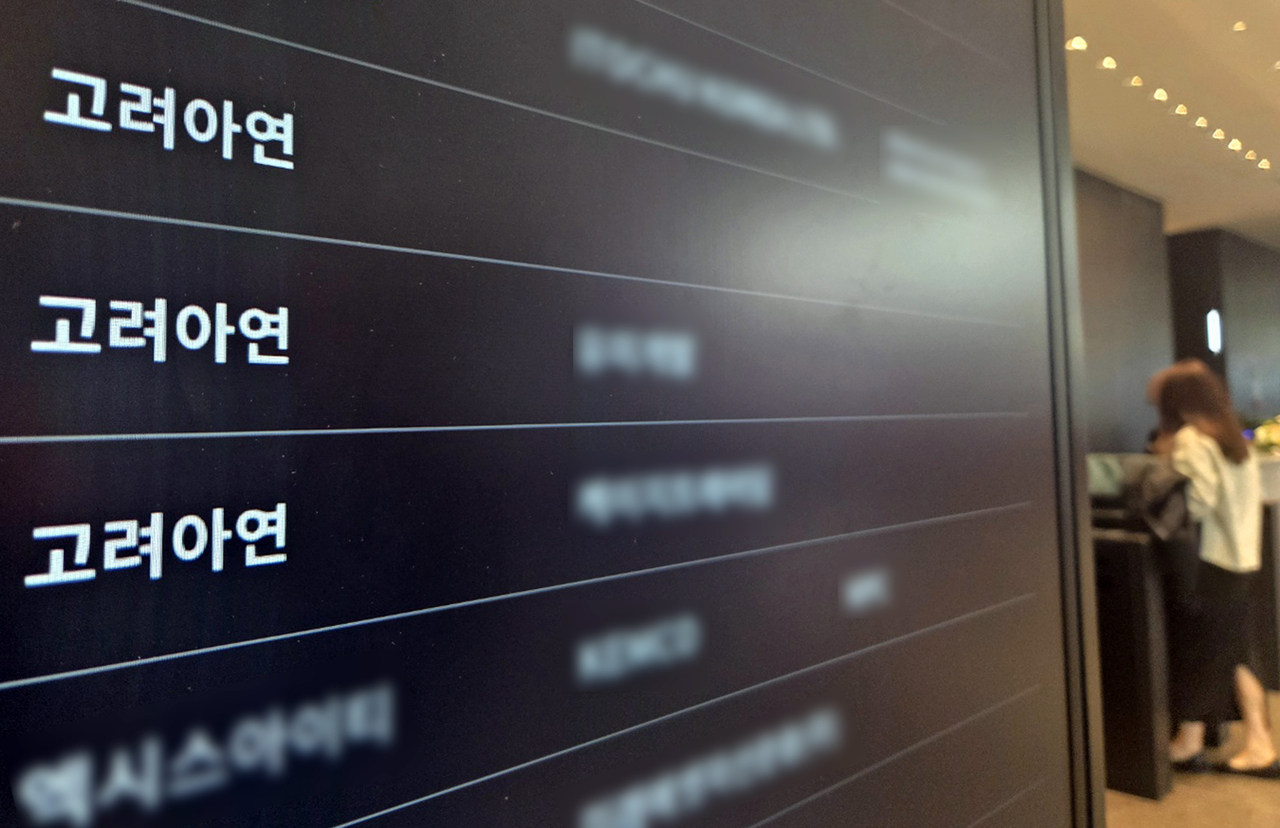
A court ruling that Korea Zinc illegally restricted the voting rights of cross-shareholding partners to defend its management control has raised the prospect of a shift in Chairman Choi Yun-beom's board majority.
While the board's composition does not change immediately, questions about the legal standing of directors appointed at last year's annual general meeting have emerged as a new variable in the ongoing management dispute. The Youngpoong-MBK alliance may now seek an injunction to suspend those directors from carrying out their duties, citing the first-instance ruling.
Court puts brakes on management-defense tactics
According to legal sources, the Seoul Central District Court's 29th Civil Division, presided over by Judge Ko Seung-il, ruled Thursday in favor of Youngpoong and MBK Partners in their lawsuit against Korea Zinc seeking to annul resolutions passed at the company's annual general meeting. The court said Korea Zinc could not restrict the voting rights of existing shareholders by invoking cross-shareholding provisions for the purpose of defending management control.
At the 2025 annual general meeting, Korea Zinc restricted voting rights on the 25.4 percent stake in Korea Zinc held by Youngpoong, on the grounds that Sun Metal Holdings (SMH), a sub-subsidiary of Korea Zinc, had acquired a 10.3 percent stake in Youngpoong. Korea Zinc argued that the resulting circular ownership chain — Youngpoong → Korea Zinc → SMH → Youngpoong — meant Youngpoong's stake in Korea Zinc was subject to voting restrictions.
Article 369, Paragraph 3 of the Commercial Act stipulates that when a company and its parent or subsidiary holds more than 10 percent of another company's shares, the voting rights on shares held by that other company are restricted.
The central issue was the purpose and circumstances behind the formation of the cross-shareholding relationship — specifically, whether Korea Zinc directed SMH to acquire Youngpoong shares for management-defense purposes, and whether it was appropriate to restrict voting rights based on a cross-shareholding structure created with such intent.
The court ruled that three sets of resolutions from the 2025 annual general meeting must be annulled: an amendment to the articles of incorporation setting an upper limit on the number of directors, the appointments of inside director Park Ki-deok and outside directors Kwon Soon-beom, Kim Bo-young, James Andrew Murphy and Jeong Da-mi, and the appointment of Seo Dae-won as an outside director serving on the audit committee.
Korea Zinc vows immediate appeal — but will board majority shift?
Korea Zinc said it would appeal immediately, arguing the ruling contradicts established Supreme Court precedent and the Supreme Court's earlier decision on a related injunction. The Supreme Court had previously dismissed a voting-rights injunction filed by the Youngpoong-MBK side.
However, the first-instance ruling is expected to widen the legal battle over whether the directors appointed at last year's annual general meeting can continue to perform their duties.
If the Youngpoong-MBK alliance uses the ruling as grounds to seek an injunction suspending those directors and a court grants it, Choi's side would lose its board majority — with the board potentially realigning to seven seats for the Youngpoong-MBK side against six for Choi's.
Even if no injunction is granted, observers say directors aligned with Choi may become more cautious about key decisions related to management defense. Voting in favor of major governance-affecting measures while the legality of their appointments is in question could expose them to legal liability.
The court particularly emphasized shareholders' voting rights in director appointments. In its written ruling, it stated: "The exercise of shareholder rights at a general meeting regarding the appointment or dismissal of directors is more important and fundamental than other shareholder rights," adding that "using the cross-shareholding voting restriction provision to limit Youngpoong's voting rights on director appointment agenda items runs counter to a systematic interpretation of the Commercial Act as a whole, and cannot be permitted as a basis for restricting the exercise of shareholder voting rights on director appointments."
Analysts say the ruling could increase the legal burden on directors when deliberating on matters that could affect management control — such as third-party allotment share issuances, large-scale investments involving changes to the ownership structure, or the establishment of joint ventures. The ruling, however, did not adjudicate on the legality of those specific measures.
An investment banking source familiar with management disputes said that once the ruling is finalized, directors could face damages claims over decisions made at the board. "There is also a strong possibility that outside directors will voluntarily step down before a final ruling is handed down," the source said.
The Youngpoong-MBK alliance had already filed a damages suit against Korea Zinc CEO Park Ki-deok over his restriction of Youngpoong's voting rights at a January 2025 extraordinary general meeting, and the court of first instance found him liable for 100 million won ($75,100) in damages.
Park, who chaired that extraordinary general meeting, restricted Youngpoong's voting rights on the basis that Sun Metal Corporation (SMC), an Australian affiliate, had acquired a stake in Youngpoong. The court ruled that the cross-shareholding voting restriction provision could not apply to SMC because it is a limited liability company.
The duties of directors appointed at that extraordinary general meeting were also suspended. A court granted an injunction sought by the Youngpoong-MBK side against four outside directors appointed on Choi's recommendation. Those outside directors had their duties suspended for more than a year before stepping down voluntarily in May.
park.jiyeong@heraldcorp.com