Hyundai Motor begins temporary permit process for SDV test vehicles; Gwangju integrated operations office to open Tuesday
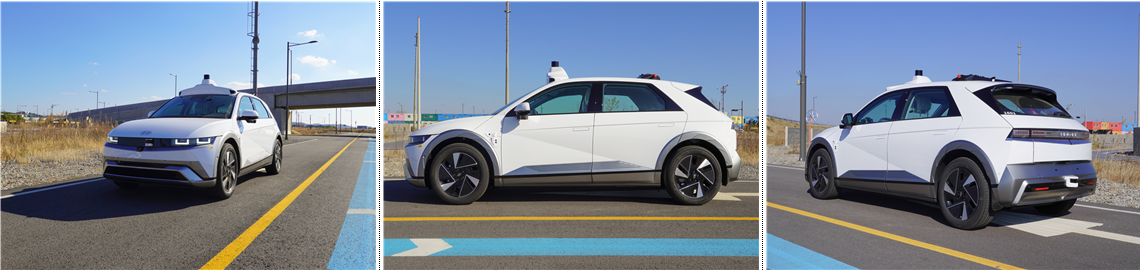
A self-driving test vehicle manufactured by Hyundai Motor will make its first run in Gwangju, South Jeolla Province, on Nov. 30, as authorities prepare for full-scale operations by verifying the vehicle's safety performance.
The Ministry of Land, Infrastructure and Transport announced Sunday that test vehicles will be deployed in Gwangju — the country's first city-scale autonomous driving demonstration zone. The vehicles will learn from complex real-world traffic conditions across a range of driving scenarios to refine the technology.
The test vehicles are software-defined vehicles, or SDVs, manufactured and delivered by Hyundai Motor. Autonomous driving developers, including A2Z and RideFlux, are currently fitting the delivered vehicles with sensors and autonomous driving systems and conducting functional modifications and inspections.
RideFlux applied last week for a temporary operating permit for the first vehicle. The Ministry of Land, Infrastructure and Transport and the Korea Transportation Safety Authority plan to review the documentation and conduct an on-site vehicle evaluation to confirm safety requirements this month, after which permits will be issued on a rolling basis. If vehicle modifications and the permitting process proceed as planned, about 120 vehicles are expected to be on public roads by year-end. The total number of planned test vehicles is 200.
The Gwangju Future Mobility Promotion Institute, an integrated operations office that will oversee the test vehicles, is set to open Tuesday. The office will serve as a transport platform, centrally managing the operating zones and routes for each developer's vehicles while monitoring vehicle locations and operational status in real time.
Deployment schedules and weekly operating plans for each vehicle, along with final integration tests between vehicles and control systems and pre-run road checks, will also be carried out shortly.
Gwangju city plans to complete construction of a depot and charging facilities needed for operations this month, following the establishment of the Gwangju Future Mobility Promotion Institute. In addition, the Korea Transportation Safety Authority has drawn up a safety and operations guideline covering the roles and procedures of each participating agency — from pre-departure inspections and in-service safety management to emergency responses for accidents and other incidents.
Before the vehicles are deployed in earnest, the ministry plans to conduct a joint simulation exercise with relevant agencies, participating companies, and police and fire departments based on the guideline to test the emergency response framework among agencies in the event of an accident.
"The Gwangju autonomous driving demonstration city is an important project that gathers diverse driving data on real roads for use in developing and validating autonomous driving technology," said Park Jun-hyung, director general of the ministry's Mobility and Automobile Bureau. "Starting with the first vehicle deployment, we will work closely with relevant agencies to put safety first throughout the demonstration process."
smh@heraldcorp.com