SeAH Holdings, SeAH Steel rise from B+ to A
SeAH Besteel holds A rating for 4th consecutive year
SeAH Holdings, SeAH Besteel score A+ in social category
SeAH Steel cuts greenhouse gas, energy and waste output
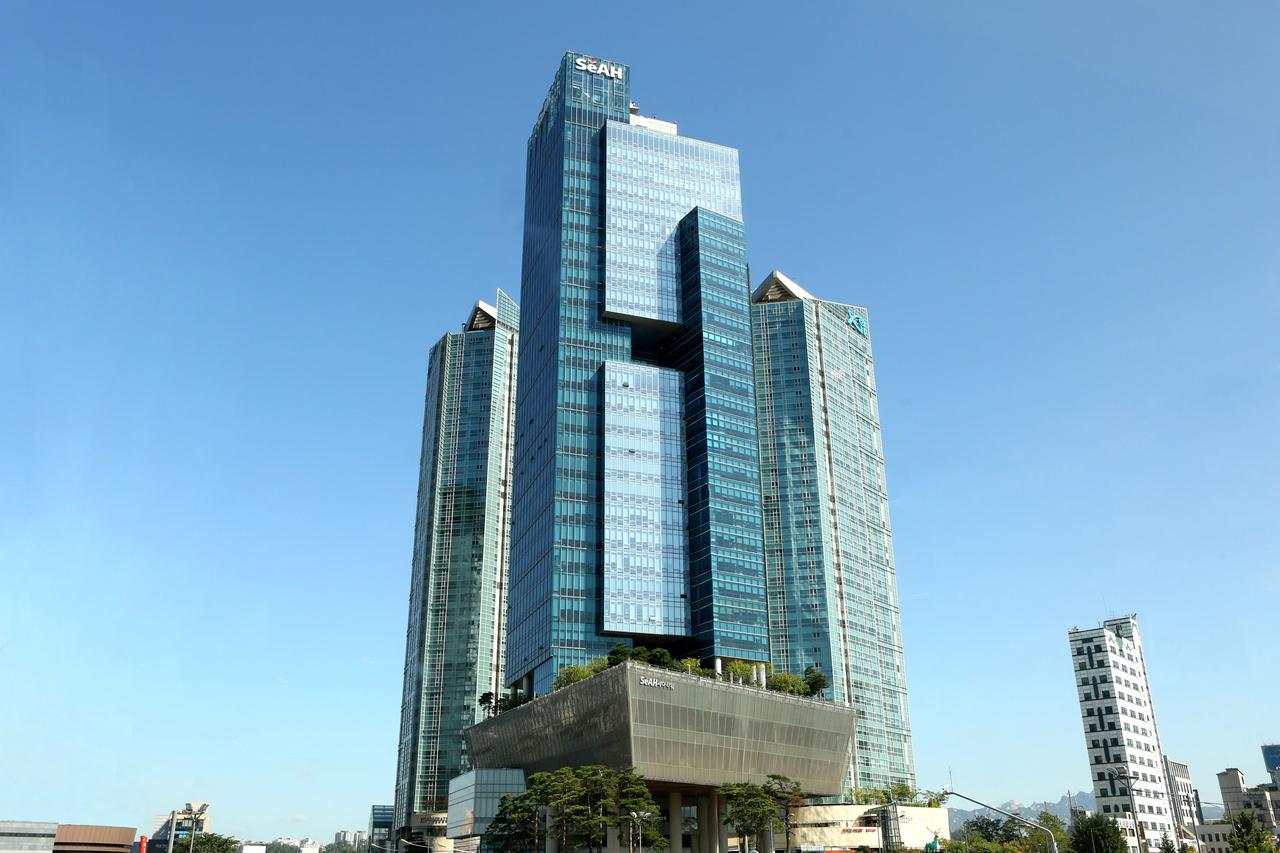
Three major affiliates of SeAH Group all received an overall "A" rating in this year's environmental, social and governance assessments. SeAH Holdings and SeAH Steel each climbed one notch from last year, while SeAH Besteel Holdings maintained an "A" for the fourth consecutive year. The results reflected the companies' efforts to cut carbon emissions, improve workplace safety management and strengthen support systems for partner firms.
SeAH Group announced Friday that SeAH Holdings, SeAH Besteel Holdings and SeAH Steel each earned an overall "A" in the 2026 ESG evaluation conducted by the Korea Institute of Corporate Governance and Sustainability (KCGS).
KCGS evaluates domestic companies annually across environmental, social and governance categories and publishes overall ratings. The assessment examines not only financial performance but also how effectively companies manage non-financial risks such as carbon emissions, industrial accidents, supply chain oversight and board operations.
In this year's evaluation, SeAH Holdings and SeAH Steel each rose one level to "A" from an overall "B+" last year. SeAH Besteel Holdings has maintained an overall "A" for four consecutive years since 2023.
All three companies scored "A" or higher in both the environmental and social categories. The group said the results reflected efforts to address key risks inherent in steelmaking, including carbon emissions from the manufacturing process, workplace safety incidents and partner firm management.
Looking at individual companies, SeAH Holdings and SeAH Besteel Holdings showed the most marked improvement in the social category. Both companies saw their social ratings rise to "A+" this year from "A" last year.
SeAH Holdings reorganized its ESG management structure to allow group-level integration of activities that had previously been carried out separately by individual subsidiaries. It also strengthened its supply chain management regime to monitor non-financial risks — including environmental, safety and human rights issues — among partner firms.
SeAH Besteel Holdings revised its partner firm management plan and introduced a method to measure the actual effectiveness of worker training programs. Rather than simply tracking the number of sessions held or participants, the company improved its management approach to assess how effectively training is applied on the ground. Efforts to enhance the practical impact of safety management at partner firms and worksites were also reflected in the evaluation.
SeAH Steel improved in both the environmental and governance categories. Both had been rated "B+" last year; each rose to "A" this year, giving the company an "A" across all three ESG categories.
In the environmental category, SeAH Steel received positive marks for reducing greenhouse gas emissions, energy consumption and waste generation for two consecutive years.
The company manages environmental indicators quantitatively, has established a sales management system for eco-friendly products and expanded the scope of its environmental disclosures.
SeAH Steel also improved its board operations. It provided specialized training for independent directors and audit committee members and required the board to review major ESG issues, strengthening oversight of management.
SeAH Group said it plans to continue focusing on reducing carbon emissions and raising safety management standards at production sites and among partner firms, taking into account the nature of the steel business.
The group also said it will strengthen systems to identify ESG risks in the supply chain before they materialize, and will expand support for partner firms and broaden ESG-related disclosures.
"These results recognize the efforts each company has made to practice responsible management across its operations and supply chain," a SeAH Group official said. "We will continue to strengthen ESG management to build trust and competitiveness in global markets and lay the foundation for sustainable growth."
Meanwhile, the steel industry faces growing pressure to respond to tightening environmental regulations and expanding ESG disclosure requirements.
The EU this year began full enforcement of its Carbon Border Adjustment Mechanism, which imposes costs on imported products — including steel — based on their carbon emissions. As EU importers are now required to report emissions and submit related certificates, the importance of emissions management has grown for South Korean steelmakers as well.
Domestically, regulators are also moving to mandate ESG disclosures. The Financial Services Commission announced a roadmap in July requiring Kospi-listed companies with combined assets of 10 trillion won ($7.51 billion) or more to begin mandatory sustainability disclosures from 2028.
kwater@heraldcorp.com