Service centers expand 91% to 21 locations, with 26 targeted by year-end
Showroom count reaches 38; cumulative sales top 20,000 units
Parts center in Pyeongtaek expands to 6,600 square meters
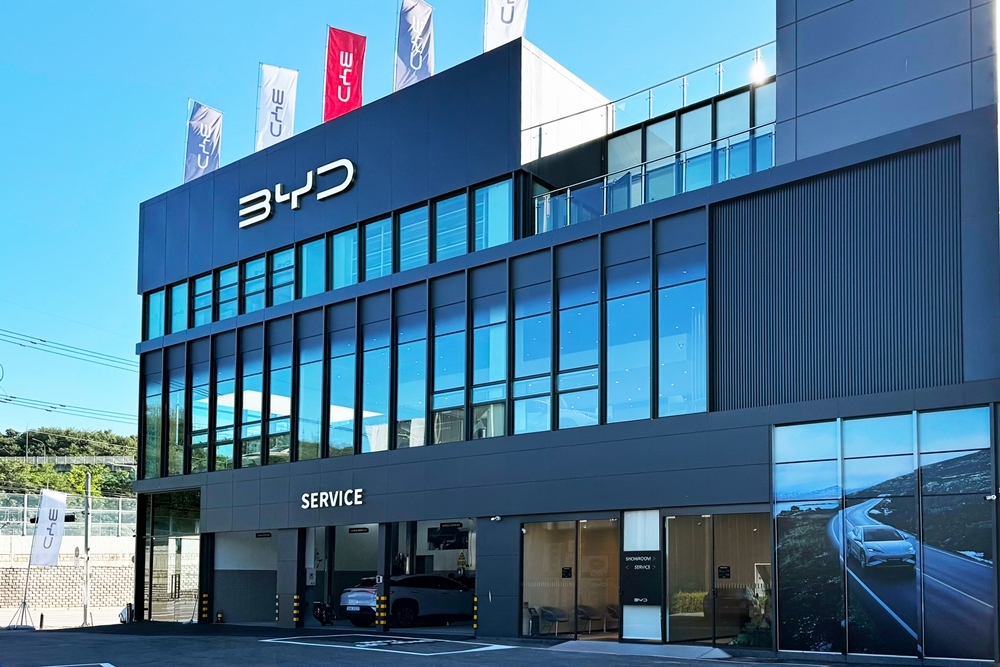
BYD, China's leading electric vehicle manufacturer, is rapidly expanding its after-sales service infrastructure in South Korea. Having already gained ground in the domestic imported-car market on the strength of competitive pricing, the company is now bolstering its service centers and parts supply chain. The move is widely seen as a strategy to ease consumer concerns about maintenance access and used-car residual values for a Chinese EV brand with a relatively short domestic sales history — and to build lasting customer trust.
BYD Korea said the company currently operates 21 passenger-car service centers nationwide. That marks a 91 percent increase from the 11 centers it had when it launched its passenger-car brand in South Korea in January last year — a span of roughly one year and 10 months. The company aims to add five more locations by year-end, bringing the total to 26.
Measured against cumulative registrations, BYD's service network is relatively dense. According to the Korea Automobile Importers & Distributors Association (KAIDA), each BYD service center was responsible for about 848 registered vehicles as of the end of June this year. By comparison, major German import brands and Tesla each handle around 10,000 cumulative registrations per service center — suggesting BYD has built a notably tight maintenance network relative to its sales volume.
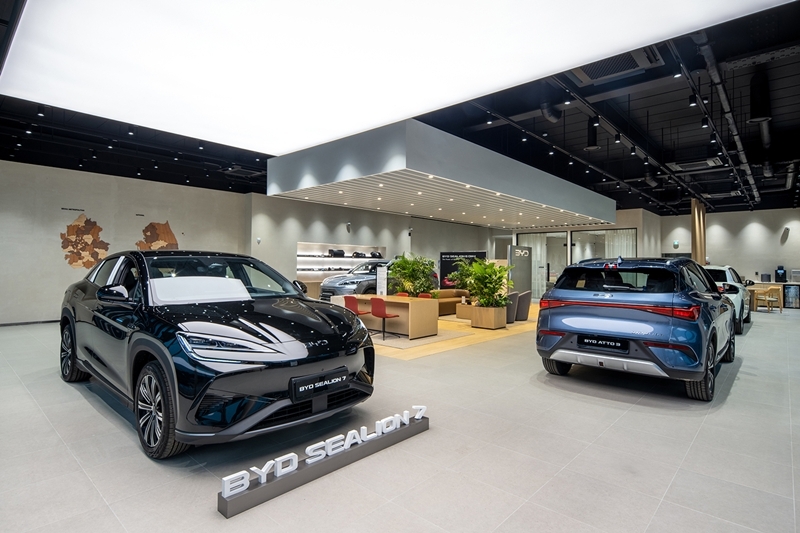
BYD has also aggressively expanded its showroom network since last year. The 15 showrooms it had at launch grew to 32 by April this year, and after opening additional locations in Pyeongtaek and Yongin in September, the count now stands at 38 — more than 2.5 times the initial figure. The company surpassed its original annual target of 35 showrooms well ahead of schedule.
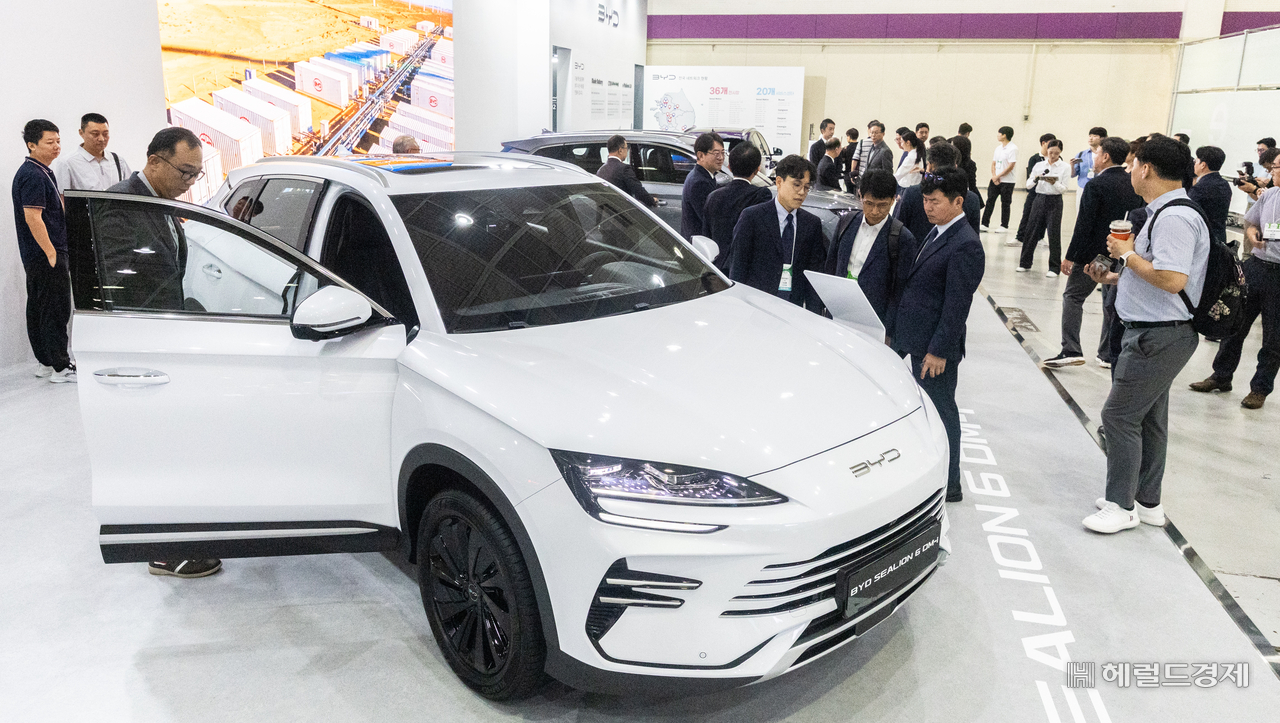
BYD has placed showrooms in major cities across the country — not just Seoul and the greater metropolitan area — and has opened outlets inside large shopping complexes to maximize consumer touchpoints. The approach reflects a deliberate effort to give potential buyers more opportunities to see and test-drive the vehicles, helping overcome the relatively low brand recognition that Chinese automakers face in South Korea.
The expanded sales network has translated into sharply higher volumes. BYD registered 21,731 new vehicles in South Korea from January through October this year, roughly 3.6 times its full-year 2025 total of 6,107 units. On a cumulative basis this year, BYD ranks fourth among imported car brands, behind Tesla, BMW and Mercedes-Benz.
The electric hatchback Dolphin and the midsize SUV Sea Lion 7 have led the sales surge. BYD began delivering the plug-in hybrid Sea Lion 6 DM-i to customers in August, broadening its lineup. The company handed over its 1,000th Sea Lion 6 DM-i on Nov. 5, extending its sales base from EVs into the plug-in hybrid market.
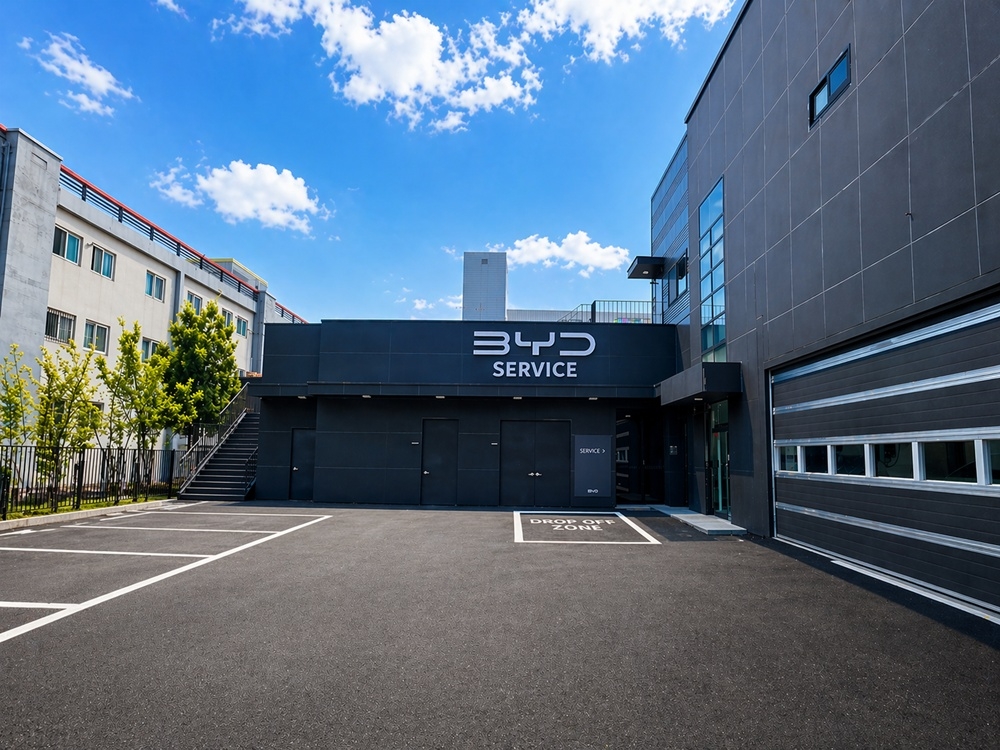
As sales volumes climb rapidly, after-sales capability has emerged as a key competitive factor. Consumers tend to harbor greater concerns about brands with short domestic track records, particularly regarding maintenance accessibility and parts availability — neither of which has been fully tested in the Korean market.
Those concerns connect directly to used-car residual values. Residual value refers to how much a vehicle retains when resold after a period of use. Even if a new car carries a low sticker price, a steep drop in used-car value can raise the true cost of ownership. Prospective used-car buyers also weigh whether major components such as the battery can be repaired, what repairs cost, and how reliably parts can be sourced. BYD's push to expand its service network is therefore read as an effort to reduce that uncertainty and lay the groundwork for protecting long-term vehicle value.
Warranty terms also factor into post-purchase costs. BYD Korea offers a six-year or 150,000-kilometer warranty on major general components, and an eight-year or 160,000-kilometer warranty on the high-voltage battery — with a guarantee that battery state of health remains above 70 percent within the warranty period. Coverage transfers with the vehicle when ownership changes hands, meaning used-car buyers can benefit from any remaining warranty, potentially lowering the barrier to purchasing a pre-owned BYD.
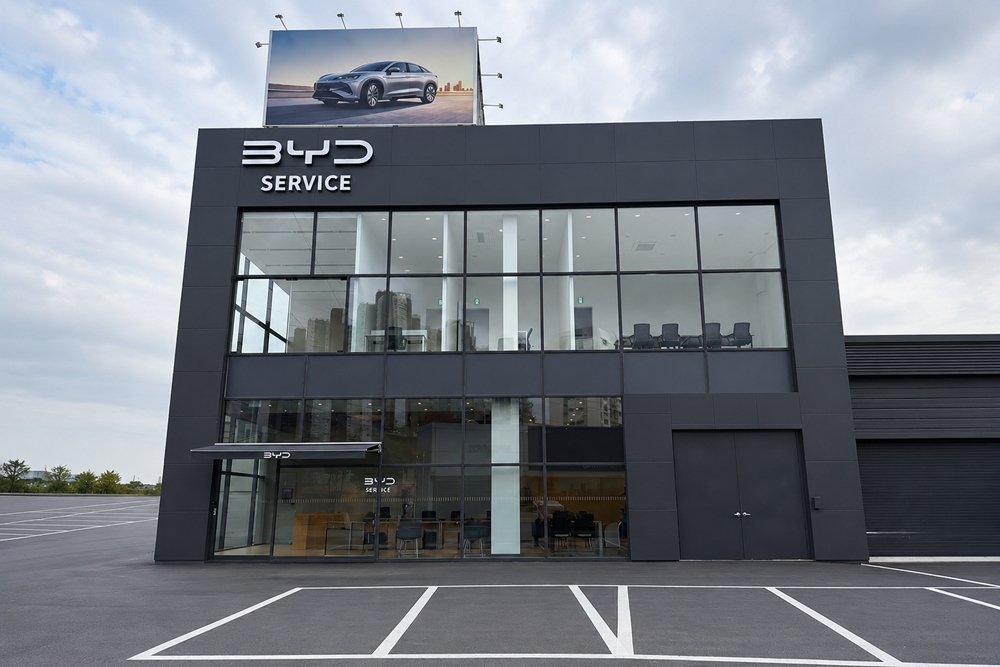
The 21 service centers currently operating nationwide are equipped with a combined 94 work bays — enough capacity to service up to roughly 10,000 vehicles per month. BYD has not simply added locations; it has also scaled up the physical capacity to handle the repair workload.
The company is also strengthening its EV-specific technical capabilities. Every service center nationwide has been fitted with BYD-certified diagnostic equipment and EV-dedicated repair facilities, enabling technicians to handle not only routine inspections but also high-voltage component work involving batteries and electric drive systems.
Collision repair services are available at five locations — Suwon, Busan Sasang, Anyang, Seoul Yangcheon and Incheon Bupyeong — with plans to add more collision repair sites before year-end.
BYD Korea has also expanded its parts supply chain. The company has operated a domestic parts center since December 2024, expanded it to more than 3,300 square meters in July this year, and last month enlarged the Pyeongtaek, Gyeonggi Province facility further to approximately 6,600 square meters. The expansions are intended to ensure a stable supply of parts as the number of BYD vehicles on Korean roads continues to grow.
Parts demand is forecast by analyzing actual usage patterns and replacement cycles. BYD Korea maintains safety stock of key components at service centers and logistics hubs to minimize wait times during repairs. For parts held in domestic inventory, the company has set up a same-day dispatch system for urgent orders, with next-day delivery to service centers.
Customer lounges at the service centers follow a "green and brown" concept featuring live plants, designed to improve comfort for customers waiting while their vehicles are serviced.
BYD's investment in after-sales infrastructure amounts to more than a convenience upgrade — it is a strategy for establishing a durable foothold in the South Korean market. A larger service network does not automatically lift used-car residual values, but greater maintenance accessibility and parts supply stability can meaningfully reduce the ongoing cost of ownership after purchase.
"Building a service environment where customers feel confident even after buying a vehicle is essential," a BYD Korea official said. "We will continue to strengthen our nationwide service network and technical capabilities, while raising service quality and convenience at every step of the customer's visit to our service centers."
kwater@heraldcorp.com