District closes 50-year Hwagok-dong era and launches new administrative hub, with plans for economic revitalization and balanced development
Moving a single household is no small task. When a home changes, so does much of daily life — commutes, schools, shopping and leisure all shift along with it.
Moving a district office where thousands of civil servants work is an even greater undertaking — a pivotal moment that reshapes a community's administration and its future.
Seoul's Gangseo-gu has closed the chapter on its 50-year Hwagok-dong district office era and opened what officials are calling the "Magok integrated district office era." The new building represents more than a change of address for a government agency; it symbolizes the next 50 — and even 100 — years of Gangseo-gu's future.
Standing at that historic starting line is Gangseo-gu District Mayor Jin Kyo-hoon.
A graduate of the National Police University who rose to deputy commissioner of the Korean National Police Agency, Jin made the transition to local government through a by-election and has since led the district with a focus on development and improving residents' quality of life.
The opening of the integrated district office carries particular significance for Jin. The new building gives him a fresh administrative foundation from which to put the district's future vision into concrete action.
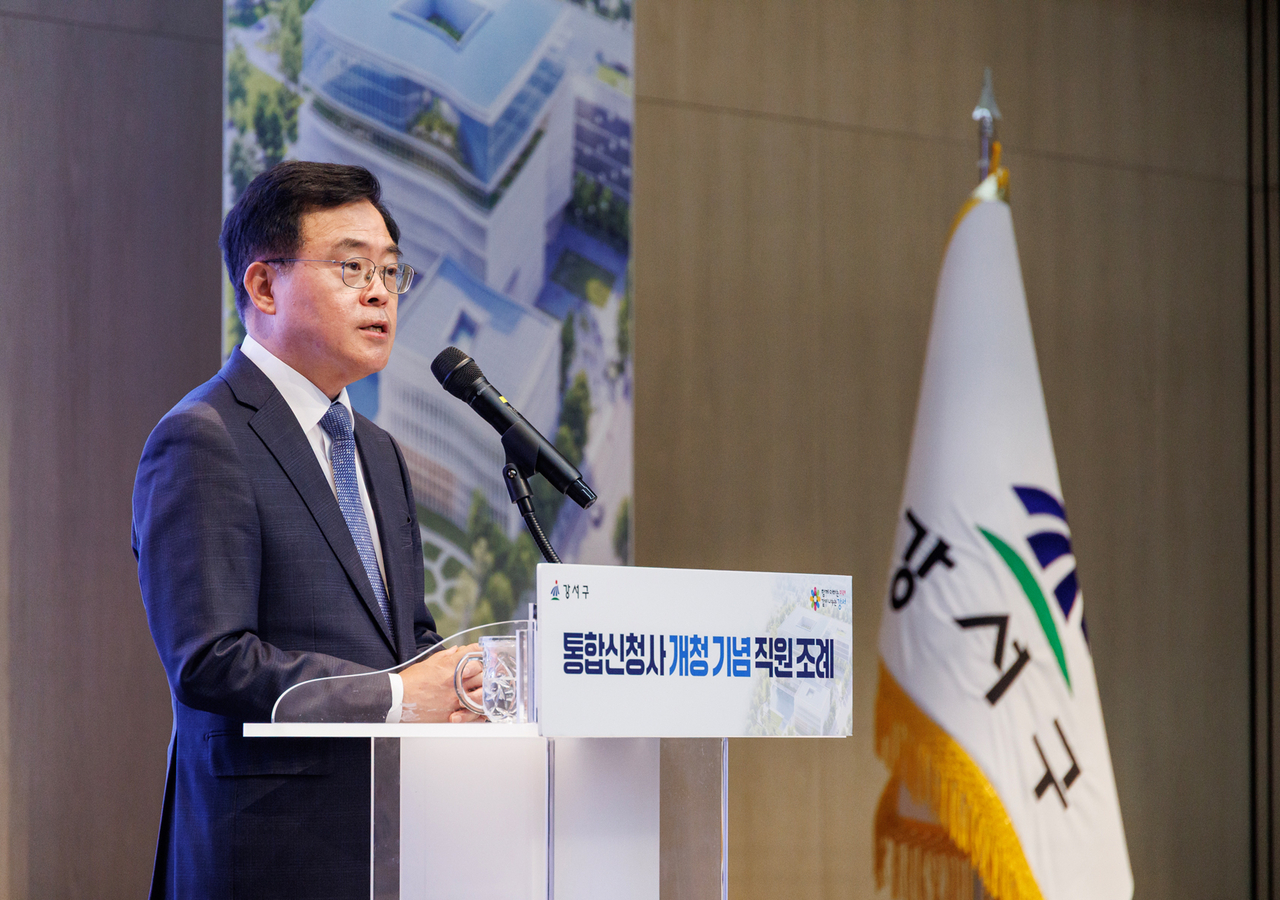
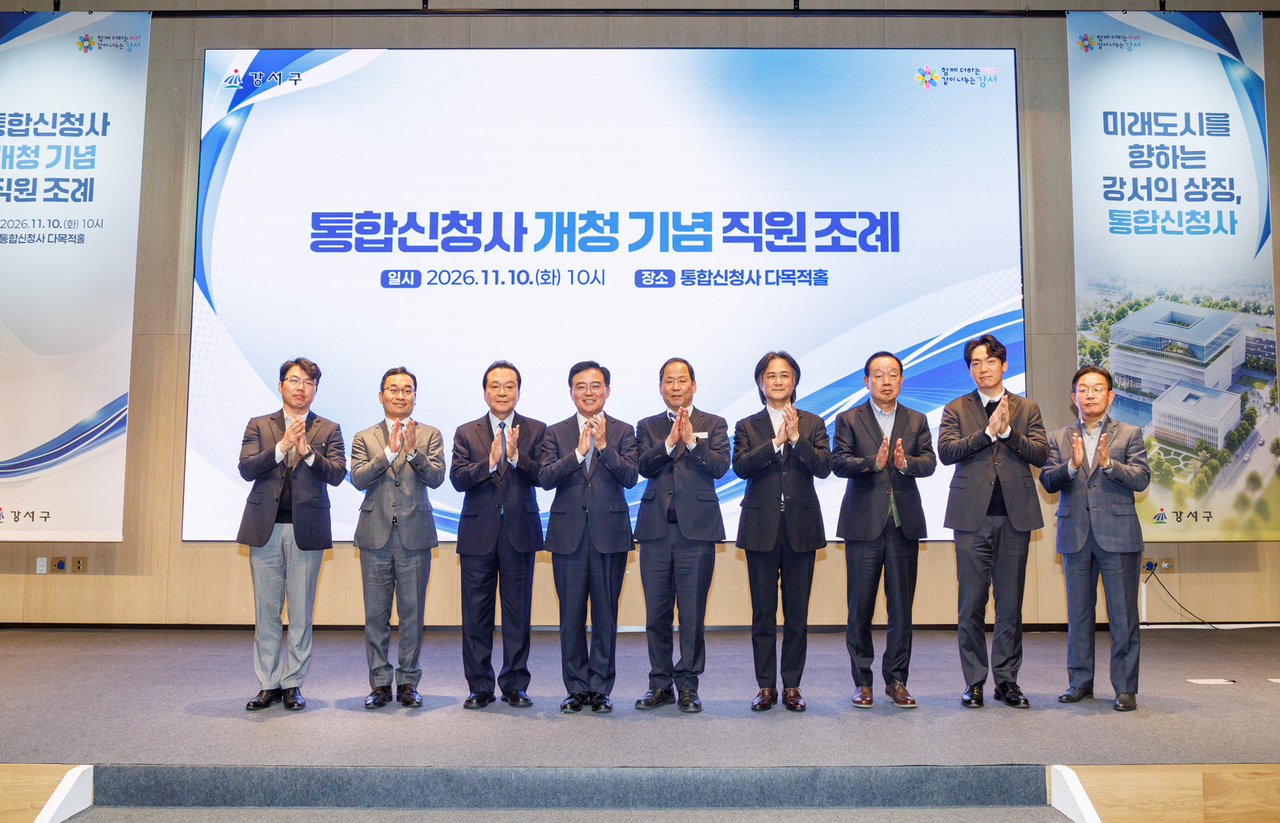
Jin held a staff ceremony at the Magok integrated district office on Tuesday to mark its opening and outline his vision for the district. In his address, he said the building's completion was made possible by the sustained support of residents. "The integrated district office is more than a workspace — it is a place that connects residents to their community, a district office that belongs to everyone," he said.
He added that Magok's growth, combined with improvements in transportation, culture and economic infrastructure, had driven steady change and progress. "Standing on the achievements of the past 50 years, we are now at the starting point of a new 100 years," he said.
The central challenge Jin has set for himself is revitalizing the local economy by securing new engines of growth.
"We will breathe new energy into the local economy by drawing on Magok's advanced industries, the MICE sector and the development potential around Gimpo Airport," he said. "We will work to create conditions where businesses, local commercial districts and small merchants can grow together."
The plan is to connect Magok's concentration of AI and robotics companies to job creation and broader economic growth across the district. The key will be building a virtuous cycle in which the expansion of the large industrial complex translates into higher incomes for residents and a revival of neighborhood commerce.
Balanced development across the district's neighborhoods is another priority Jin identified.
"We will look carefully at the different conditions and needs of each area and work to improve living environments," he said. "We will pay close attention to ensuring that every resident, in every part of the district, can enjoy a convenient and stable life."
Jin said he would make a particular effort to narrow the development gap between Magok, where the new district office now stands, and established residential areas such as Hwagok-dong.
He added that the district would pursue a range of economic stimulus measures — including spending campaigns and other initiatives — to help revive the neighborhood economy around the former Hwagok-dong district office site.
The goal is to ensure that the economic benefits of Magok's growth spread across all of Gangseo-gu rather than remaining concentrated in one area.
Jin also pledged administrative changes that residents would feel in their everyday lives.
"We will protect residents' daily lives and deliver tangible improvements across transportation, culture, care services and leisure," he said. "From everyday inconveniences to major issues, we will listen closely to residents' voices and work out practical solutions."
The opening of the integrated district office marks a new beginning for Gangseo-gu's administration. But the move alone does not guarantee progress. How well the district can link Magok's high-tech industrial strengths to the broader local economy — and how much it can improve living conditions in areas that have lagged behind — will determine whether the next 100 years are a success.
That is the challenge before Jin: to make good on the promise of "a district office for all residents" through balanced growth and an administration whose impact every resident can feel.
seouldream01@heraldcorp.com