8,404.8 square meters of reclamation added to national plan across four sites
Measures aim to reduce typhoon damage, improve port usability
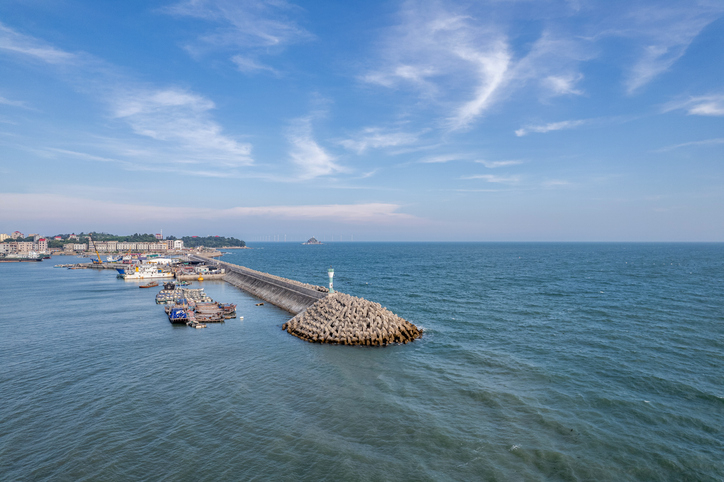
South Korea has revised its sea reclamation plan to allow breakwater construction and small-vessel dock expansion at four fishing ports nationwide, including Hongwon Port in Seocheon, South Chungcheong Province. The changes are intended to reduce damage from typhoons and other severe weather and to improve conditions for fishing vessels using the ports.
The Ministry of Oceans and Fisheries announced Monday that it has revised and publicly notified the Fourth Basic Plan for Public Waters Reclamation (2021–2031) to designate four new sites, including Hongwon Port, as planned reclamation areas.
The newly added reclamation sites total 8,404.8 square meters. Hongwon Port in Seocheon, South Chungcheong Province, accounts for the largest share at 5,516 square meters, with the land earmarked for expanding small-vessel docks and extending an existing breakwater.
Holtong Port in Muan, South Jeolla Province, and Dangdong Port in Goseong, South Gyeongsang Province, will have 1,200 square meters and 1,128.8 square meters designated respectively, with new breakwaters to be built at both sites. Yugyo Port in Geoje, South Gyeongsang Province, will have 560 square meters added to extend its existing breakwater.
All four sites are designated for the development of fishing port facility land. The ministry said it expects the new and reinforced breakwaters to prevent casualties and property damage during typhoons and other disasters, while the expanded small-vessel docks will improve the efficiency of port operations.
The Basic Plan for Public Waters Reclamation is a statutory plan established to prevent indiscriminate reclamation of shared coastal waters, including tidal flats. It is drawn up on a 10-year cycle after reviewing the necessity of reclamation and its environmental impact.
Inclusion in the basic plan does not mean construction will begin immediately. The designated sites must still go through follow-up procedures, including obtaining a reclamation license, before actual work can proceed.
The ministry accepts applications to amend the basic plan twice a year to reflect changing field conditions and demand. This round added four sites after they cleared expert assessments and a review by the Central Coastal Management Deliberation Council.
The Fourth Basic Plan currently covers 286 sites nationwide with a combined area of 33.5 square kilometers, including projects reflected under other laws. By category, port facilities account for the largest share at 190 sites, followed by fishing port facilities at 80 sites and public facilities at 6.
"This revision to the basic plan was carried out targeting projects that are essential for the safety of fishers and for improving conditions at fishing ports," said Hwang Jun-seong, director general for marine environment policy at the ministry. "We will continue to manage the reclamation system so that the preservation of public waters and on-the-ground demand remain in balance."
adastra@heraldcorp.com