Bridge to connect Banghak-dong and Sanggye-dong
Seoul Metropolitan Government says detour of up to 2.2 km to be eliminated
Completion targeted for first half of 2029
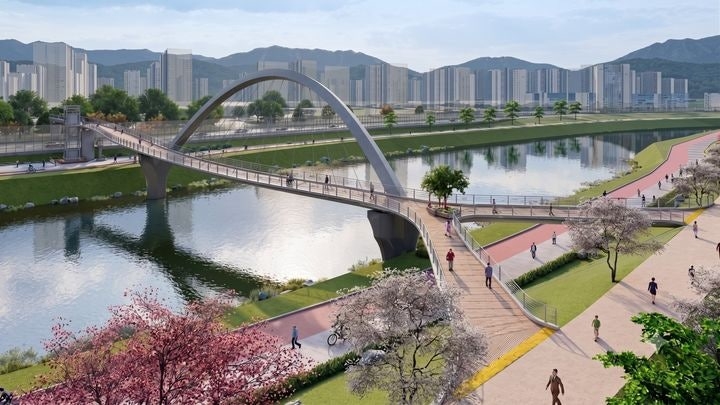
The Seoul Metropolitan Government plans to break ground on a pedestrian bridge over Jungnangcheon this month, with completion targeted for the first half of 2029. The bridge will connect the Samsung Raemian apartment complex in Banghak-dong, Dobong-gu, with the Jugong 16 complex in Sanggye-dong, Nowon-gu.
The project aims to improve pedestrian conditions between the two neighborhoods, which are cut off from each other by the river, as part of the city's broader "walkable Seoul" initiative. Residents have long faced inconvenience crossing between Banghak-dong and Sanggye-dong because Jungnangcheon runs between them. The two nearest existing bridges — Sewol Bridge to the north and Sanggye Bridge to the south — are about 1.3 kilometers apart, forcing pedestrians to detour up to 2.2 kilometers.
"There were stepping stones in the river, but flooding during heavy rains restricted their use, and they were difficult for elderly people, people with disabilities and others with limited mobility," a Seoul city official said. "Calls for a safe, all-weather pedestrian crossing have continued."
In response, the city conducted a feasibility study and selected the route between the Samsung Raemian complex in Banghak-dong and the Jugong 16 complex in Sanggye-dong as the optimal alignment, as it connects directly to an existing overpass leading to Jungnangcheon.
The bridge will be 136 meters long and 4.5 meters wide, featuring a curved design inspired by the ridgelines of Dobongsan and the flow of Jungnangcheon, along with a viewing rest area. The city intends the structure to serve not merely as a crossing but as a new pedestrian destination where residents can walk and linger. To that end, the city will build pathways accessible to wheelchairs and strollers and install nighttime landscape lighting.
"This is a community-focused project that will eliminate the inconvenience of traveling between the two areas and allow all residents — including those with limited mobility — to safely access the river and public transportation," said Im Chun-geun, head of the Seoul Metropolitan Government's Urban Infrastructure Headquarters.
ken@heraldcorp.com