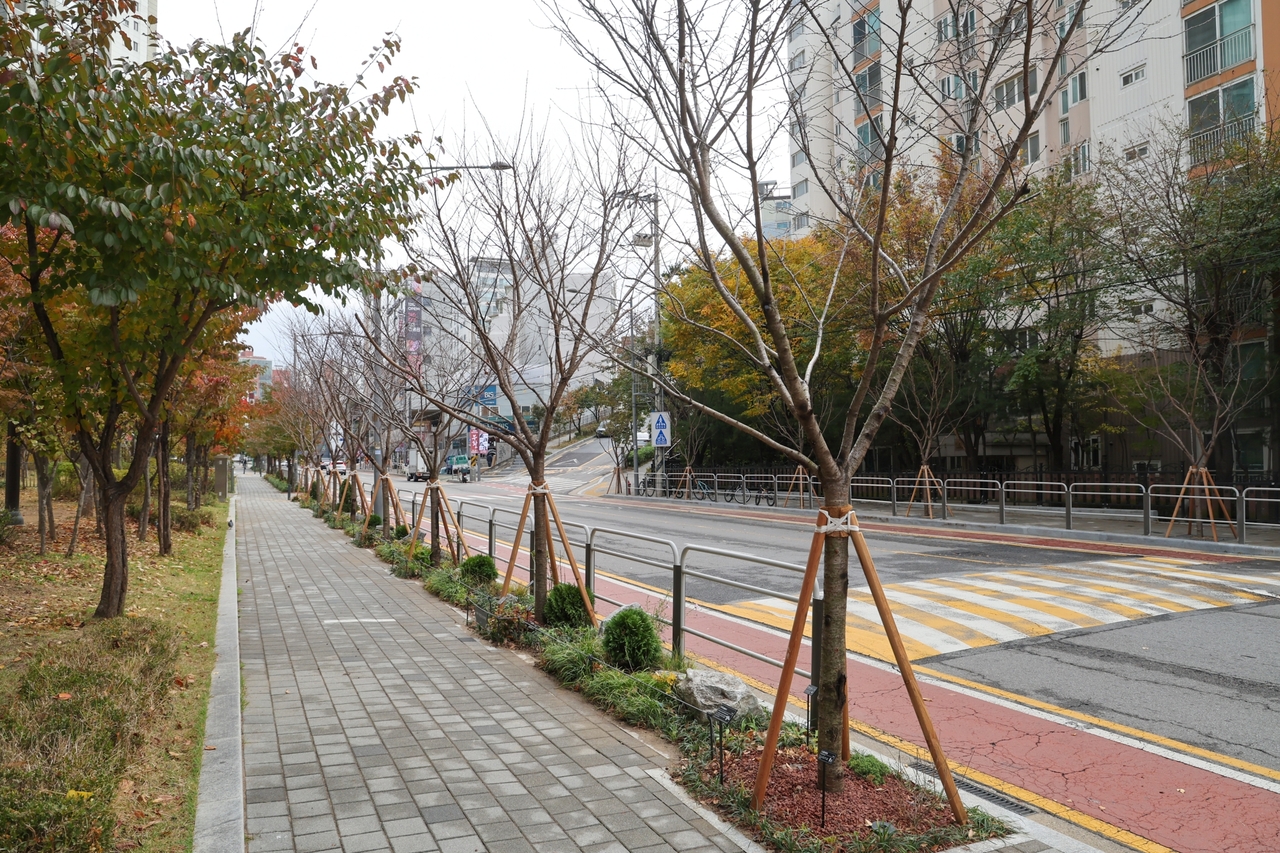
The district swapped out persimmon street trees for king cherry trees to eliminate falling-fruit hazards and resident complaints, while planting shrubs and perennials between trees to create a green corridor; the removed trees were transplanted to other green spaces.
Gwangseong-ro in Mapo-gu is set to become a new cherry blossom destination next spring.
Mapo-gu completed the replanting in October, replacing the street trees along Gwangseong-ro with king cherry trees to create a new cherry blossom corridor.
The area had long been lined with persimmon trees, which drew persistent complaints from residents every autumn as ripened fruit fell onto roads and sidewalks, creating walking hazards and raising fears of slip-and-fall accidents.
A December 2025 Seoul Metropolitan Government urban forest review recommended replacing the persimmon trees with king cherry trees to improve pedestrian safety, and residents of Sinsu-dong raised the same concern at a community meeting in July.
In response, the district replaced 34 persimmon and other street trees along an approximately 400-meter stretch of Gwangseong-ro near Sinsu-dong 455 with king cherry trees and planted additional trees in vacant spots, bringing the total to 42.
Between the trees, the district planted 77 shrubs across seven species — including nandina — and 912 flowering perennials across seven species, including hosta, to create a varied green corridor.
The removed trees were transplanted to green spaces near Culture Tank, preserving the existing stock while putting the trees to better use elsewhere.
The district said it hopes the project will ease pedestrian inconvenience and add a new springtime attraction to the Gwangseong-ro area.
"Even when replacing a single street tree, we must consider the surrounding landscape and residents' convenience together," Mapo-gu District Mayor Yoo Dong-gyun said. "We will continue listening to residents and improving the street environment to reduce everyday inconveniences."
seouldream01@heraldcorp.com