Average jeonse deposit reached 217.97 million won last year
Financial debt as share of deposit expanded to 21.3%
Rising jeonse prices and loan rates compound burden on renters
Jeonse deposits paid by tenants have risen nearly 35% over the past six years, with the loans taken out to cover those deposits growing even faster — surging more than 50% over the same period.
With jeonse prices continuing to climb this year and rising loan rates compounding tighter financial regulations, concerns are mounting that the housing cost burden on tenants could worsen further.
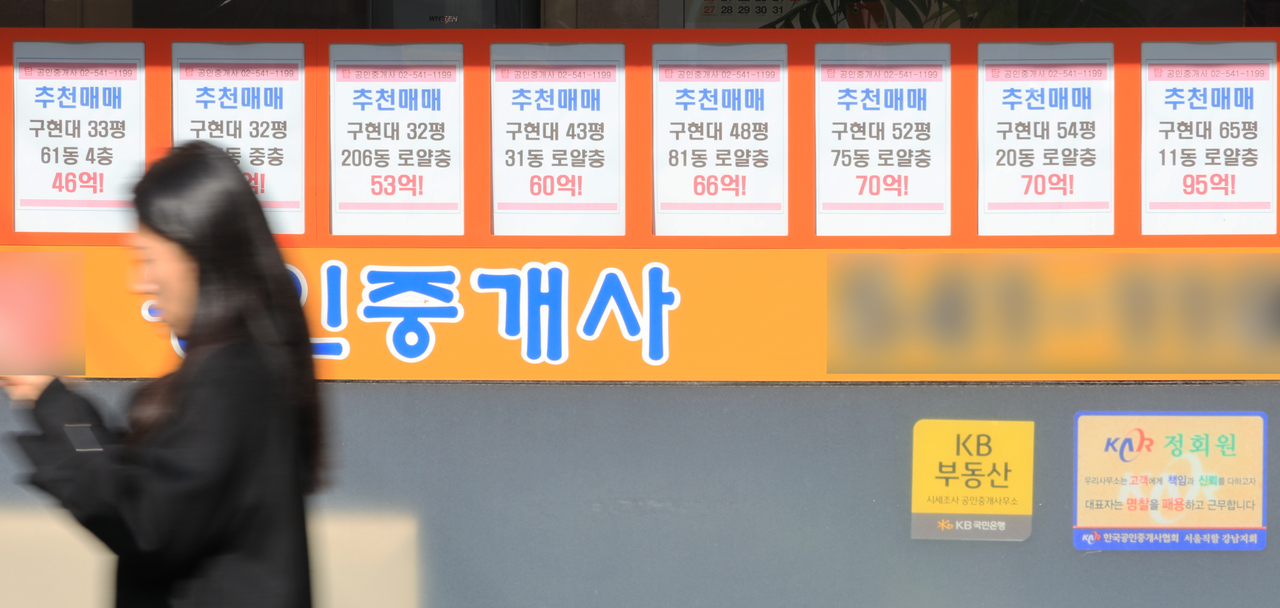
The average jeonse deposit paid by tenant households last year stood at 217.97 million won ($164,000), according to an analysis of microdata from the Ministry of Statistics' Household Finance and Welfare Survey released Sunday.
That marks an increase of 56.35 million won, or 34.9%, from 161.62 million won in 2019 — the earliest year for which microdata analysis is available online. The average jeonse deposit rose every year during the survey period, surpassing 200 million won for the first time in 2023.
As deposits climbed, tenants grew more reliant on borrowing. The average amount households took out in secured and unsecured loans from financial institutions to cover their jeonse deposits rose from 30.33 million won per household in 2019 to 46.39 million won last year — an increase of 16.06 million won, or 53.0%, over six years. That growth rate outpaced the rise in deposits by 18.1 percentage points over the same period.
The share of financial debt incurred for deposit purposes within total jeonse deposits also expanded, rising 2.5 percentage points from 18.8% in 2019 to 21.3% last year. As deposit burdens have grown, tenants have become increasingly dependent on institutional borrowing to meet them.
However, the pace of loan growth has shown signs of slowing in recent years. Debt taken on to cover jeonse deposits posted double-digit annual growth rates from 2020 to 2022, but the increase narrowed sharply to 0.4% in 2023. The balance then fell 2.1% in 2024 and 1.0% last year, marking two consecutive years of decline.
Analysts suggest that rising interest rates during that period increased the cost of jeonse loans, while reverse-jeonse situations — where market values fall below the deposit amount — emerged in some areas, dampening demand for new borrowing. A growing number of households opting for monthly rent or semi-jeonse arrangements instead of traditional jeonse is also seen as a contributing factor.
The concern now is that upward pressure on jeonse prices is building again this year even as borrowing conditions deteriorate. With both jeonse and monthly rent prices rising, higher loan rates and tighter regulations are expected to make it even harder for tenants to secure the funds needed for deposits.
According to the KB Housing Market Review for October 2026, published by KB Financial's management research institute, national housing jeonse prices rose 0.32% month-on-month in September — a faster pace than the 0.30% gain recorded in August. The Greater Seoul area posted a 0.56% increase, with Seoul and Gyeonggi Province rising 0.64% and 0.59%, respectively.
The institute attributed the price gains to a shrinking supply of newly completed housing units, a rise in existing tenants exercising their contract renewal rights, and an influx of would-be homebuyers shifting into the rental market.
The jeonse and monthly rent consumer price index compiled by the Ministry of Statistics rose 1.4% year-on-year last month — the highest rate of increase since December 2022.
Jeonse loan interest rates are adding to the strain. Bank of Korea monetary and financial statistics show that the average rate on new jeonse loans extended by deposit-taking banks fell to 3.70% per annum in May last year before reversing course. By September this year, the rate had climbed to 4.57% — up 0.87 percentage points from the May last year trough.
y2k@heraldcorp.com