Monthly rent inflation reaches highest level in nearly 13 years
Loan repayment burden grows as interest rates rise
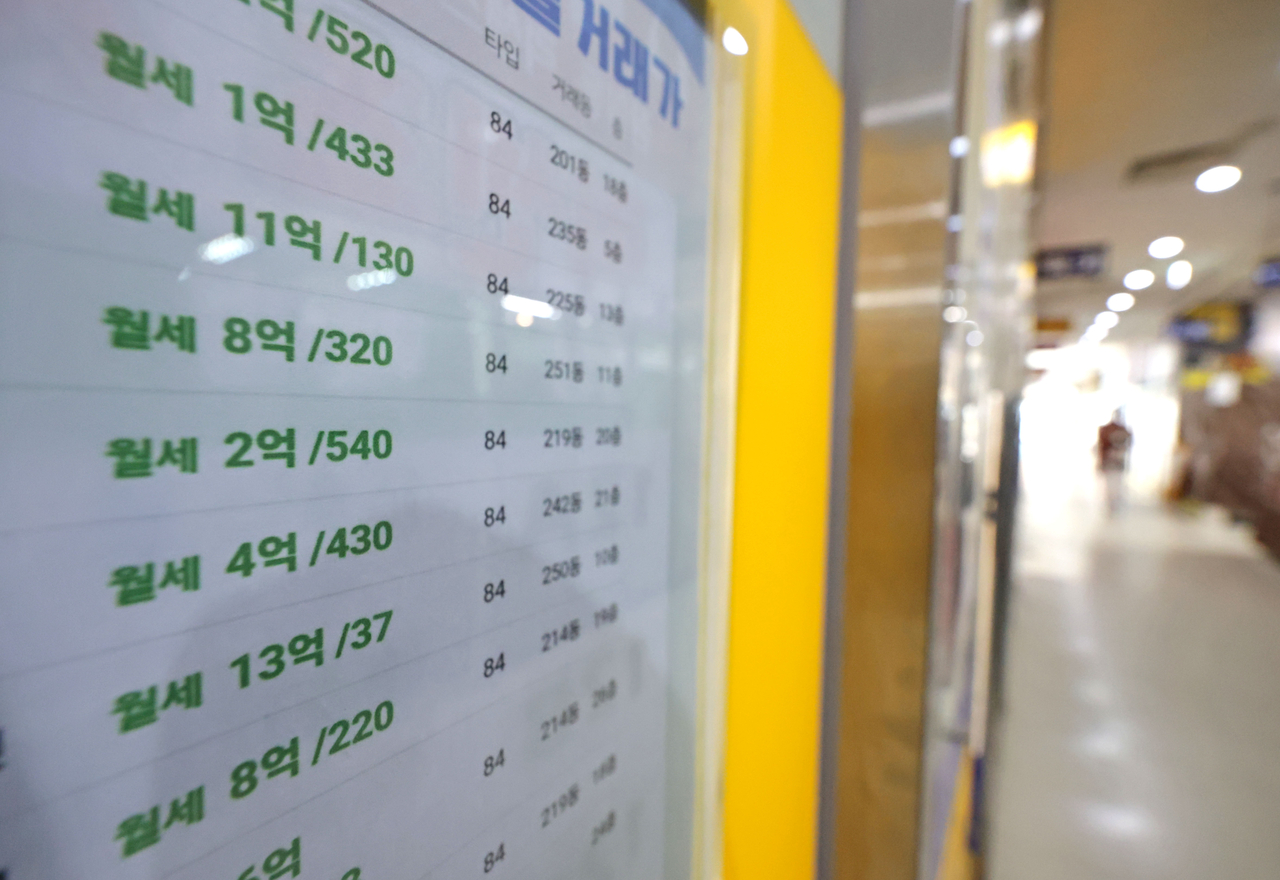
Jeonse and monthly rent prices rose at their fastest pace in nearly four years last month, prompting concerns that housing costs could increasingly constrain household spending. Many renters are believed to have taken out loans to cover their deposits during the current period of rising interest rates.
Data from the Korean Statistical Information Service (KOSIS), operated by the Ministry of Statistics, showed Sunday that the consumer price index for jeonse and monthly rent rose 1.4 percent year-on-year last month.
The Ministry of Statistics surveys about 11,000 jeonse and monthly rent households nationwide to track rental inflation. The index reflects average housing cost trends across both existing and new lease contracts.
Compared with standard rental price indices that track only new contracts, the index incorporates actual transaction price changes with a lag and tends to show smaller fluctuations.
Last month's 1.4 percent increase was the largest since December 2022, when the rate also stood at 1.4 percent. The index had dipped into negative territory — minus 0.1 percent in December 2023, minus 0.2 percent in January 2024 and minus 0.1 percent in February 2024 — before returning to zero in March and April 2024. It climbed to 0.1 percent in May of that year and has risen consistently since.
This year, the rate held at 0.9 percent from January through March before edging up to 1.0 percent from April through June. It then accelerated to 1.1 percent in July, 1.2 percent in August and 1.3 percent in September, marking four consecutive months of expansion.
Four or more consecutive months of acceleration in the jeonse and monthly rent inflation rate had not been seen since the January 2021 (0.7 percent) to May 2021 (1.3 percent) stretch — about five and a half years ago, counting from this July when the current run began.
That earlier surge was driven by a revised lease law enacted in late July 2020 that introduced contract renewal rights and rent increase caps. The legislation led to a rise in lease renewals, locking up jeonse supply and pushing jeonse prices sharply higher.
Breaking down the figures, monthly rent inflation came in at 1.5 percent last month, the highest since December 2013, when it also stood at 1.5 percent. Tighter regulations on jeonse loans have contributed to a shortage of jeonse properties, accelerating a shift from jeonse to monthly rent arrangements and driving up monthly rent prices.
Jeonse price inflation stood at 1.4 percent, the highest since February 2023, when it reached 1.6 percent. By region, Ulsan posted the steepest jeonse and monthly rent increase at 2.4 percent, followed by Seoul at 2.1 percent and Sejong at 1.6 percent — the only three cities above the national average.
Ulsan in particular has held the top spot for four consecutive months, having been the only city nationwide to record a jeonse and monthly rent increase above 2 percent back in July. A shortage of available units, driven in part by a decline in new housing supply, has fueled the upward trend there throughout the year.
Seoul's rate climbed from 1.7 percent in July and 1.8 percent in August to 2.0 percent in September, and has now held above 2 percent for two consecutive months, trailing only Ulsan.
Sejong's jeonse and monthly rent inflation was limited to below 1 percent through June but has been picking up speed since July. Analysts attribute the acceleration to expectations of a housing shortage stemming from the relocation of public institutions to the city.
Many renters are believed to have relied on loans from financial institutions to cover their deposits. Last year, the average deposit for jeonse households stood at 217.97 million won ($164,000), up 34.9 percent from 161.62 million won in 2019.
The amount jeonse households borrowed for deposit purposes — combining secured and unsecured loans — rose 53.0 percent over the same period, from 30.33 million won to 46.39 million won, an 18 percentage point faster pace than the rise in deposits themselves.
The combination of rising rental costs and higher interest rates is expected to have increased the financial burden on non-homeowning renters. Loan interest repayments could act as a drag on household consumption.
The concern comes as private consumption growth has lagged behind overall economic expansion, with some analysts warning that a recovery in consumer spending may become even more elusive going forward.
The Korea Development Institute (KDI), in an issue analysis report titled "The Impact of the Recent Semiconductor Boom and Rising Oil Prices on Private Consumption," said "the sharp recent rise in market interest rates and low wage growth in non-semiconductor sectors could constrain households' capacity to spend."
oskymoon@heraldcorp.com