Democratic Party: 'Police must investigate thoroughly, opportunity must be fair for all'
Reform Party: 'Cheating methods grow more sophisticated; time to rethink what exams measure'
The top passer of the 63rd national tax accountant examination has turned self in to police, admitting to using electronic devices and generative AI to cheat. The case has drawn swift reactions from political parties, with lawmakers calling for a thorough investigation and urgent reforms to exam oversight.
An Tae-hun, a standing deputy spokesperson of the Democratic Party of Korea, said at a briefing on Saturday that the incident was "shocking," adding that AI technology continues to evolve and exam supervision cannot afford to stand still.
"Some people stayed up all night studying for years, and others gave up their livelihoods to prepare for this exam," An said. "Cheating that exploits advanced technology has undermined their sweat, effort and right to a fair opportunity. What is even more troubling is that the existing exam supervision system failed to catch this kind of misconduct."
An called on police to uncover the full truth through a rigorous investigation and urged relevant authorities to hold those responsible accountable under the law, while also identifying and addressing gaps in the exam oversight system. "No matter how much AI advances, the value of fairness cannot change," An said. "Technology can reshape the future — but the opportunity to reach that future must be fair for everyone."
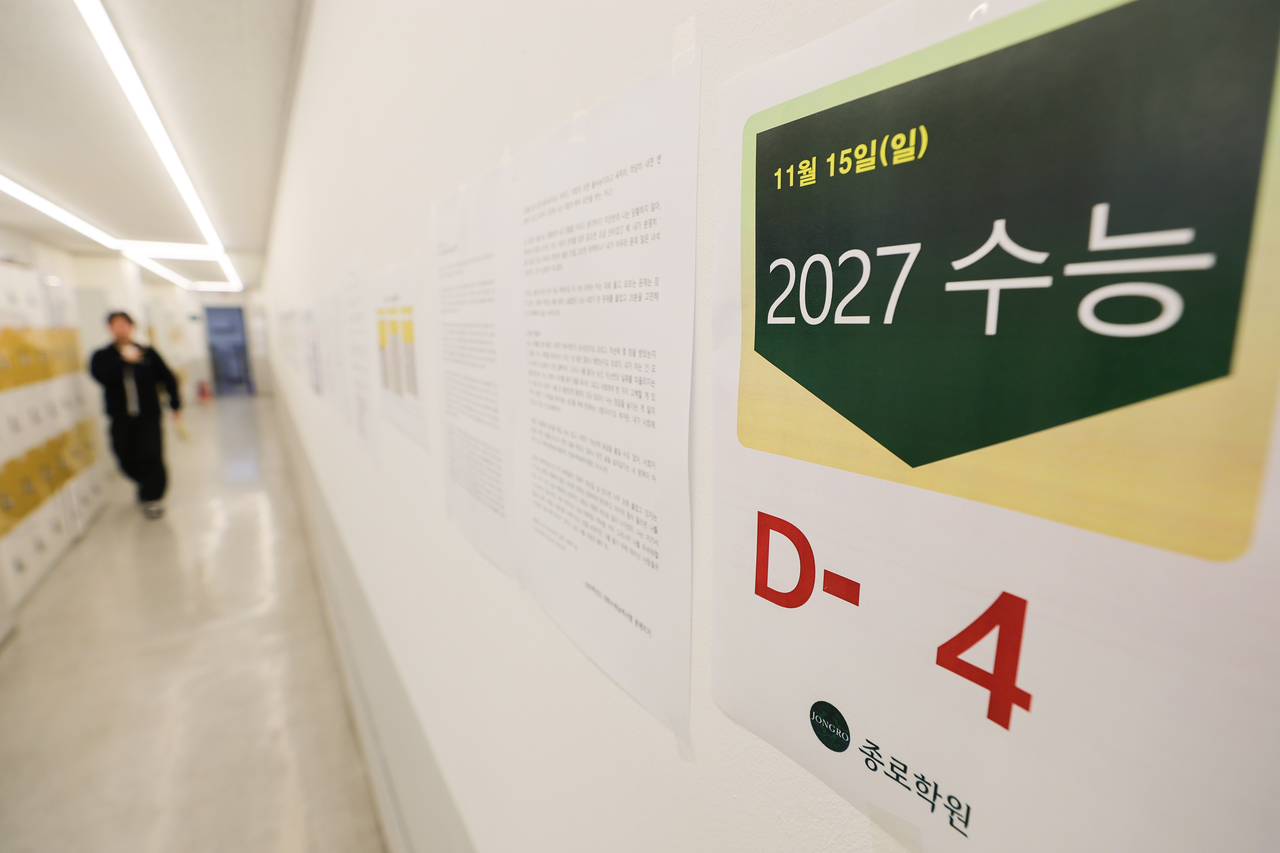
Lee Dong-hun, chief spokesperson of the Reform Party, also weighed in, noting that the self-confession came just days before the College Scholastic Ability Test. "When trust in exams is shaken, we must ask again what exams are fundamentally for," Lee said.
Lee described exams as "a social compact — not merely a procedure for selecting correct answers, but a commitment to compete under the same rules and conditions and to accept the outcome." He added that when that compact breaks down, the damage extends beyond one individual's misconduct to cast doubt on the entire system of selecting people through examinations.
"Those who cheat must face appropriate legal and social consequences," Lee said. "But checking eyeglass frames and tightening supervision at exam venues alone cannot solve this problem. If the format of exams stays the same, cheating methods will only grow more sophisticated and public distrust will deepen."
Lee pressed for more fundamental questions to be asked. "We live in an era where AI can produce correct answers at extraordinary speed and retrieve any knowledge on demand — so should we still be measuring a person's ability by how many correct answers they can select within a fixed time?" he said. "We need to evaluate not just the ability to memorize knowledge and choose answers, but also the ability to scrutinize the basis of AI-generated answers, identify errors, define problems and take responsibility for judgments."
Lee said ensuring that students and parents can trust the fairness of exams is important, but warned that chasing ever-evolving cheating methods by inspecting students' eyeglass frames is not enough to preserve that trust. "We must move beyond assessments skewed toward memorization and speed, and ask anew what exams in the AI era should actually measure," he said.
Under current rules, using unauthorized electronic devices or AI to complete answers in a national licensing examination constitutes cheating and is subject to criminal punishment.
The suspect, identified only as A, is reported to have placed first in both the first- and second-stage tax accountant exams held in April and July, respectively. The controversy began after online communities flagged the unusually high scores A had disclosed in a media interview while introducing the suspect as the top passer.
bigroot@heraldcorp.com