First-ever US-China-Russia trilateral summit set for Thursday in Shenzhen
Meeting may signal weakening of democracy-vs-authoritarianism divide
Trump seeks momentum after midterm drubbing
Strategic gains for China and Russia in the summit itself
Concerns mount over Korean Peninsula security being decided without Seoul
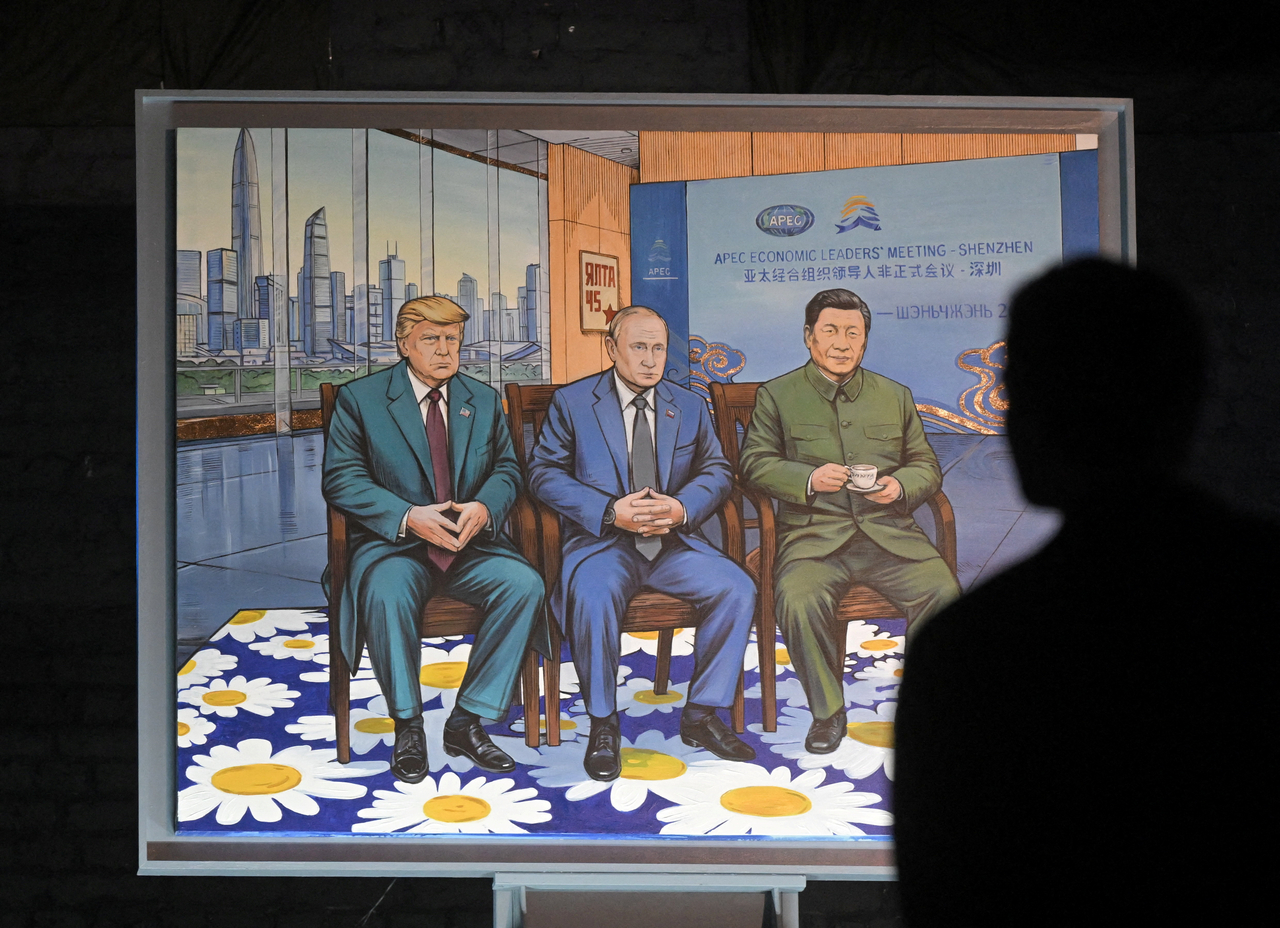
The first-ever trilateral summit among the leaders of the United States, China and Russia — set to take place on the sidelines of the Asia-Pacific Economic Cooperation forum — is stoking fears that great-power deal-making could upend the existing international order.
Analysts say the decades-old divide between the democratic and authoritarian blocs, a defining axis of the post-World War II order, now stands at a critical crossroads. Should the summit produce discussions with major implications for security on the Korean Peninsula, observers warn it could amount to a second Yalta Conference.
The historic US-China-Russia trilateral meeting is scheduled for Thursday (local time) in Shenzhen, China, on the sidelines of the APEC summit. The idea originated with Russian President Vladimir Putin, who proposed it to US President Donald Trump last month.
Putin's stated aim was to discuss ending the war in Ukraine among the major powers — without Ukraine at the table. For Putin, who has been largely isolated from the international community since the invasion, the summit also offers a chance to stand alongside the leaders of the United States and China and reassert Russia's status as a great power before a global audience.
Trump, who has been eyeing nuclear arms reduction among the three powers, embraced the proposal. With the Republican Party facing a deepening midterm defeat, Trump appears to have calculated that a high-profile summit with the world's so-called strongmen could deliver a significant diplomatic win — and potentially draw China into a framework for nuclear arms reduction negotiations.
Analysts also believe Trump factored in the potential for China and Russia to play a key role in intensifying pressure on Iran. Since the Republican midterm losses, voices within conservative circles in the United States have warned that failure to end the Iran war could jeopardize the party's prospects in the 2028 presidential election.
The summit can also be read as Trump's attempt to recover politically and diplomatically after a bruising midterm showing that weakened his domestic standing and dented his international image. Observers note that Trump's well-documented admiration for strongman leaders likely played a role as well.
Xi Jinping agreed to the trilateral format despite having little appetite for either nuclear arms reduction talks or discussions on ending the war in Ukraine.
Hal Brands, a professor at Johns Hopkins University, wrote in Foreign Policy that China likely agreed because it had received "sufficient assurances that nothing of substance would come out of the meeting."
Still, the summit offers Xi an advantage: with Russia — effectively on China's side — at the table, Beijing can leverage a two-against-one dynamic against Washington and reinforce its own standing as a major power.
With all three sides finding reasons to proceed, the first-ever US-China-Russia summit is now a reality — and observers say it could become a symbolic moment marking the erosion of the democracy-versus-authoritarianism divide.
For more than 80 years since World War II, the United States rallied democratic allies in the West and Asia against authoritarian regimes. Now, Washington itself appears to be undermining that very posture.
Analysts warn the development could bring significant changes to the international order sustained by an alliance of democratic nations bound by shared values.
Even if the summit produces no concrete agreements, if it is not a one-off event, the foundations of the existing international order could continue to erode under the weight of great-power transactional diplomacy.
Opposition in the United States has been fierce since the idea was first floated. Particularly sharp criticism has centered on the possibility that the end of the Ukraine war could be negotiated without Ukraine present — with many warning the summit risks becoming a "new Yalta."
Washington says the trilateral meeting will focus on nuclear arms reduction and the Iran war, and that Ukraine will not be on the agenda — a position that appears designed to blunt domestic criticism that Trump could fall into Putin's trap. Even so, it is difficult to rule out Putin finding some way to bring Ukraine into the discussion.
A more immediate concern for Seoul is that Korean Peninsula security issues could be drawn into the great-power bargaining.
The New York Post, which first reported that the trilateral summit would be held Thursday, cited a White House official as saying North Korea could also come up. The remark may reflect a US intention to put North Korea on the agenda.
Trump, who wants to restart US-North Korea dialogue, may ask the Chinese and Russian leaders — both of whom wield considerable influence over Pyongyang — to help persuade North Korean leader Kim Jong-un to engage.
However, the three powers have divergent calculations on North Korea, making it difficult to predict which direction any discussion might take. There are concerns that Trump, known for his impulsive style, could prioritize securing a diplomatic win for the United States and allow discussions to proceed in ways that disadvantage South Korea.
That is precisely why the South Korean government is watching the summit with close attention. A senior official at South Korea's Ministry of Foreign Affairs said, even before the summit was officially announced, that Seoul had made its position clear to both Washington and Beijing: "The US-China-Russia meeting must not become a second Yalta Conference, and South Korea's national interests on the Korean Peninsula issue cannot be compromised."
It remains unclear what form any announcement from the summit will take, but North Korea could be discussed without any mention of denuclearization.
Kim Jong-un, who wants his country recognized as a nuclear state, has repeatedly rejected denuclearization talks, and Trump has shown little inclination to set denuclearization as the ultimate goal of his North Korea diplomacy. The Chinese and Russian leaders already spoke with one voice in opposing sanctions on North Korea in a joint statement from their May summit, without any reference to denuclearization.
mokiya@heraldcorp.com