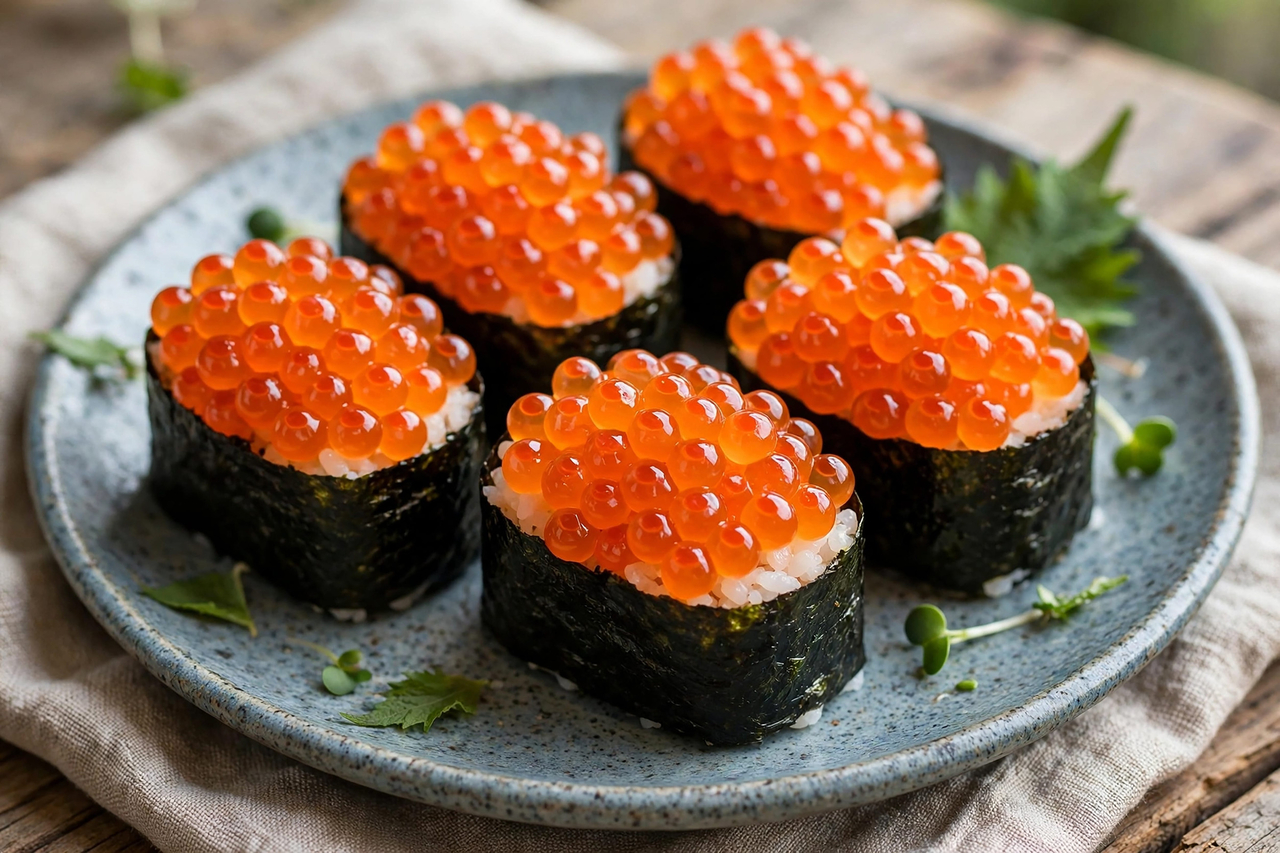
Ikura, the salmon roe long found at Japanese sushi restaurants and onigiri shops, is at risk of disappearing from menus as wild salmon catches plunge in Russia and Alaska, deepening a supply crunch.
Russia's major wild salmon catch this year fell 60 percent from last year, the Financial Times reported Saturday (local time). Alaska, another key source, also came in more than 20 percent below forecasts.
Industry players expect prices to spike sharply as the volume of salmon roe hitting the market this month falls well short of demand. Kaeriyama Masahide, an emeritus professor at Hokkaido University, said "an unprecedentedly rapid decline has occurred in Russia over the past two years."
Experts say the drop in wild salmon catches will inevitably translate into a shortage of salmon roe. Farmed salmon are raised primarily for their flesh and are often harvested before females can fully mature their eggs, leaving little room to make up the shortfall through aquaculture.
El Niño and rising sea temperatures are among the factors blamed for the decline in wild salmon populations. Russia's national fisheries research institute, VNIRO, has found that El Niño contributed to the drop in wild salmon catches.
Warming seas are also altering salmon migration routes. Hokkaido in Japan and British Columbia in Canada were once prime habitats, but salmon have increasingly been moving toward Alaska and Russia in recent years. As a result, Hokkaido's salmon catch has fallen more than 90 percent over the past two decades, the Financial Times reported.
The problem is that demand for ikura is growing even as supply shrinks. A signature topping at sushi restaurants and izakaya, ikura has seen rising overseas demand as Japanese cuisine gains global popularity. If the supply crunch persists, analysts warn the broader Japanese fishing industry — worth around $22 billion — could face serious damage.
Rising prices are also straining the restaurant industry. Yao Masaki of seafood distributor Toyosuichiba.com said the price of a 250-gram salmon roe product the company sells could soon climb to between 16,000 and 20,000 yen ($100–$125) — up to 10 times what it cost a decade ago.
"We no longer know whether consumers will buy the product at this price," Yao said, adding that ikura could quietly disappear from some sushi course menus without explanation.
Budget conveyor-belt sushi chains have already begun substituting trout roe for salmon roe. Trout roe is smaller and milder in flavor and texture, but it costs less. Even that substitute is getting more expensive, however, deepening the industry's dilemma. One Tokyo izakaya said it would stop selling ikura rice bowls if the price of trout roe rises to 15,000 yen per kilogram this month.
Some establishments are considering dropping the item from their menus altogether rather than absorbing the cost. Onigiri Bongo, a rice ball shop in Tokyo that has been in business for 66 years, is weighing whether to discontinue its popular ikura onigiri. The preference is to remove the item rather than compromise on quality as ingredient costs rise.
The global popularity of Japanese cuisine is compounding the supply crunch. Upscale Japanese restaurants in the United States have joined the scramble for ikura, intensifying competition over a shrinking pool of supply.
Expanding aquaculture is being discussed as a potential solution. Japanese fisheries company Okamura Food plans to boost salmon roe production by focusing on trout breeds with high egg yields at Nordic fish farms.
bbo@heraldcorp.com