Delegation participates in ICCN forum and annual report launch, showcasing Korea's standing citizens' climate assembly
Bilateral meetings held with climate policy bodies from UK, Australia and others to discuss international climate governance cooperation
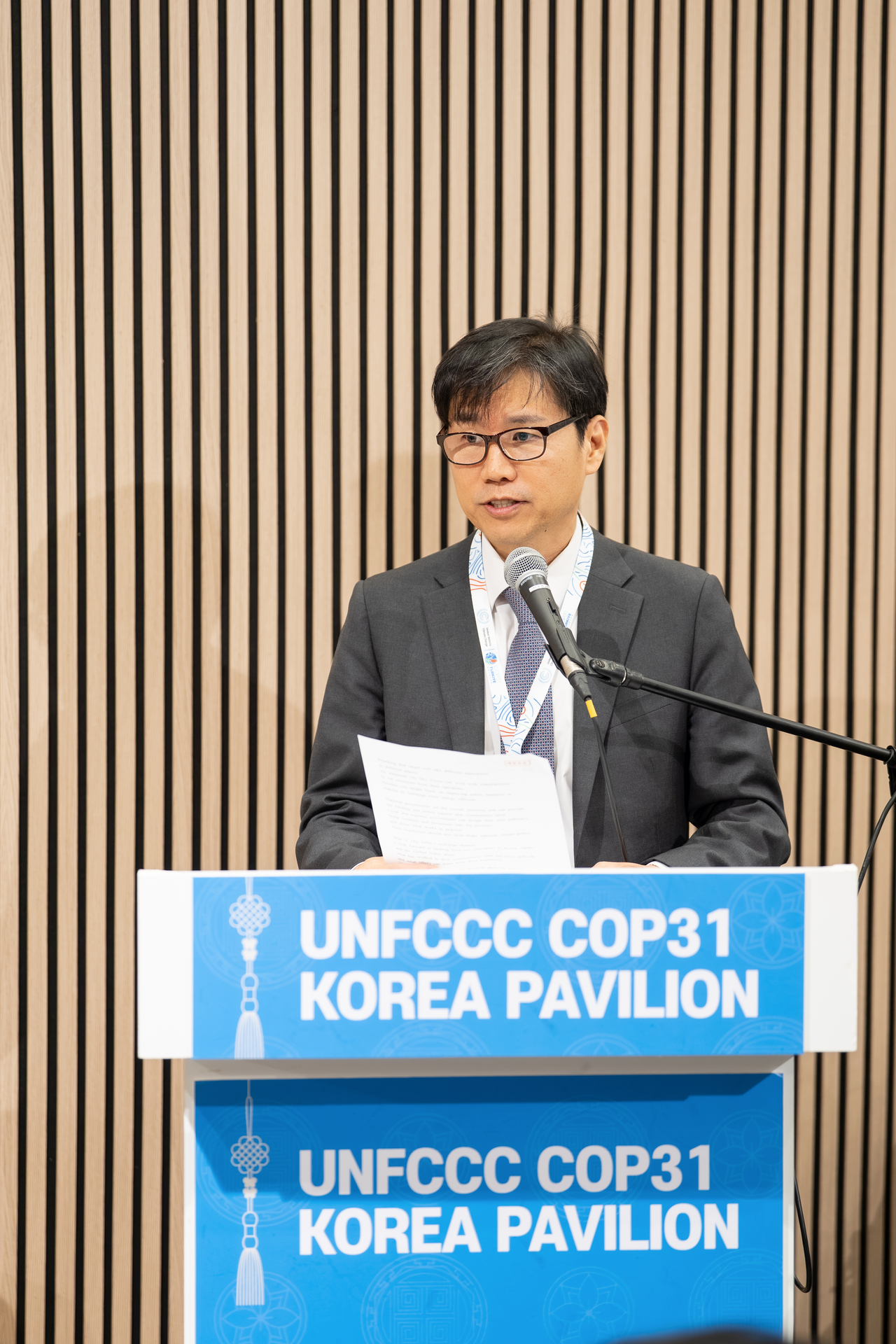
A delegation from the Presidential Commission on Carbon Neutrality and Green Growth attended the 31st Conference of the Parties to the UN Framework Convention on Climate Change in Antalya, Turkey, sharing South Korea's experience implementing climate policy with the international community and discussing ways to strengthen cooperation on climate action with major countries.
The commission said Monday it organized four side events on the sidelines of COP31 and carried out a range of activities to expand international climate governance cooperation, including participating in the International Climate Commissions Network (ICCN) forum and holding bilateral meetings with climate policy bodies from key countries.
At a side event titled "Local Climate Action for NDC Implementation," held Tuesday, representatives from the International Council for Local Environmental Initiatives, the Local Energy and Climate Action Partnership and local government officials from South Korea and abroad gathered to discuss ways to meet climate targets through central-local government cooperation and share examples of climate action tailored to regional conditions.
A side event on Wednesday focused on the legal codification of medium- and long-term greenhouse gas reduction pathways toward carbon neutrality by 2050. The event introduced South Korea's Constitutional Court ruling on climate litigation and the country's subsequent experience enshrining a long-term emissions reduction pathway into law, with officials from the UK, Finland, Canada, the EU and Australia sharing their own national systems and policy cases.
Participants particularly discussed the importance of legal and institutional frameworks for protecting the rights of future generations and ensuring the consistency and continuity of climate policy.
At another side event held the same day on expanding international carbon credit cooperation, participants shared examples of international mitigation projects under Article 6 of the Paris Agreement — including an electric vehicle transition project in Cambodia, a landfill greenhouse gas reduction project in Mongolia and a forestry sector mitigation project in Honduras.
Officials from partner countries including Nepal, Mongolia and Honduras, along with domestic and international private-sector companies, took part in the event to explore challenges and solutions for scaling up international mitigation projects and boosting private-sector participation.
A side event on Thursday showcased outcomes from the 2026 Net Zero Friends project, highlighting cases in which youth climate action ideas were translated into concrete initiatives through cooperation between companies and government.
Participating companies, including Amorepacific and Pulmuone, joined youth participants in sharing their experiences with the Net Zero Friends project, underscoring the importance of engaging future generations and fostering public-private cooperation in addressing the climate crisis.
The commission also participated in the ICCN forum, where it discussed with climate policy bodies from various countries ways to advance climate governance and strengthen policy implementation.
Notably, at the ICCN annual report launch held Friday, South Korea's standing citizens' climate assembly — launched in May — was featured in the annual report.
As co-chair of the ICCN climate governance working group, the commission plans to continue facilitating the sharing of policy experiences and institutional innovations among national climate bodies and to expand its role in international climate governance discussions.
Commission co-chair Lee Chang-hoon held four bilateral meetings with heads of climate policy bodies from major countries to discuss ways to improve the effectiveness of climate policy and strengthen international cooperation.
In meetings with Matt Kean, chair of Australia's Climate Change Authority; Rick Smith, president of the Canadian Climate Institute; and Camila Fernandez, chair of Chile's Scientific Advisory Committee on Climate Change, the parties shared their respective experiences on science-based policy advice, the implementation of medium- and long-term climate targets and the role of independent climate policy bodies, and discussed ways to deepen cooperation through the ICCN.
Lee also met with Rachel Kyte, the UK's Special Representative for Climate, to exchange views on the key agenda items both countries are prioritizing at COP31 and agreed to further expand bilateral cooperation in addressing the international climate crisis.
"Our participation in COP31 has been an opportunity to share South Korea's experience in climate policy and governance innovation with the international community and to strengthen our cooperative network with climate policy bodies of major countries," the commission said. "We plan to make active use of international cooperation channels to expand policy exchanges and joint collaboration with various countries, and to ensure that the outcomes of international cooperation translate into stronger domestic climate policy implementation and meaningful climate action by the international community."
thlee@heraldcorp.com