Yongsan-gu holds its second children and youth policy proposal event, covering school commute safety to study space support
Six teams present everyday-life proposals; district to review feasibility before reflecting ideas in policy
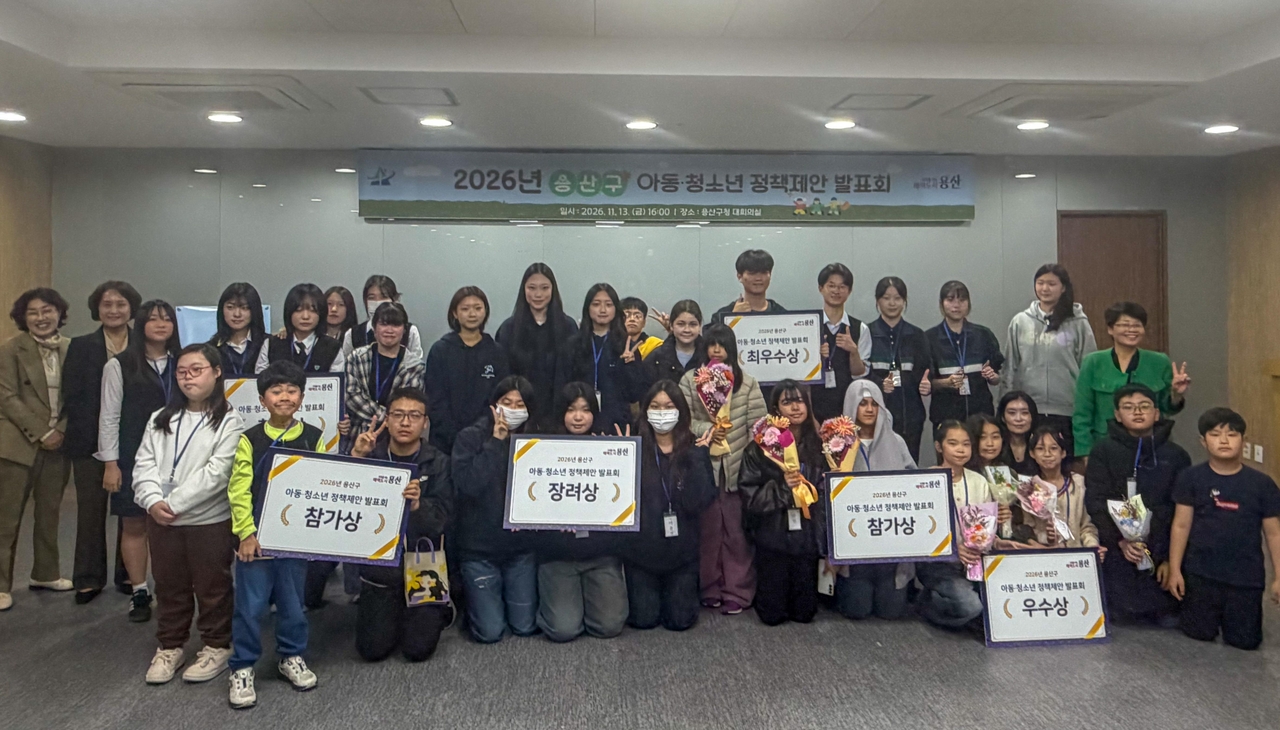
Children and teenagers in Seoul's Yongsan-gu identified problems in their community and proposed policy solutions to address them at a district-organized event.
Their ideas ranged from installing CCTV cameras and emergency call buttons along school commute routes to subsidizing study cafe fees for teenagers and expanding career-exploration programs for children with disabilities.
Yongsan-gu held the "2026 Children and Youth Policy Proposal Event" at the district office's main conference room on Friday.
Now in its second year, the event drew 30 participants across six teams, spanning early elementary school students through high schoolers. The program was designed to give children and teenagers a chance to take part in local governance and build their capacity for civic engagement by turning their own ideas into concrete policy proposals.
Participants were recruited through an open call in August. Professional facilitators then visited each team to guide them through research, discussion, drafting proposals and rehearsing presentations, helping the groups develop their ideas into actionable policy recommendations.
Every proposal presented that day was rooted in everyday experience. Suggestions included installing CCTV cameras and emergency call buttons to improve safety on school commute routes and in alleyways, and creating a peer mentoring program to help multicultural students adjust to school life, with incentives for student mentors.
Teams also proposed improvements to cultural and educational conditions for young people — building a multipurpose youth cultural facility inside Kkumnamu Children's Park, subsidizing up to 50 hours a month of study cafe use for teenagers, and redesigning the district office website so that youth support benefits are easier to find in one place. Expanding career and vocational experience programs for children with disabilities was another key proposal.
A notable feature of the event was a review process designed to give the proposals a genuine path to becoming policy. Before the presentations, relevant district departments conducted an initial review, and a policy task force made up of Grade 5 or higher officials discussed the feasibility of each proposal and ways to refine them.
Judging combined a pre-event policy assessment by the task force, which accounted for 70 percent of the score, with a presentation evaluation by an external panel on the day, worth the remaining 30 percent. Three teams received merit awards and three received certificates of appreciation.
The district plans to compile a booklet containing the proposals, departmental review comments and activity photos for distribution. Through this, it aims to share the local issues seen through the eyes of children and teenagers and explore ways to incorporate each proposal into policy.
"It is meaningful that the children who will lead Yongsan's future directly proposed ideas for improvements they felt in their daily lives," Yongsan-gu District Mayor Kim Kyung-dae said. "We will continue to listen closely to the diverse voices of children and teenagers as we work to build a child-friendly environment."
seouldream01@heraldcorp.com