Brazilian researchers find cats meow four times more in front of people than alone — and only stare at the door when left by themselves
Cats embed cries in purrs to beg for food and can even tell their owner's voice apart from a stranger's
A look at what can happen to our dogs and cats — exploring the policies, research and global cases behind the stories.
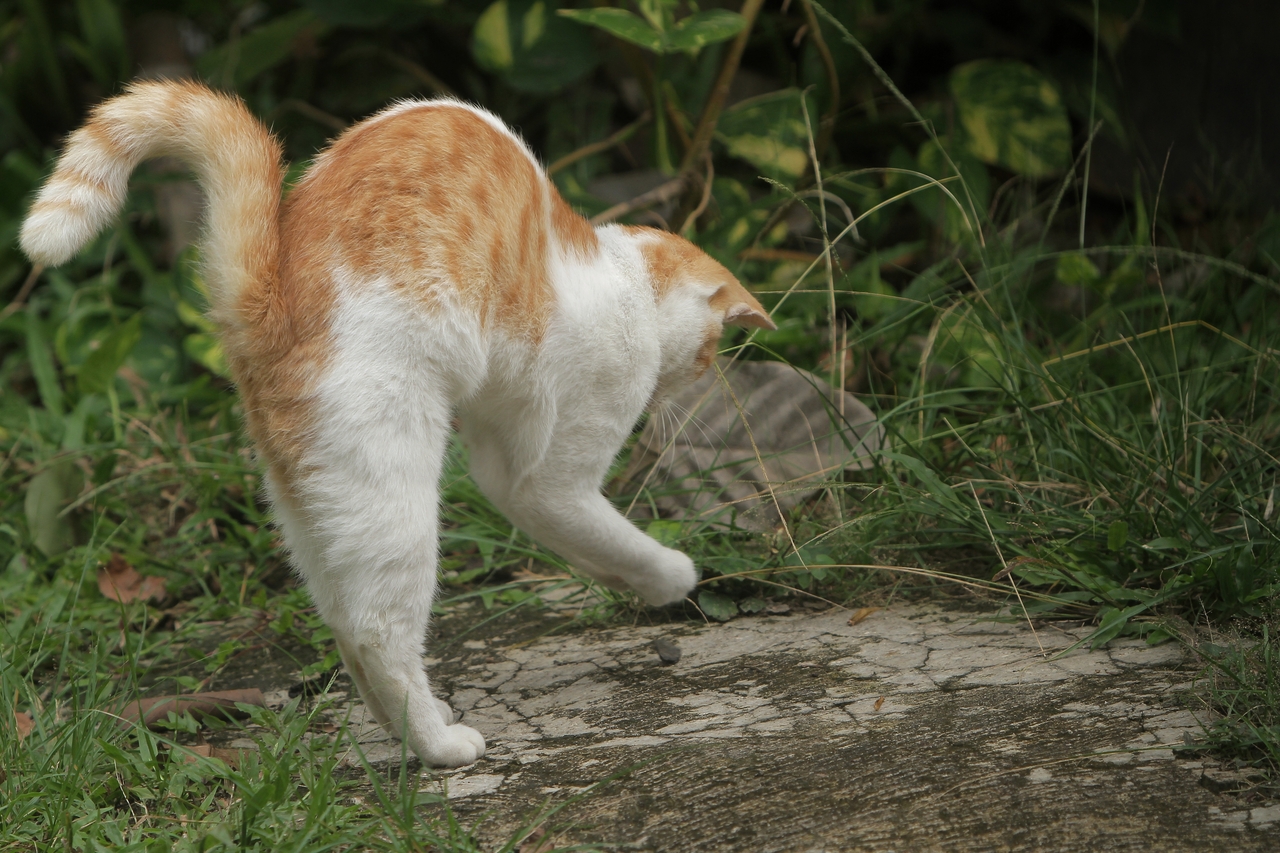
A new study finds that when a cat meows at a person, it is not talking to itself — it is sending a signal asking for help.
Cats are often thought of as aloof, yet the number of cat-owning households in South Korea keeps rising. According to KB Financial's "2025 Korea Pet Report," the number of pet cats in the country stood at about 2.17 million at the end of 2024, up 9.2 percent from a year earlier, while the pet dog population fell for the first time — from about 5.56 million to about 5.46 million over the same period. The number of households keeping cats was estimated at about 1.37 million.
According to the science news outlet ScienceAlert, a research team led by Naila Fukimoto at the University of São Paulo in Brazil published a paper in the international journal Animal Behaviour confirming through experiments why cats meow in front of people.
The team recruited 38 cats whose owners reported they frequently vocalized around food, then placed each cat's favorite treat inside a small plastic box with holes. The cats could smell the treat but could not retrieve it on their own.
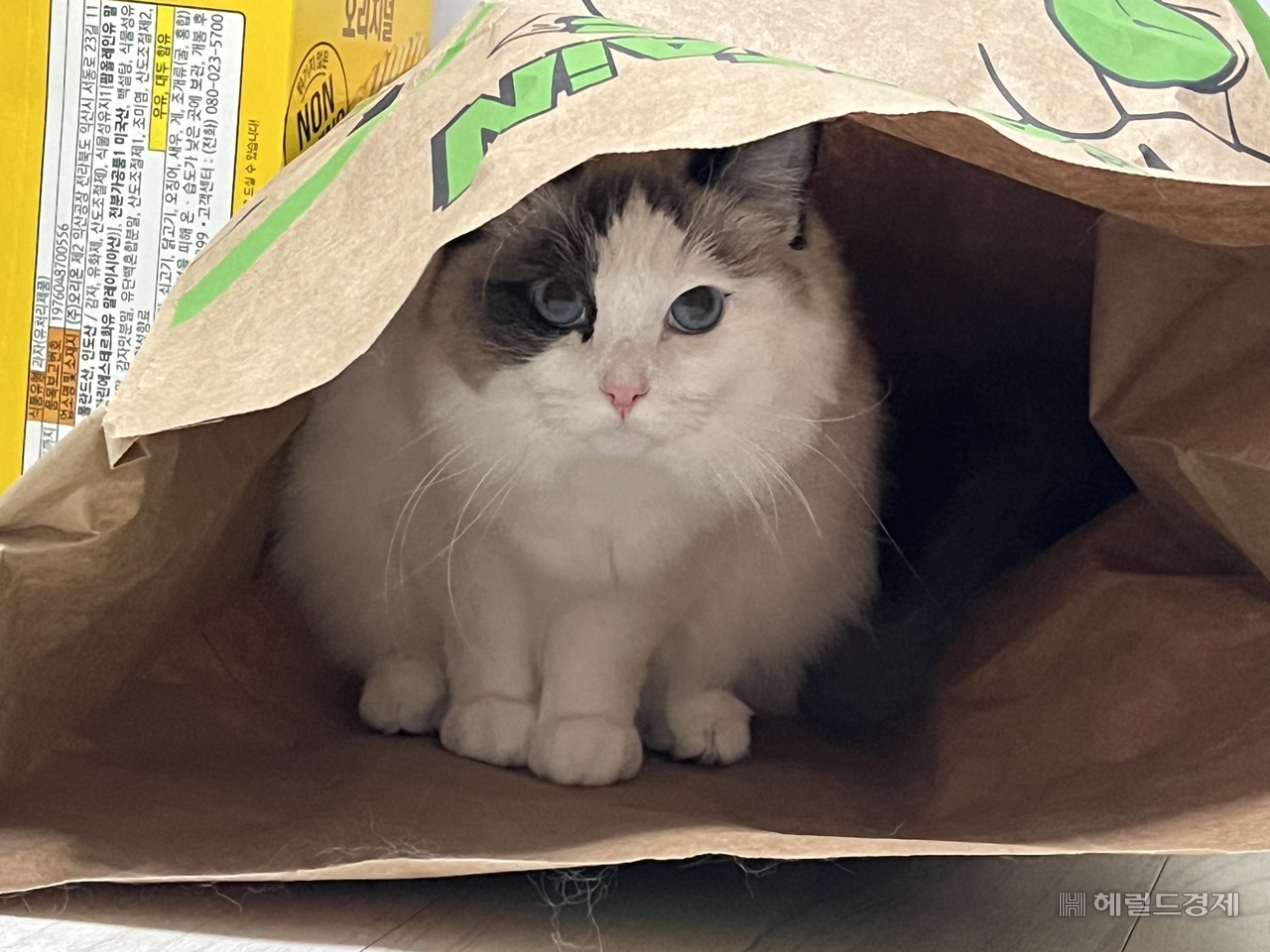
The researchers observed each cat's behavior for one minute under two conditions: with a person present in the room watching, and with no one in the room at all.
When a person was present, the cats meowed a combined 86 times; when left alone, they meowed only 20 times. The likelihood of a cat vocalizing with a person nearby was more than 16 times greater than when alone.
With a person in the room, the cats frequently looked at the person and alternated their gaze between the person and the treat box. When left alone, the cats tended to stand still and stare toward the door for long stretches. They appeared to be waiting for someone to come in and open the box.
"These results are consistent with meowing playing a communicative role in cat-human interactions," the team said. The researchers interpreted the meow not as an indiscriminate sound but as a targeted signal directed at a specific individual.
Cats hide a cry inside a purr to beg for food
Cats also manipulate people by concealing a cry inside a purr. A research team led by Karen McComb at the University of Sussex in the United Kingdom published a paper in the international journal Current Biology in 2009 analyzing what they called cats' "solicitation purr."
The team played recordings of cats purring while asking for food alongside purrs made in other situations and had people rate them. Listeners judged the food-solicitation purrs as more urgent and less pleasant than ordinary purrs. Even people who had never owned a cat responded the same way.
The secret was hidden inside the sound. Embedded within the low rumble of the purr was a higher-pitched cry, and the more prominent that cry, the more urgent listeners found the sound.
When the researchers removed the cry component from the recording, urgency ratings dropped sharply.
McComb concluded that cats learn to amplify the cry once they discover it works. The solicitation purr appeared more often in cats living one-on-one with an owner than in households with multiple cats.
Cats meow more in front of men than women
Research also shows that cats are selective about whom they meow at. A team led by Kaan Kerman at Bilkent University in Turkey published a paper in the international journal Ethology in November last year analyzing footage of 31 cat owners reuniting with their cats for 100 seconds immediately after returning home.
The cats meowed more when a male owner entered than when a female owner did. Even after accounting for the cat's sex, breed and the number of cats in the household, the owner's sex was the only factor that influenced the result.
The team suggested that women may talk to their cats more and pick up on their needs more readily, while cats may need to signal more loudly to capture a man's attention.
Kerman said the findings demonstrate "cats' ability to distinguish between bonded individuals and adjust their responses accordingly."
Cats are also selective listeners. A team led by Charlotte Duranton at the University of Paris Nanterre in France published results in 2022 in the international journal Animal Cognition from an experiment involving 16 indoor cats.
The researchers recorded both the owner and a stranger speaking in a high-pitched, cat-directed voice and in a normal adult-directed voice, then played the recordings for the cats while observing their ear and tail movements and pupil size.
Cats that had been listening to a stranger's voice gradually showed less and less reaction. Ten of the 16 cats perked up again when their owner's voice came on.
The cats responded most strongly to their owner speaking in the high-pitched, affectionate tone typically used with them, and reacted less when the owner spoke in a normal adult voice.
The team said "one-on-one relationships are important for cats and humans to form a strong bond."
A cat's attachment to its owner rivals that of a human infant
Research also suggests that the attachment cats feel toward their owners is comparable to that of a human baby.
A team led by Kristyn Vitale at Oregon State University in the United States published results in Current Biology in 2019 from an experiment in which cats were placed in an unfamiliar room with their owner for two minutes, left alone for two minutes, then reunited with their owner.
About 64 percent of the 70 kittens tested showed "secure attachment" to their owner — approaching and greeting the owner upon reunion while calmly exploring the surroundings. Adult cats showed a similar pattern, with about 66 percent displaying secure attachment. The secure attachment rate in human infants is about 65 percent.
Vitale said "the majority of cats use their owner as a source of comfort." Vitale added that the attachment both cats and dogs feel toward people may be an adaptation of the bond young animals form with their mothers, reshaped for a relationship with humans.
Research into decoding cat communication is still in its early stages. There is a popular belief that cats do not meow at each other and reserve the sound only for humans, but this has not yet been confirmed scientifically.
Kerman said "cats are more social animals than we previously thought."
dbsdn1110@heraldcorp.com