Semiconductors, AI, energy and aerospace to receive focused investment
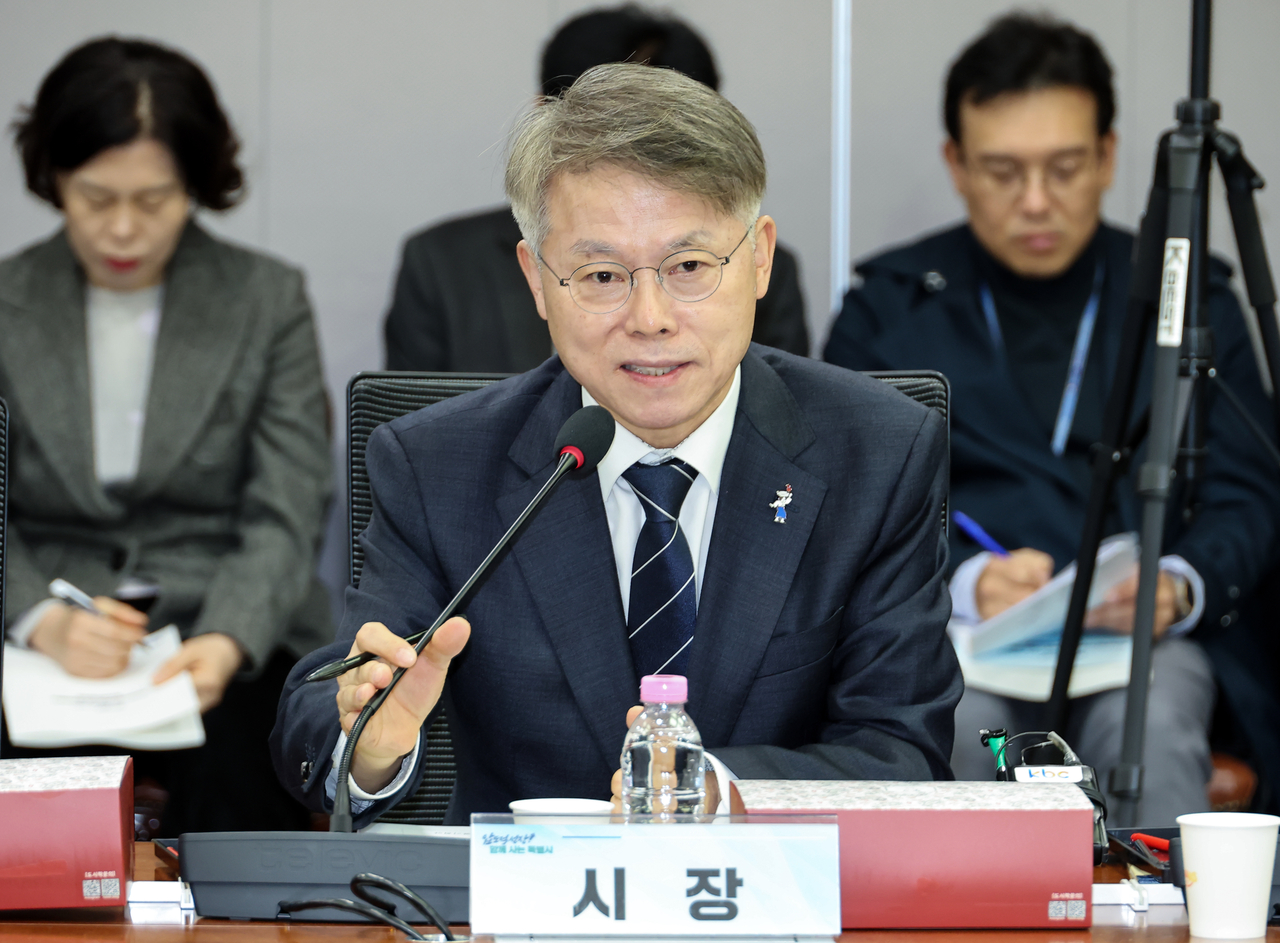
South Jeolla-Gwangju Special City Mayor Min Hyung-bae has submitted a 22.02 trillion won ($16.5 billion) budget proposal for next year to the city council, calling 2027 "the inaugural year in which citizens will feel the power of integration."
Speaking Monday at the second plenary session of the fifth regular session of the South Jeolla-Gwangju Special City Council, Min said the fruits of integration — including Samsung and SK Group's 800 trillion won semiconductor investment and the allocation of 60 medical school seats to Suncheon National University — "must reach more deeply into the still-difficult lives of small-business owners, young people, and farmers and fishers."
The proposed total budget of 22.02 trillion won for next year represents a 1.21 trillion won, or 5.8 percent, increase from this year's base budget of 20.80 trillion won. It comprises a general account of 18.07 trillion won, a special account of 2.67 trillion won and a fund of 1.27 trillion won.
Min outlined four key investment priorities.
The first focuses on nurturing advanced strategic industries, including AI, semiconductors, next-generation vehicles, energy and aerospace. Allocations include 163.8 billion won for the development of an AX demonstration valley, 57.5 billion won to support companies investing in semiconductor back-end packaging, 5.5 billion won for a Honam-region semiconductor joint research institute and 2.4 billion won for the development of core fusion energy technology.
The second priority is the creation of four regional growth hubs.
The Gwangju area will be developed as a cultural, arts and AI complex hub; the eastern zone as a center for performances, sports and extended-stay tourism; the western zone as a base for renewable energy and MICE industries; and the central-southern zone as a hub for future agriculture, K-food and wellness industries.
To stimulate the local circular economy, the budget includes 155.8 billion won for the issuance of local gift certificates, 3 billion won for the South Jeolla-Gwangju 365 half-price travel program and 3.7 billion won to foster social solidarity economy enterprises.
Some 338.8 billion won has been set aside for a pilot rural basic income program, with payments to begin in the first half of next year in areas receiving central government funding and in the second half in areas funded by the city itself.
By sector, the budget allocates 2.38 trillion won to agriculture, fisheries and livestock; 7.42 trillion won to welfare and healthcare; 767.9 billion won to culture and tourism; 2.53 trillion won to transportation and safety; 1.07 trillion won to the environment and forestry; and 659.5 billion won to education.
An additional 8.5 billion won will go toward constructing a public wastewater treatment facility for the Honam-region semiconductor national industrial complex.
sij@heraldcorp.com