Trump declares military victory but rules out new negotiations
US leans on sanctions, naval blockade as pressure tools
Iran demands sanctions relief; nuclear gap remains wide
Midterm losses make escalation a political liability
Debriefing: The Korea Herald's international desk breaks down the hidden stories behind the hottest global issues. Have a question? Leave it in the comments.
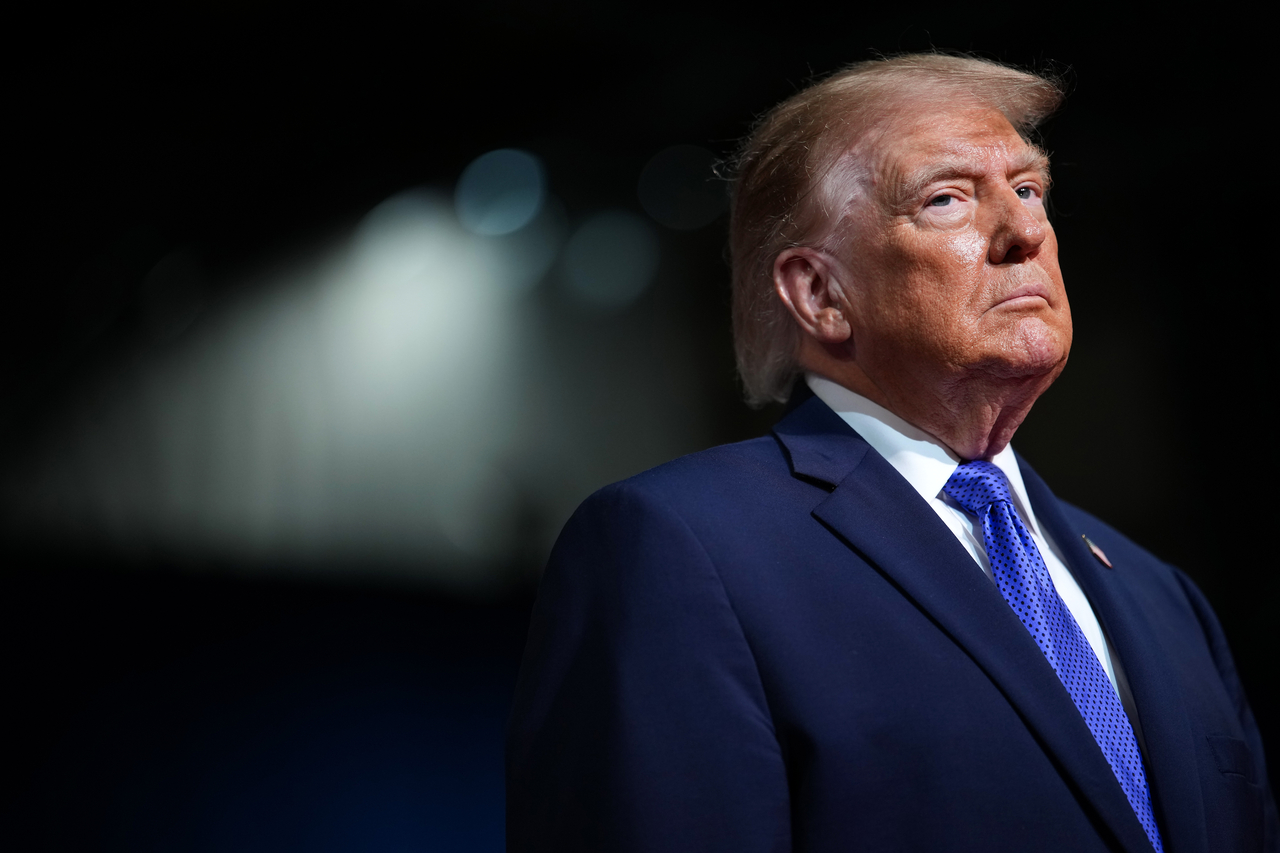
US President Donald Trump has repeatedly pledged to end the war with Iran soon, yet he is drawing a clear line against further negotiations to bring that about. With new military strikes also on hold, the conflict — now more than eight months old — appears no closer to an exit. Analysts warn that Washington's apparent preference for economic sanctions and a naval blockade over either military escalation or diplomatic compromise could trap the conflict in a prolonged stalemate — neither full-scale war nor peace.
According to AP and Reuters, Trump said on Truth Social on Thursday that the United States no longer needs a deal with Iran. He also directed Vice President JD Vance, who had been involved in cease-fire negotiations, to focus on other matters — a step back from the administration's earlier posture of keeping the door open to resumed talks.
At a Veterans Day ceremony on Wednesday, Trump said he wanted "complete victory, not 93 percent," reaffirming his desire for an early end to the war. Earlier, after meeting with the Qatari prime minister, he declared the conflict militarily over, saying large-scale additional strikes on Iran were unlikely to be needed. He left open the possibility of resuming attacks, however, should new activity be detected at Iranian nuclear facilities.
Reuters reported Saturday that Trump had told aides he was prepared to hold off on new strikes as long as Iran and the Iran-aligned Houthi rebels in Yemen refrained from further provocations. A final cease-fire framework, however, had not been decided.
Trump's cautious posture appears shaped in part by the changed political landscape following the midterm elections. In the Nov. 3 midterms, Republicans lost their majorities in both the Senate and the House to the Democratic Party. Trump acknowledged that the Iran war and the economic disruption it caused had contributed to the Republican defeat.
The Democratic Party is considering using its budget authority after the new Congress convenes in January to restrict war funding. Any escalation would only deepen Trump's political exposure.
Against that backdrop, the administration appears to be leaning toward sustaining economic pressure rather than launching additional military operations. The Washington Post reported Friday that the Trump administration seemed to have settled on a strategy of maintaining the status quo — no new war, no new negotiations, no durable peace.
The United States is maintaining a naval blockade of Iranian ports while tightening sanctions targeting oil exports and financial transactions. Secretary of State Marco Rubio, speaking recently at a G7 meeting, said economic pressure was inflicting significant damage on Iran and suggested there was little need to resume large-scale military operations.
Whether that pressure will translate into Iranian concessions remains uncertain. According to the Washington Post, Iran's inflation rate has surpassed 80 percent, but the country's leadership is wary that yielding to US demands could invite further pressure down the line.
The nuclear question remains the central obstacle to any cease-fire. Washington is demanding limits on Iran's nuclear program, while Tehran insists that the naval blockade must be lifted, oil sanctions eased and frozen assets returned before any agreement can be reached. Both sides have left some room for talks, but the gap on core issues has not narrowed.
Iran has not entirely ruled out a diplomatic resolution. Gholam-Hossein Darzi, Iran's deputy ambassador to the UN, told the Security Council on Friday that Tehran had not closed the door on diplomacy. He warned, however, that Iran would respond immediately if the United States or Israel resumed attacks.
Neighboring countries in the Middle East are also alarmed by the prospect of renewed escalation. According to Reuters, Saudi Crown Prince Mohammed bin Salman and Turkish President Recep Tayyip Erdogan have both asked Trump to hold back from further military action. Israel, by contrast, has continued to press for additional strikes on Iran, adding another unpredictable variable to the situation.
The economic toll of the prolonged conflict persists. Oil shipments through the Strait of Hormuz have approached pre-war levels, but the naval blockade and ongoing military tensions have left energy supply uncertainty unresolved. US gasoline prices remain above where they stood before the war began.
Trump has declared military victory, yet the nuclear question, sanctions relief and freedom of navigation through the Strait of Hormuz all remain unsettled. Washington is betting that economic pressure will extract concessions from Tehran, but Iran has made clear it cannot accept any agreement that leaves sanctions in place. If both sides continue to avoid direct confrontation while failing to break the diplomatic deadlock, the Iran war risks settling into a prolonged stalemate with no end in sight.
sjy@heraldcorp.com