Guide covers 10 safety rules across 3 hazard categories at TMS stations
Some small and midsize businesses to receive acid-resistant gloves
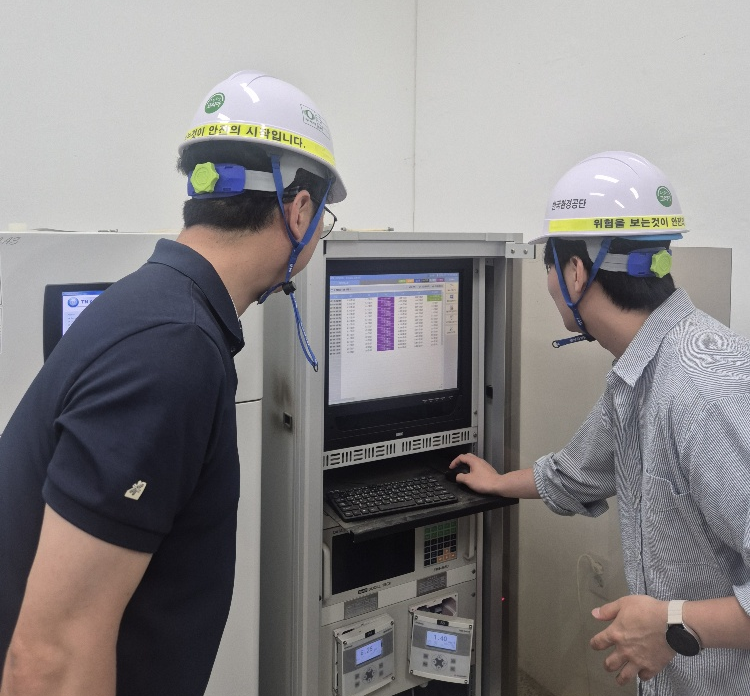
The Korea Environment Corporation, an agency under the Ministry of Climate, Environment and Energy, announced Monday it has published the "Water Quality TMS Station Safety Management Guidelines (2026 Edition)" and will distribute copies to 1,201 worksites across the country to help prevent accidents among workers at water quality remote monitoring system (TMS) stations.
The water quality remote monitoring system measures and manages the quality of discharged water from public sewage and wastewater treatment facilities and industrial wastewater discharge sites around the clock in real time. TMS stations house analytical reagents such as sulfuric acid and hydrochloric acid, gas cylinders and electrical equipment in confined spaces, meaning even minor carelessness can lead to accidents.
The guide is designed to help workers identify hazards that are easy to overlook during routine tasks at monitoring stations, with a focus on compliance checks for accident prevention.
The contents were developed on the basis of relevant laws including the Occupational Safety and Health Act and the Chemical Substances Control Act, and reviewed by in-house experts with experience in similar work. Hazards are broken down into 10 items across three categories — chemical substances, machinery and equipment, and worker health and safety — and explained in plain language with photographs and illustrations.
The guide also organizes key safety rules by work situation and includes ready-to-use checklists and forms so workers can regularly assess their own compliance with safety protocols.
The corporation will distribute one copy of the guide to each worksite where water quality remote monitoring equipment is installed, and will also provide acid-resistant gloves to some small and midsize businesses to encourage adherence to safety rules.
"Workers at monitoring stations are our valued citizens, and safety is the starting point for reliable water quality monitoring," said Ahn Byong-yong, the corporation's director of water environment affairs. "We will continue to refine the guide so that workers in the field can easily put safety rules into practice, and we will support a stable, round-the-clock water quality monitoring system."
thlee@heraldcorp.com