Concentration near levels seen at Fukushima intake
Probe underway into possible damage to discharge pipes
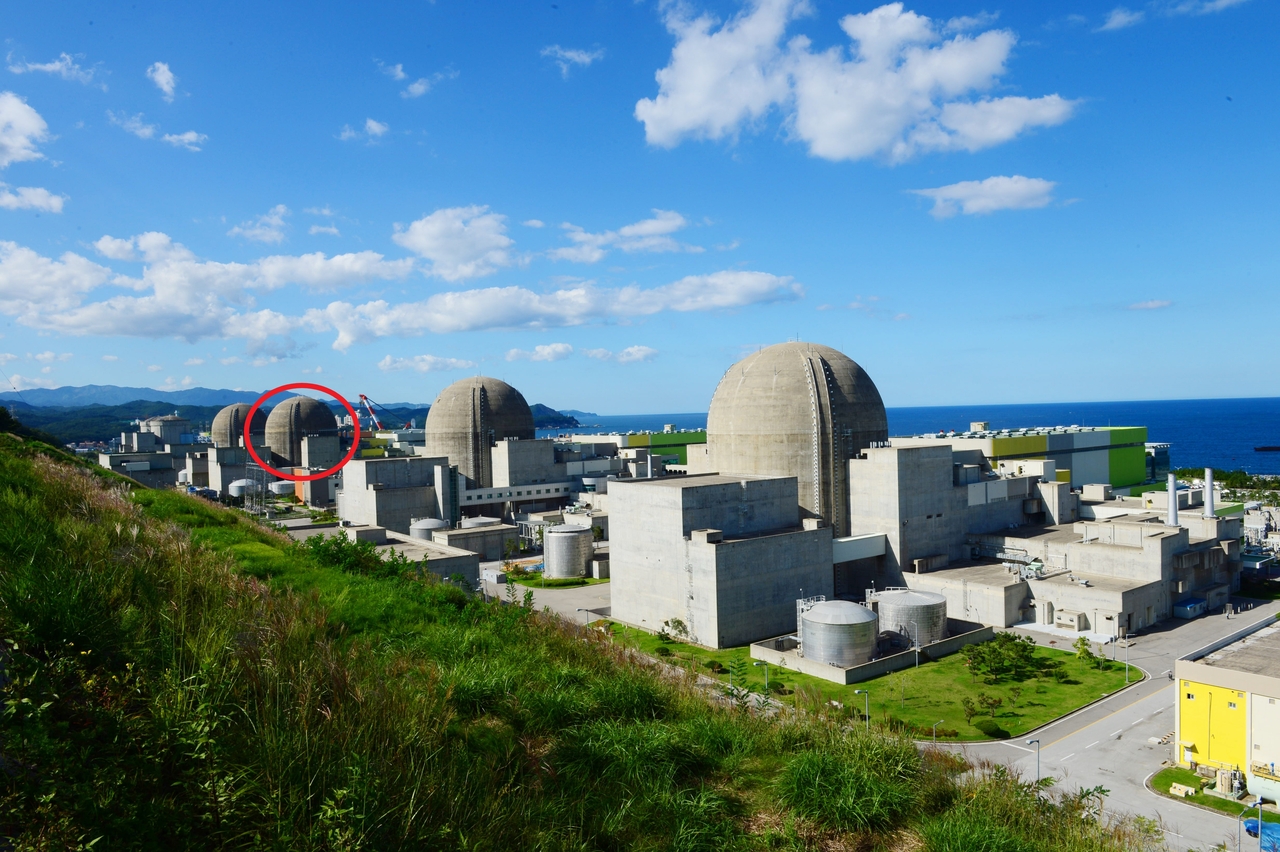
South Korea's nuclear safety regulator said Monday it launched an investigation into tritium discharges at the Hanul nuclear power plant in Uljin-gun, North Gyeongsang Province, after detecting concentrations comparable to those observed during the release of contaminated water from Japan's Fukushima plant.
The Nuclear Safety and Security Commission said it dispatched an investigation team of experts from the Korea Institute of Nuclear Safety to begin a formal probe.
The commission's regional office was notified Friday that tritium exceeding marine radiation safety standards had been detected at one groundwater monitoring well inside the Hanul plant.
The groundwater sample showed a tritium concentration of 30,000 becquerels per liter — close to Korea Hydro & Nuclear Power's own internal management threshold of 40,000 becquerels per liter.
The commission called for KHNP to halt operations at any facilities where radioactive material leakage was possible and to conduct seawater analysis to determine whether radioactive substances had been released into the surrounding environment.
Seawater samples analyzed by KHNP that day showed a tritium concentration of 117 becquerels per liter at the plant's intake point, above the commission's marine radiation safety limit of 100 becquerels per liter. During Tokyo Electric Power Company's 25th discharge of Fukushima contaminated water — conducted from Oct. 16 to Friday — tritium concentrations of 179 becquerels per liter were recorded at the Fukushima intake point.
However, KHNP reported to the commission that afternoon that no tritium was detected in seawater samples collected outside the plant's restricted zone.
KHNP also said no gamma nuclides were detected, and that no anomalies were found at other groundwater monitoring wells or radiation monitors within the Hanul plant.
The suspected cause is damage to a pipe that discharges treated liquid radioactive waste into the sea, with some of the discharged material believed to have leaked into the surrounding area.
The commission said it plans to "thoroughly inspect KHNP's response measures and assess any impact on the surrounding environment."
addressh@heraldcorp.com