OpenAI chief says he deeply empathizes with Huang's situation; declines to say whether Huang should return
AI chip demand may be double-counted, Altman warns
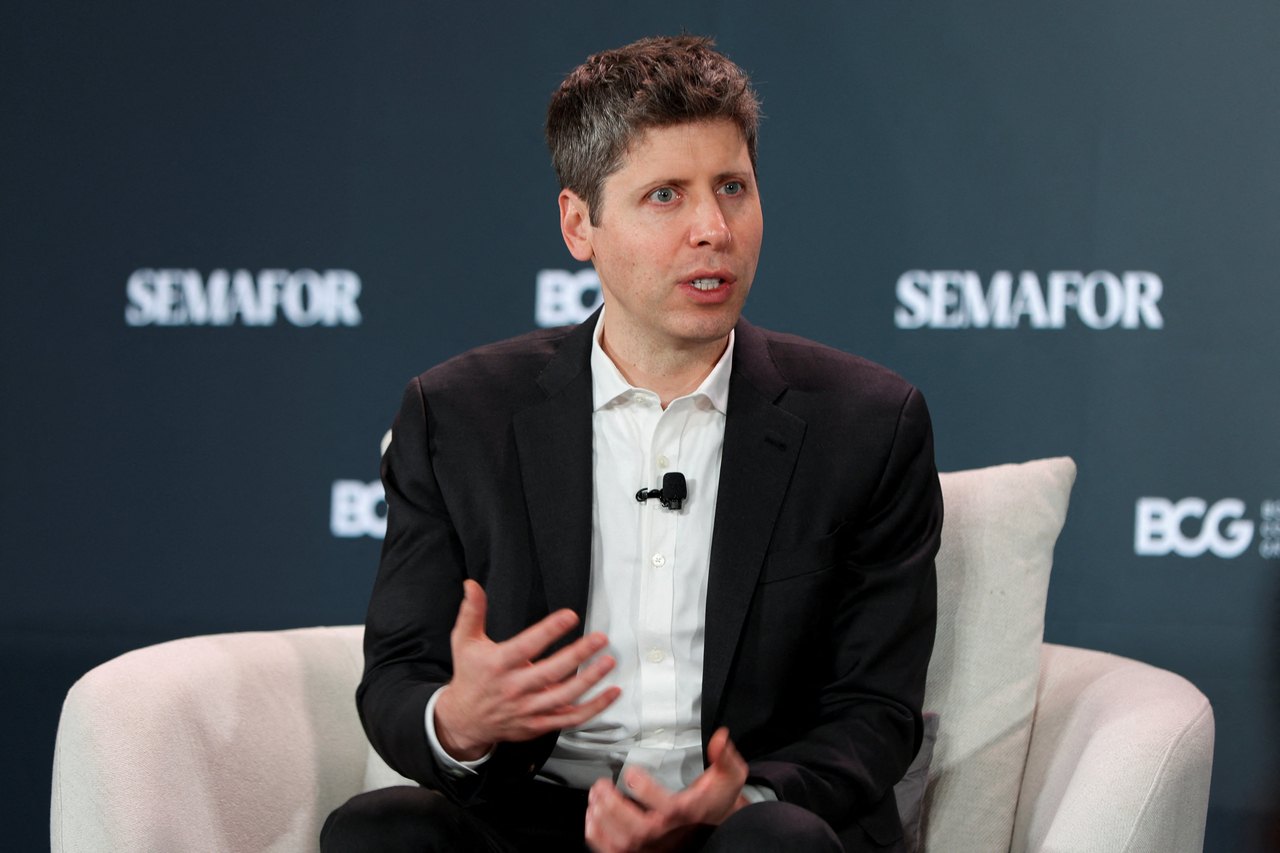
OpenAI CEO Sam Altman said he feels deep personal sympathy for Jensen Huang, the former Nvidia CEO who recently stepped down amid a scandal.
Speaking Monday (local time) at a conversation hosted by Semafor as part of its "Silicon Valley and the World" event, Altman said Huang had long been his hero. "Heroes have flaws," he added.
"It's hard to imagine the AI revolution without Jensen and the company he built," Altman said. "Nvidia bet on us early, and we bet on him."
Asked whether Huang should return to lead Nvidia, Altman said he did not think he knew enough to answer that question.
He then noted that he himself had been removed as CEO by his board three years ago, and said he feels deep personal sympathy for the current situation.
On the revelation that a listening device had been found in a conference room — part of a spy-related episode that also touched OpenAI — Altman said the company had time to adapt, expressing confidence in its security posture.
"We've been fooled sometimes and our security is not perfect," he said, "but we have already been living the reality that everyone else is now suddenly confronting."
Altman also raised concerns that demand for AI chips may be getting double-counted.
"For a long time there was only one chip supplier in the industry, so when counting wafer volumes you could ask companies like OpenAI what future demand would look like," he said. "Now there are many chip makers, but a lot of them still think we or Anthropic will buy most of their output."
Nvidia's GPUs once held an effective monopoly on the AI chip market, but the rise of competitors such as AMD, Google and Cerebras has made demand forecasting harder and may have created a distorted picture of actual demand.
Altman is said to have shared the same analysis at a meeting with Samsung executives in Yongin, Gyeonggi Province, during his recent visit to South Korea.
He added, however, that underlying demand — for data center construction and the like — remains solid, and that his belief in AI as a driver of human progress is unchanged.
On the public backlash and anxiety about AI reflected in recent US midterm elections, Altman said there must be no "handover of control" in which decisions about humanity's future are ceded to AI.
On recursive self-improvement — where AI enhances its own capabilities without human oversight — he said using AI to develop new models faster is appropriate, but stressed that OpenAI is not simply pressing a button and leaving AI to improve itself on its own.
Asked whether he wants OpenAI to go public or would rather avoid it, Altman said he sees downsides to a listing but expects the company to list eventually.
When asked whether investor demand would remain after Anthropic lists first, he said that was not something to worry about. "Looking back at the past year, investor demand has been far too high and supply has not been sufficient," he said.
He said there are many people around the world who want the opportunity to invest in the AI market and in OpenAI — not just investors with access to private markets.
mokiya@heraldcorp.com