The district's residential welfare policies span emergency relocations from a condemned building and temporary housing for displaced residents to 154 youth-tailored public rental units
Seodaemun-gu's residential welfare policies — ranging from emergency relocations out of hazardous buildings and temporary housing for suddenly displaced residents to tailored public rental units for young people — have earned national recognition.
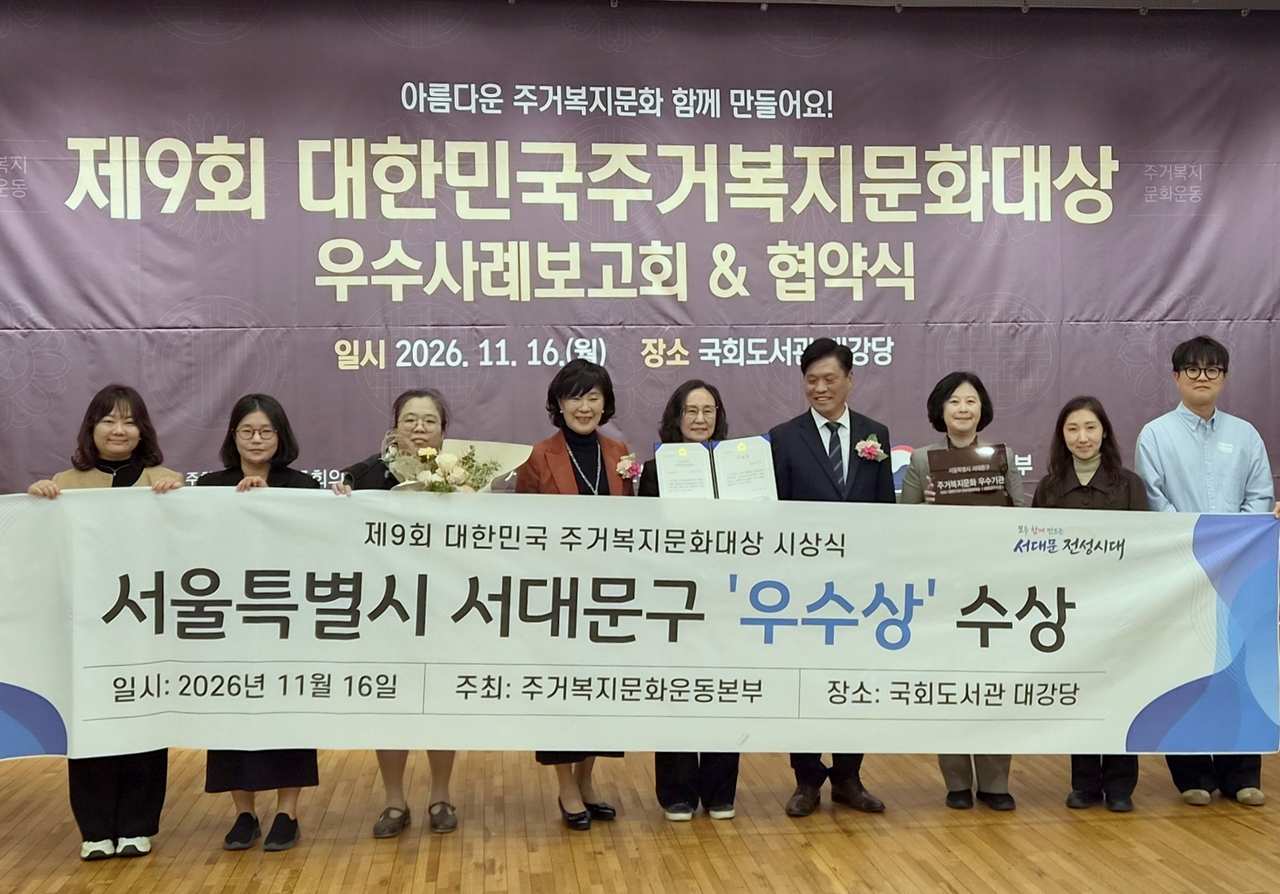
Seodaemun-gu announced Tuesday that it received the excellence award at the 9th Korea Residential Welfare Culture Awards, hosted by the Residential Welfare Culture Movement Headquarters. The ceremony was held Monday at the National Assembly Library auditorium.
The award recognized the district's efforts to build a housing safety net calibrated to residents' circumstances and life stages — covering emergency relocations from dangerous structures, protection for households in housing crisis, and residential stability for young people.
The flagship policy is the emergency relocation support provided to residents of Jwawon Arcade, a building that received an E rating — the lowest safety grade.
Completed in 1966, Jwawon Arcade was South Korea's first mixed-use residential-commercial complex, and the deterioration of the aging structure made securing safe housing for its residents urgent. The district partnered with the Korea Land and Housing Corporation (LH) to set up a relocation support center on site and linked residents to a housing-upgrade support project for vulnerable groups as well as emergency housing assistance, enabling tenants in difficult financial circumstances to move into public rental housing.
The district also operates "Jinggeomdarijutaek" — stepping-stone housing units that serve as emergency temporary accommodation for residents who suddenly lose their homes.
Since 2021, the district has maintained five such units for residents displaced by disasters, domestic violence or forced evictions. Residents placed in these units receive full coverage of their deposit and rent.
A distinguishing feature of the program is that support does not end with temporary shelter: through the Seodaemun Residential Security Comprehensive Center, the district continues assisting residents until they secure stable long-term housing, including placement in public rental units.
The district's supply of tailored public rental housing to ease the cost burden on young residents has also drawn attention.
Reflecting the area's character as home to nine universities, the district worked with the Seoul Housing & Communities Corporation (SH) to deliver 154 youth-tailored public rental units — called "Cheongnyeondamda" — in Sinchon-dong. Billed as the largest demand-tailored public rental housing development in Seoul, the project was designed to support young residents' housing stability and long-term settlement in the area.
Field-based outreach to reduce gaps in residential welfare runs alongside these programs. Together with the Seodaemun Residential Security Comprehensive Center, the district operates a monthly mobile housing consultation service that visits each neighborhood in turn, and it also runs a home-repair project for low-income households in vulnerable housing situations.
Through a home-repair initiative carried out in partnership with private organizations including Habitat for Humanity Korea, the district is also tackling housing-environment improvements that public support alone cannot fully address.
"A home is not merely a living space — it is the most fundamental safety net that sustains a person's life," Seodaemun-gu District Mayor Park Un-gi said. "The role of government must continue until residents in crisis find safe shelter and restore their daily lives." Park added that the district would pursue residential welfare policies that stay with residents from the moment they need housing support through to stable settlement.
seouldream01@heraldcorp.com