Xi future strategy forum RE:EVOLVE held Monday
Mid- to long-term vision takes shape two years after 2024 Xi rebrand
Three flagship products unveiled: AI Home, IX Platform and Clima System
GS Engineering & Construction has unveiled the mid- to long-term vision for its residential brand Xi under the banner "Beyond Living," introducing a suite of future housing products that combine AI-powered solutions, a flexible living platform and climate-response technology. The strategy marks a shift in how the company defines apartment premium — away from location, finishes and community amenities at the time of move-in, and toward the quality of experience residents accumulate over the years they live there.
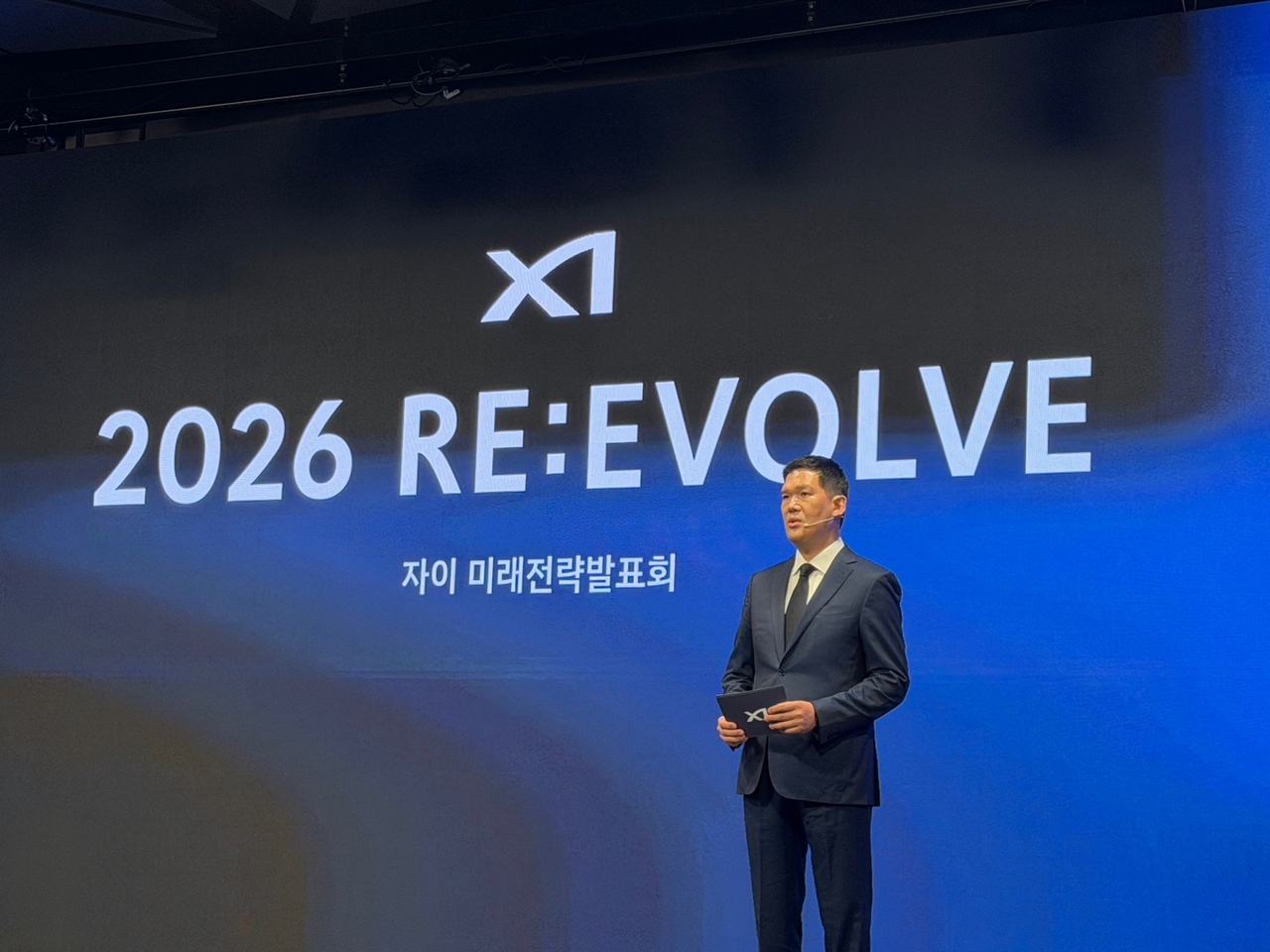
The company held the Xi future strategy forum RE:EVOLVE at the Westin Josun Seoul in Samseong-dong, Seoul, on Monday, laying out the details of the vision. The event gave concrete form to a customer-experience-centered strategy the company has pursued for roughly two years since it overhauled the Xi brand in November 2024 — its first rebrand in 22 years.
Heo Yun-hong, CEO of GS Engineering & Construction, delivered the keynote address at the forum. "The rebrand was a starting point for renewing our commitment to how we see our customers' lives and our promise toward the future," Heo said. "For the past two years, we have been constantly thinking about how to turn that promise into reality." Heo added that RE:EVOLVE was "the occasion that opens the next chapter of that thinking," and said setting new standards ahead of the curve — rather than merely keeping pace with change — was "the way Xi has always approached its challenges and the role we must continue to play."
The Beyond Living vision is built around the idea of "creating a new standard for life, beyond the home." Seo A-ran, head of brand strategy at GS Engineering & Construction, said premium value in the past was something completed at the moment of move-in, but that the measure has now shifted to how well a positive experience continues after residents settle in. "A home's competitiveness must be proven not at the point of completion, but in every moment a customer lives there," Seo said.
Three core products will deliver that vision: AI Home, the IX Platform and the Clima System.
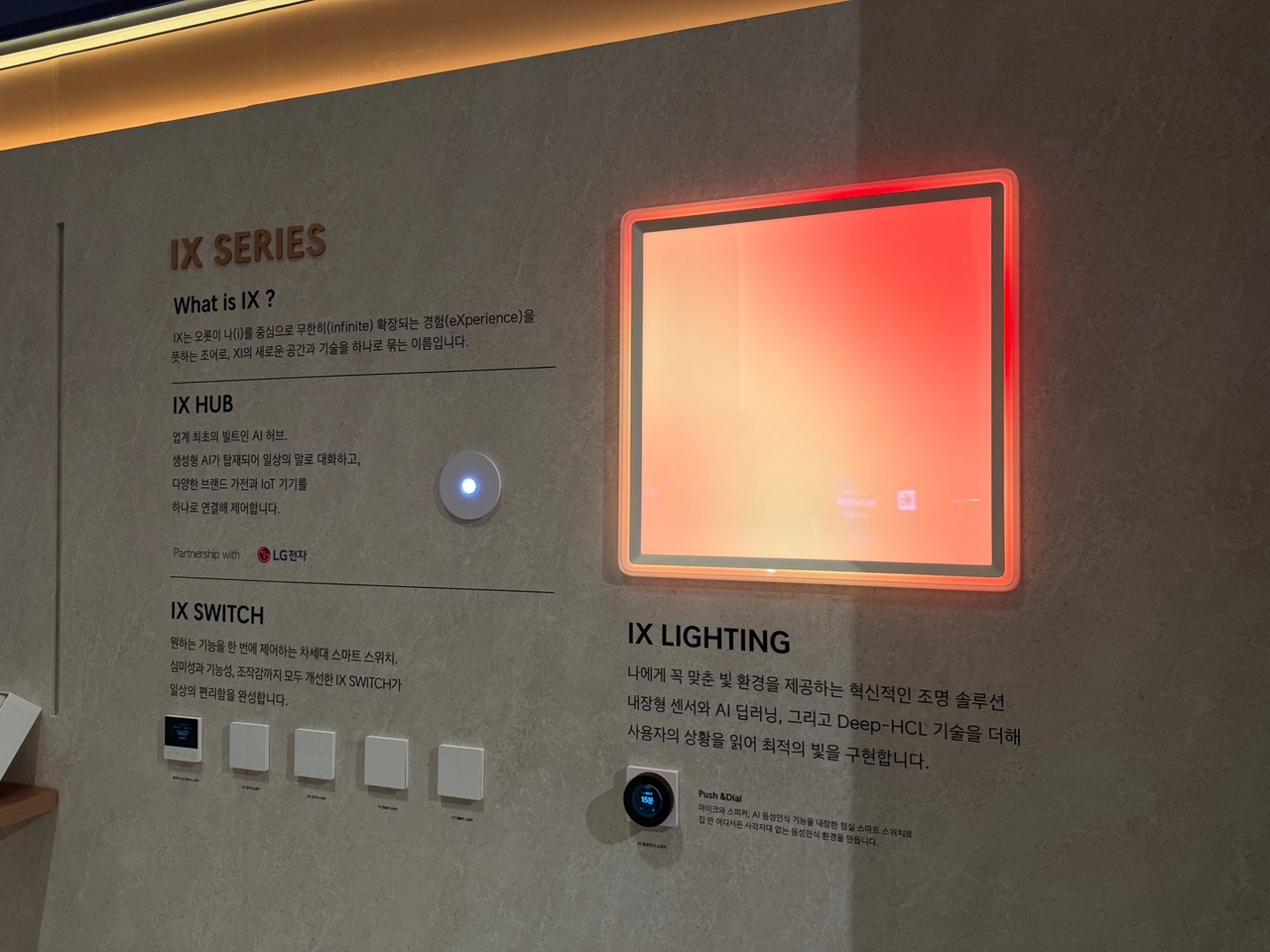
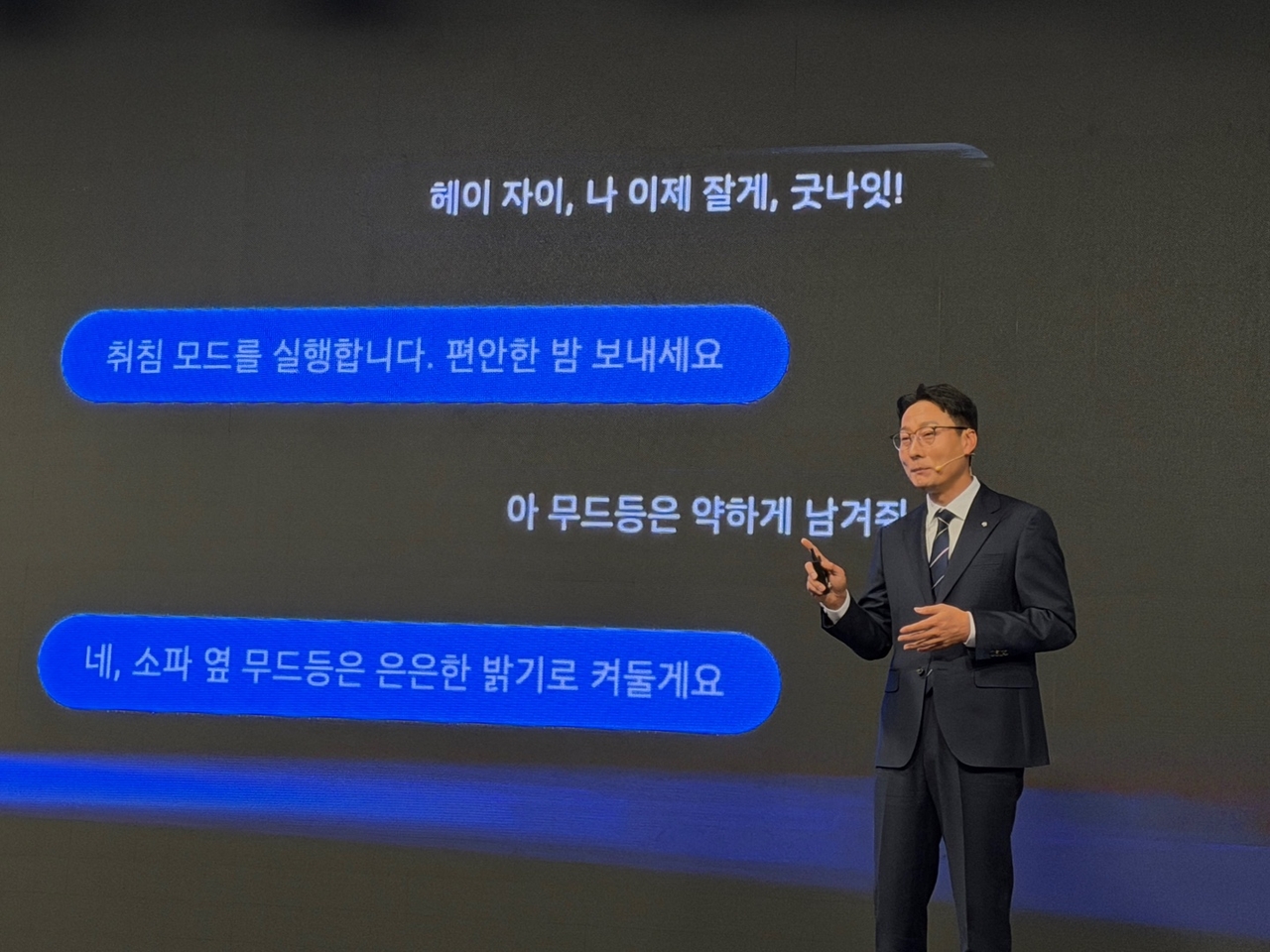
AI Home is an integrated residential solution co-developed with LG Electronics, built around a built-in AI hub that connects lighting, heating, cooling and ventilation systems, home appliances and IoT devices, while also covering complex-wide services such as elevator calls, parking and community reservations. GS Engineering & Construction said it is the first in the industry to establish a six-level residential autonomy scale — dubbed the Living Home Autonomy scale, ranging from LV0 to LV5 — to measure smart-home technology. The company has set LV3, "context-aware automation," as its target for AI Home next year, enabling the home to recognize a resident's situation through real-time data and execute necessary functions on its own.
A voice-recognition switch with a built-in microphone and speaker lets residents control functions throughout the home by saying "Hey Xi." A non-identifying sensor light that detects movement without a camera senses whether a room is occupied. The company is also developing a feature that alerts family members or building management when the sensor detects an unusual situation — such as an elderly person living alone taking a fall.
AI Home was partially applied to Mokdong Yunseul Xi, a development that went on pre-sale in September, and is set to be rolled out sequentially starting with pre-sale complexes in the second half of 2027.
Lee Yong-gu, head of architectural and housing design at GS Engineering & Construction, said the system is "a solution that precisely controls the home in line with a resident's lifestyle patterns," adding that "even in moments when you cannot speak, the home is the first to notice." On the timeline for reaching LV4 and LV5 — where the home makes decisions without human intervention — Lee looked about five years ahead, on the assumption that autonomous driving technology will have matured and humanoid robots will be in widespread household use by then.
GS Engineering & Construction also outlined how it plans to manage operating costs and security concerns ahead of the commercial rollout of AI Home. Lee said that using an unnecessarily large number of tokens — the units of AI computation — would impose costs on consumers, and that the company is "building rule-based systems for functions that do not require AI processing while looking for other ways to generate revenue."
Nam Gyeong-ho, head of the architectural and housing business division at GS Engineering & Construction, offered a renewed apology over a recent customer data leak and pledged that "as AI Home gathers more customer data, we will make sure our security measures are thorough."
The IX Platform is a flexible residential model that allows living spaces to be reconfigured as family composition and life circumstances change. Built on a prefabricated structure — beams, columns and slabs manufactured at a factory and assembled on site — the design places columns outside individual units and consolidates utilities at the center, allowing adjustments to kitchen and bathroom layouts. GS Engineering & Construction also unveiled the IX Slab, which cuts weight by about 50 percent compared with a conventional slab, and the IX Wall, a movable partition that lets residents convert a living room into a bedroom through an app.
The Clima System bundles 31 climate-response solutions — developed through joint research with CRA, the architecture and innovation design group led by architect Carlo Ratti — into a "detect, respond and circulate" framework. When heavy rainfall is forecast, sensors within the complex detect warning signs, block rainwater intrusion and adjust drainage; stored rainwater is then purified and recycled for landscaping use.
Meanwhile, GS Engineering & Construction said its urban redevelopment project orders this year are on track to set an all-time record since the company's founding. Nam said orders in the redevelopment segment are expected to surpass 11 trillion won ($8.25 billion) this year, and that while the order target for next year has been set at 10 trillion won, the company plans to raise it in line with this year's performance and market conditions.
hwshin@heraldcorp.com