Korea's passenger car output up 1.1%, Germany's down 4%
Gap narrows to 170,000 units — half of last year's margin
First top-5 finish since 2021 within reach
Volkswagen, Mercedes restructure as Chinese rivals bite
Both nations' production bases face a critical test
Government, Hyundai Motor Group push to defend 4 million units at home
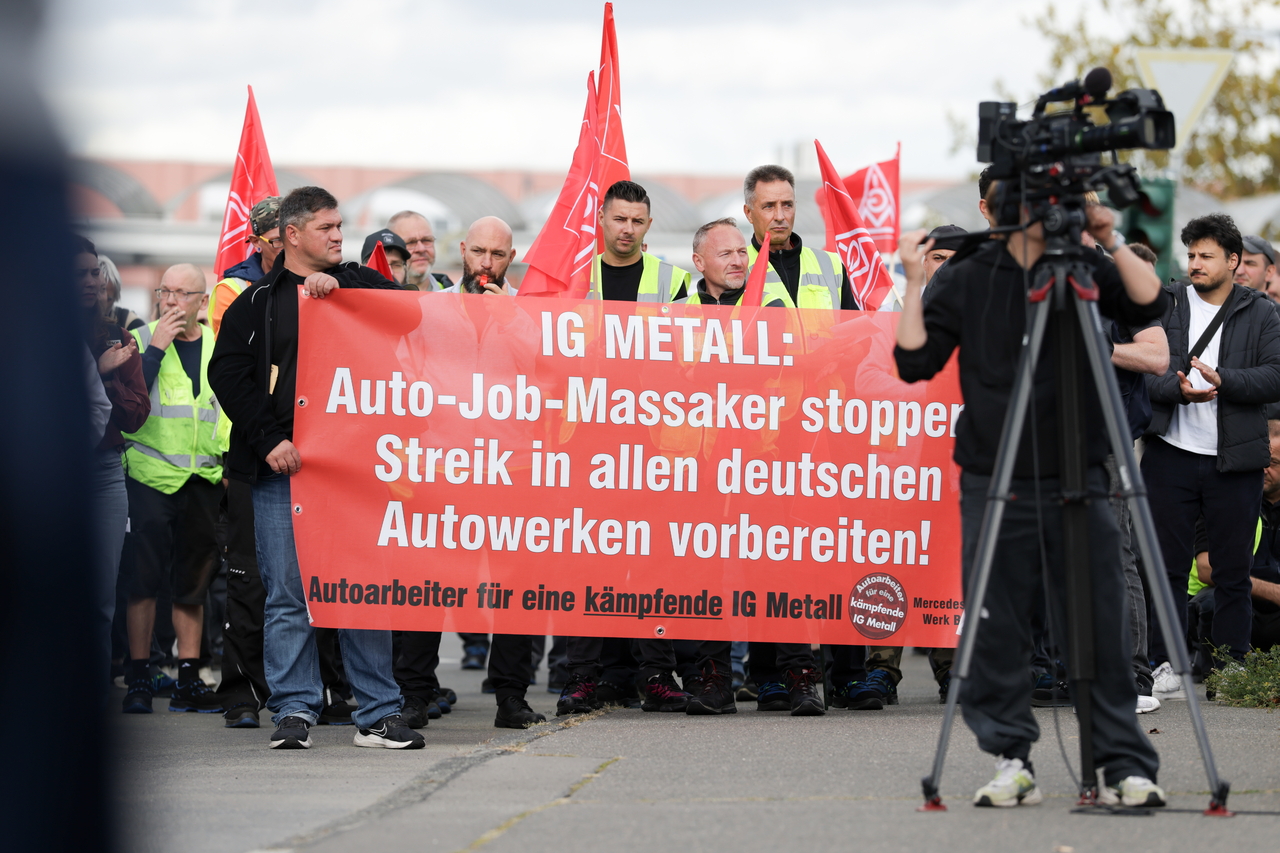
Germany, long regarded as the world's automotive kingdom, is buckling under pressure from Chinese automakers and a high-cost production structure — and South Korea sees an opening to reclaim its place among the world's top five vehicle-producing nations.
According to data released Tuesday by the Korea Automobile Manufacturers Association and Germany's VDA, South Korea produced about 3.2 million passenger cars in the January-October period this year, up 1.1 percent from the same period last year. Germany, by contrast, turned out about 3.37 million units over the same stretch, a 4 percent decline. Germany still leads by about 170,000 units, but that gap has shrunk to roughly half the approximately 340,000-unit margin recorded in the same period last year.
If current production trends hold through year-end, the annual gap in passenger car output between the two countries is expected to narrow from about 300,000 units last year to around 200,000 units this year. Should the trend continue into next year, South Korea could close the remaining distance and overtake Germany.
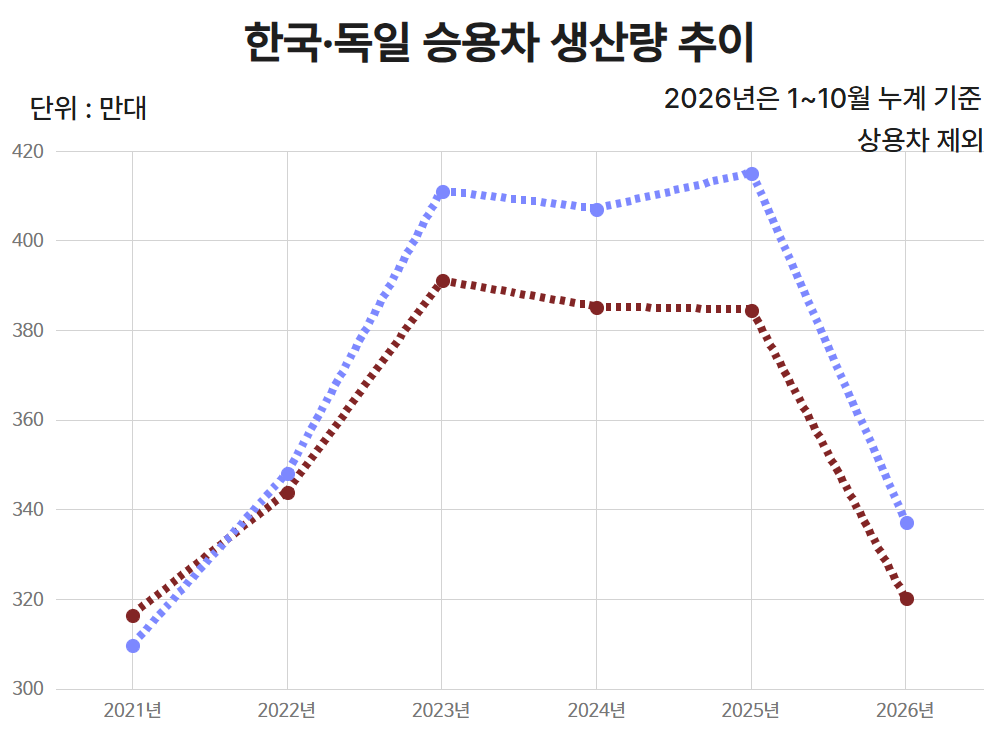
South Korea actually outproduced Germany by about 70,000 units in 2021, but Germany pulled ahead by roughly 40,000 units in 2022. The gap then widened steadily — to about 200,000 units in 2023, 220,000 in 2024, and approximately 300,000 last year.
A return to fifth place would be South Korea's first since 2021. The country held that ranking for 11 consecutive years from 2005 to 2015, before India overtook it in 2016. Mexico pushed South Korea further down to seventh in 2018 and 2019. Disruptions to rival nations' output during the COVID-19 pandemic allowed South Korea to recover to fifth in 2020 and 2021, but it has since fluctuated between sixth and seventh.
Germany's production weakness shows no sign of reversing. Output in the January-October period this year was 15 percent below the same period in 2019, before the pandemic. October alone saw 326,300 units produced, down 7 percent from the same month last year.
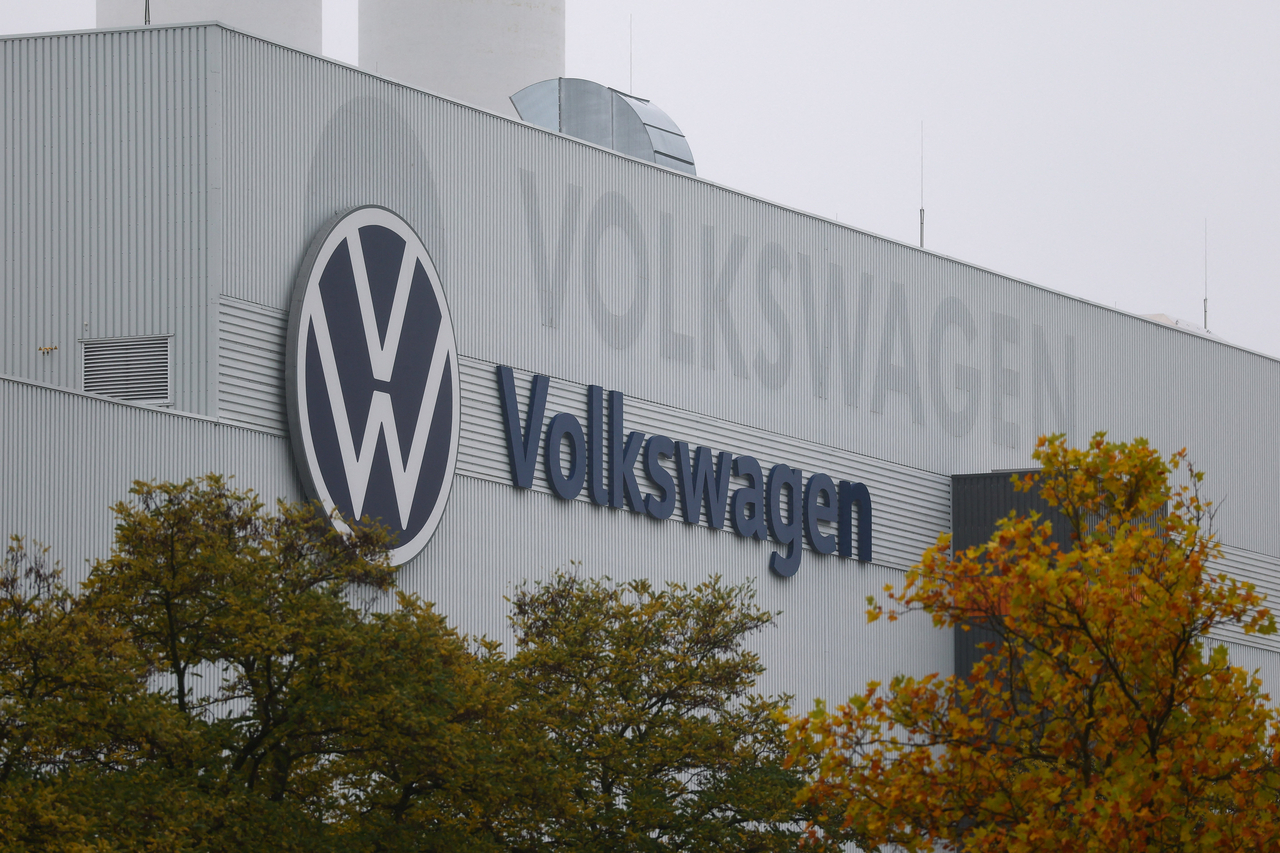
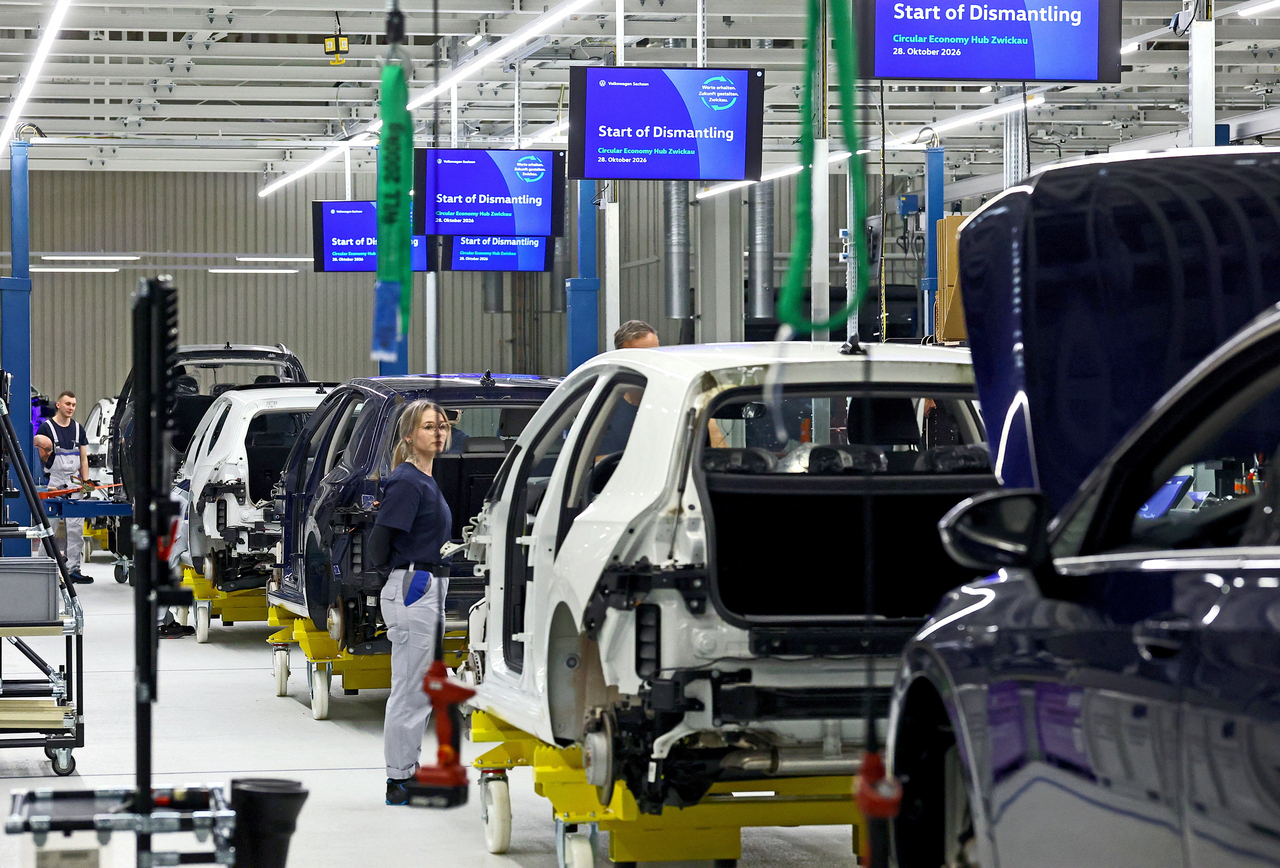
The crisis in Germany's auto industry is driving sweeping restructuring at its major manufacturers. Volkswagen Group plans to cut about 50,000 jobs in Germany and reorganize its production facilities by 2030. Mercedes-Benz has halted additional investment in its German plants and is considering closing some of them.
The strain reflects weakening competitiveness in China compounded by heavy production costs, including high labor expenses. Mercedes-Benz sold about 87,000 passenger cars in China in the third quarter of this year, a 31 percent drop from the same period last year. Operating profit in the passenger car segment fell nearly half over the same period, to 560 million euros ($616 million).
Even if South Korea does reclaim fifth place, analysts caution against reading the shift as a structural recovery in the country's automotive competitiveness.
Domestic vehicle output peaked at about 4.66 million units in 2011, then declined from about 4.56 million in 2015 to about 4.24 million in 2023, about 4.13 million in 2024, and about 4.1 million last year — roughly 560,000 units below the all-time high. Output for the first 10 months of this year edged up slightly, but full-year production is expected to come in near last year's level.
Competition with Mexico, which is closing in fast, adds another layer of pressure. South Korea finished ahead of Mexico by just 9,752 units last year to hold sixth place, and the gap through the first 10 months of this year stands at only 8,901 units.
Chinese electric vehicles are also penetrating the domestic market at an accelerating pace. According to KAMA, about 112,000 Chinese-made passenger electric vehicles were newly registered in South Korea in the January-September period this year, 2.2 times the figure for the same period last year. Their market share climbed to 43.5 percent, while the share held by domestically produced passenger electric vehicles fell below the halfway mark to 48.7 percent. Chinese-made vehicles include not only Chinese brands but also Tesla models built in China.
US tariffs and the expansion of overseas local production also weigh on the domestic manufacturing base. Ramping up local output in key markets can reduce costs and tariff exposure, but any decline in domestic production volumes risks shrinking order books and employment at parts suppliers.
That concern is behind the government's push to keep domestic vehicle production at 4 million units. In its K-Mobility Global Leadership Strategy announced last year, the government set a target of maintaining domestic output at "4 million units-plus" through 2035. The auto industry accounts for 11.3 percent of domestic manufacturing employment, 14.1 percent of shipment value, and 11.9 percent of value added, based on 2024 figures.
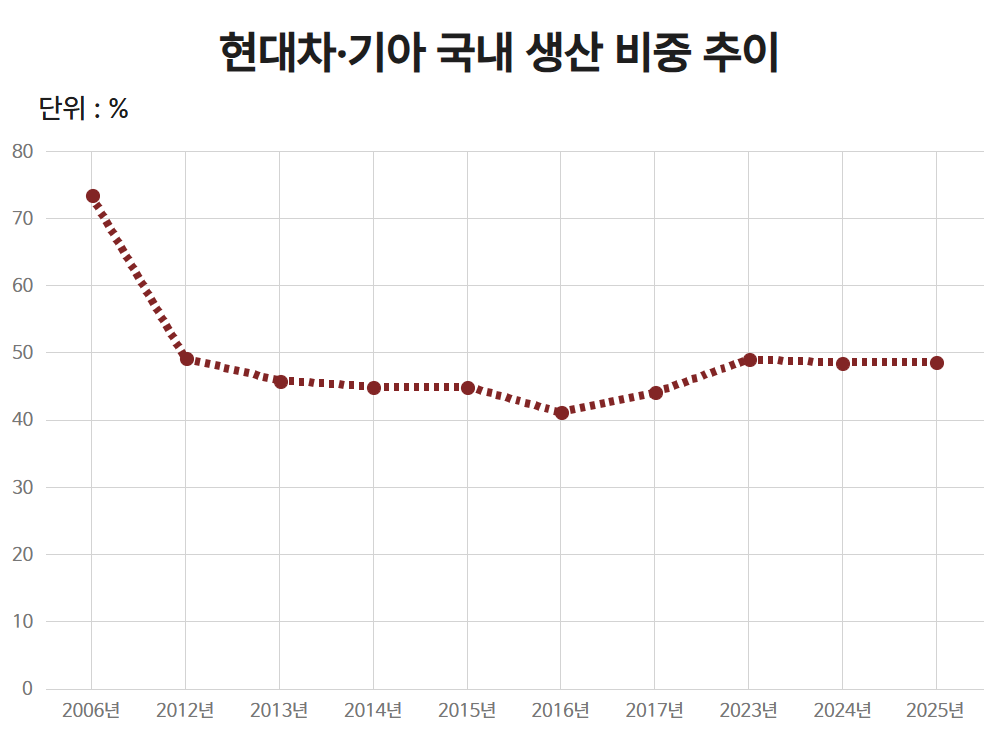
Hyundai Motor Group is also working to preserve its domestic production base even as it expands overseas facilities. The combined domestic production share of Hyundai Motor and Kia has fallen sharply from 73.3 percent in 2006 but has held at around 50 percent in recent years. Last year, the two automakers produced about 3.44 million units in South Korea and about 3.65 million abroad, putting the domestic share at 48.5 percent.
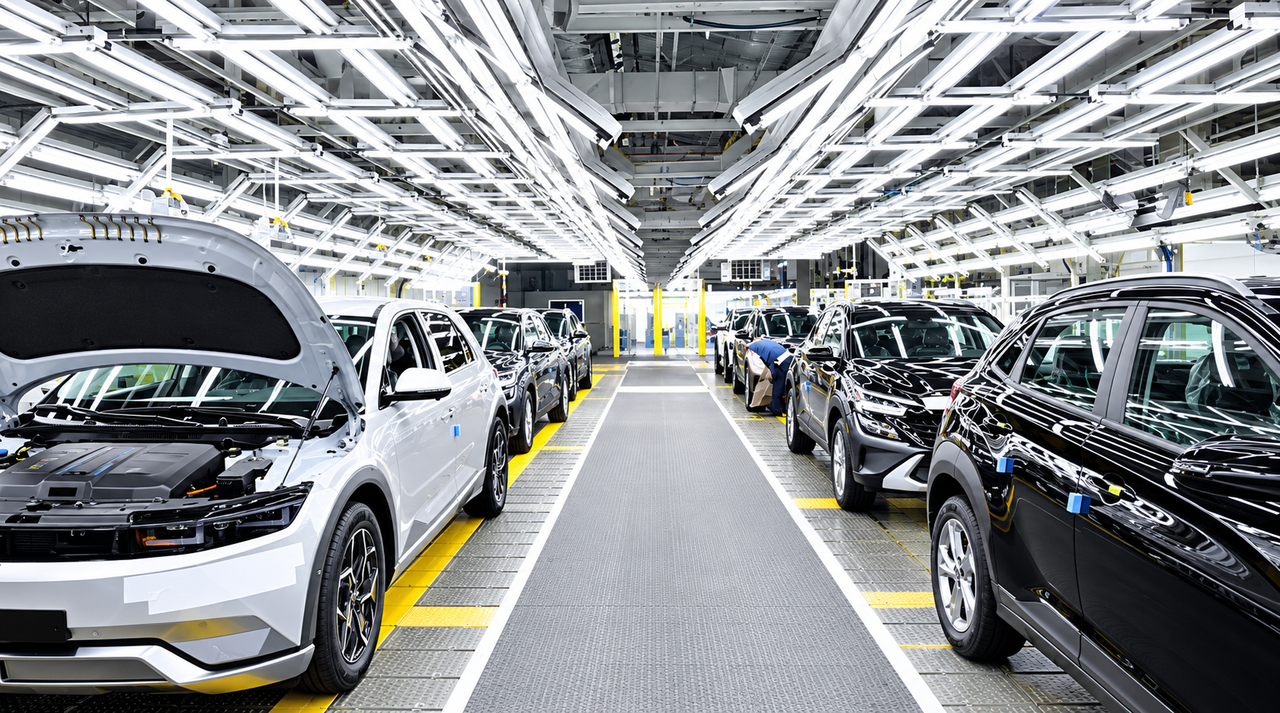
Domestic investment continues as well. Hyundai Motor last month began mass production at a new dedicated electric vehicle factory in Ulsan, while Kia completed its EVO Plant East — a purpose-built production facility for purpose-built vehicles (PBV) — in Hwaseong last year. Once the West plant, scheduled to begin operation next year, is finished, the Hwaseong complex will have annual PBV production capacity of 250,000 units. The strategy is to develop domestic plants into a manufacturing hub for next-generation vehicles.
Sustaining the domestic production base will not be easy, however, as intensifying price competition from Chinese manufacturers compounds the burden of US tariffs and rising labor costs. The National Assembly is discussing whether to include electric vehicles in the scope of domestic production tax credits.
"Watching German automakers — which relied heavily on China sales — take the first hit makes us acutely aware that South Korea could be next," an industry official said. "If the domestic production base weakens while Chinese manufacturers spread their price offensive to global markets, the damage will extend beyond finished-car makers to countless parts suppliers and their workers. Protecting domestic production competitiveness has never been more important."

kwater@heraldcorp.com