JV 'Jupiter' formed with US firm SolarCycle
Korea Zinc holds 70% voting rights
Spent panel collection and smelting linked
Eight US recycling facilities to be utilized
Spent data center IT equipment also targeted
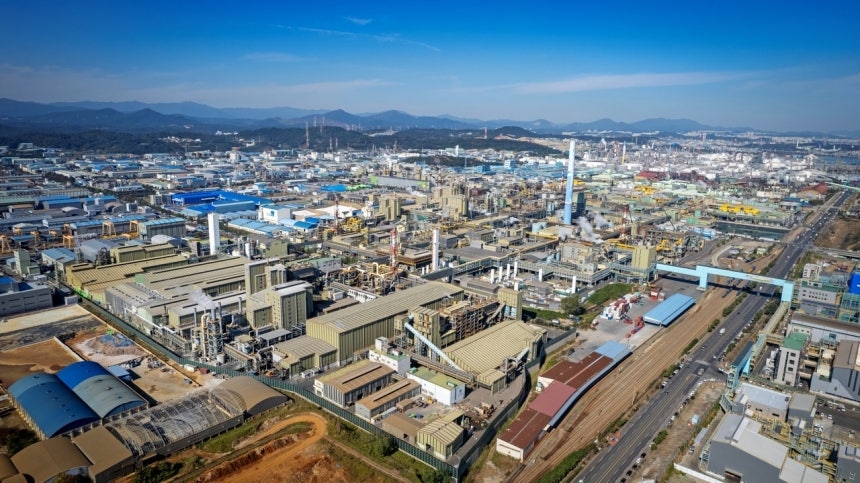
Korea Zinc will form a joint venture with a US solar panel recycling company backed by Microsoft, aiming to collect spent solar panels across the United States and recover valuable metals including silver and copper. The two companies plan to combine their US recycling facilities and smelting technology to build an integrated system linking raw material procurement to metal production.
Korea Zinc announced Tuesday it had signed an agreement with SolarCycle, a US company specializing in end-of-life solar panel recycling, to establish a joint venture called Jupiter.
The joint venture will merge Korea Zinc's US resource-circulation business with SolarCycle's panel collection and recycling operations.
Pedal Point, Korea Zinc's US resource-circulation subsidiary, will contribute its stake in e-waste recycler Evtera to the joint venture as an in-kind investment. SolarCycle will establish a separate entity, then contribute shares of that entity — encompassing its relevant operations — to the venture.
Once the transaction closes, Korea Zinc's side will hold 70 percent of Jupiter's voting rights, with SolarCycle holding the remaining 30 percent.
The core purpose of the joint venture is to connect the entire value chain in the United States, from securing recyclable feedstock to recovering finished metals.
SolarCycle has operated a business collecting and processing decommissioned solar panels in the US. Korea Zinc brings expertise in recovering metals from recycled feedstock through its non-ferrous smelting and refining technology.
By combining their respective strengths, the two companies plan to build a resource-circulation system spanning panel collection, preprocessing, recovery of valuable metals, and smelting and refining.
Solar panels contain not only glass, aluminum and silicon but also metals such as silver and copper. Because these different materials are bonded together, separating and recovering the metals from spent panels involves significant processing costs.
Korea Zinc intends to apply its smelting technology for complex feedstocks to the recycling process, improving metal recovery efficiency and lowering processing costs. The recovered metals will be supplied back into industrial supply chains.
The joint venture will also gain access to recycling facilities and an established customer base already operating in the United States.
Jupiter will operate from eight recycling facilities spread across the country, supported by a workforce of about 250 people. The facilities' total processing space amounts to roughly 92,900 square meters.
The business will not be limited to spent solar panels. Jupiter will also collect end-of-life IT equipment from data centers and energy-related assets, either refurbishing them for reuse or recycling them as metal feedstock.
Jupiter will inherit the existing customer base of both companies, which includes Microsoft, US logistics and real estate firm Prologis, and global investment firm Brookfield.
SolarCycle has also attracted investment from major global companies.
Microsoft joined SolarCycle as a strategic investor in October 2024, drawn by the growth potential of recovering raw materials from solar panels and reintroducing them into supply chains at a time when renewable energy installations were expanding rapidly.
Earlier, in 2023, HG Ventures — the corporate venture capital arm of US environmental and chemical conglomerate Heritage Group — invested in SolarCycle, co-leading a fundraising round of about $30 million alongside global real estate and decarbonization investor Fifth Wall.
At the time, HG Ventures Managing Director Kip Frey said SolarCycle was "offering customers the first business model capable of scaling solar panel recycling at a commercial level," adding that it was "a perfect fit for our investment philosophy of partnering with innovative, high-growth companies that support a sustainable future."
Korea Zinc's push into the US resource-circulation business is also driven by the growth outlook for the spent solar panel recycling market. As solar power installations expand in the United States and around the world, the volume of panels reaching the end of their service life is expected to grow substantially.
Korea Zinc plans to link recyclable feedstock secured in the United States to its existing smelting facilities, while also incorporating it into future new smelting operations.
One potential connection is with Project Crucible, an integrated critical minerals smelter the company is developing in Tennessee. Under that concept, recycled feedstock collected and processed by the joint venture would be turned into finished metal products at Korea Zinc's smelting and refining facilities.
"Through this joint venture, we have laid the groundwork to secure a stable supply of recycled feedstock — spent solar panels — in the United States, and to combine Korea Zinc's world-class smelting and refining technology with our resource-circulation capabilities," a Korea Zinc official said. "Going forward, we will strengthen our competitiveness in recovering valuable metals such as silver and copper, while continuously expanding our resource-circulation value chain in the US to secure new growth engines."
Meanwhile, Korea Zinc said Sunday it received approval from the Tennessee Valley Authority to use 230 megawatts of electricity needed to operate its planned integrated smelter in the state. The TVA is scheduled to begin supplying power to the facility in 2029, adding further momentum to Korea Zinc's efforts to establish a critical minerals production base in the United States.
kwater@heraldcorp.com