Private financing schemes emerge outside banking system
Loan caps, debt service ratio rules don't apply
Financial authorities say peer-to-peer deals hard to police
Scale of market unknown even as it grows
Balloon effect threatens effectiveness of lending curbs
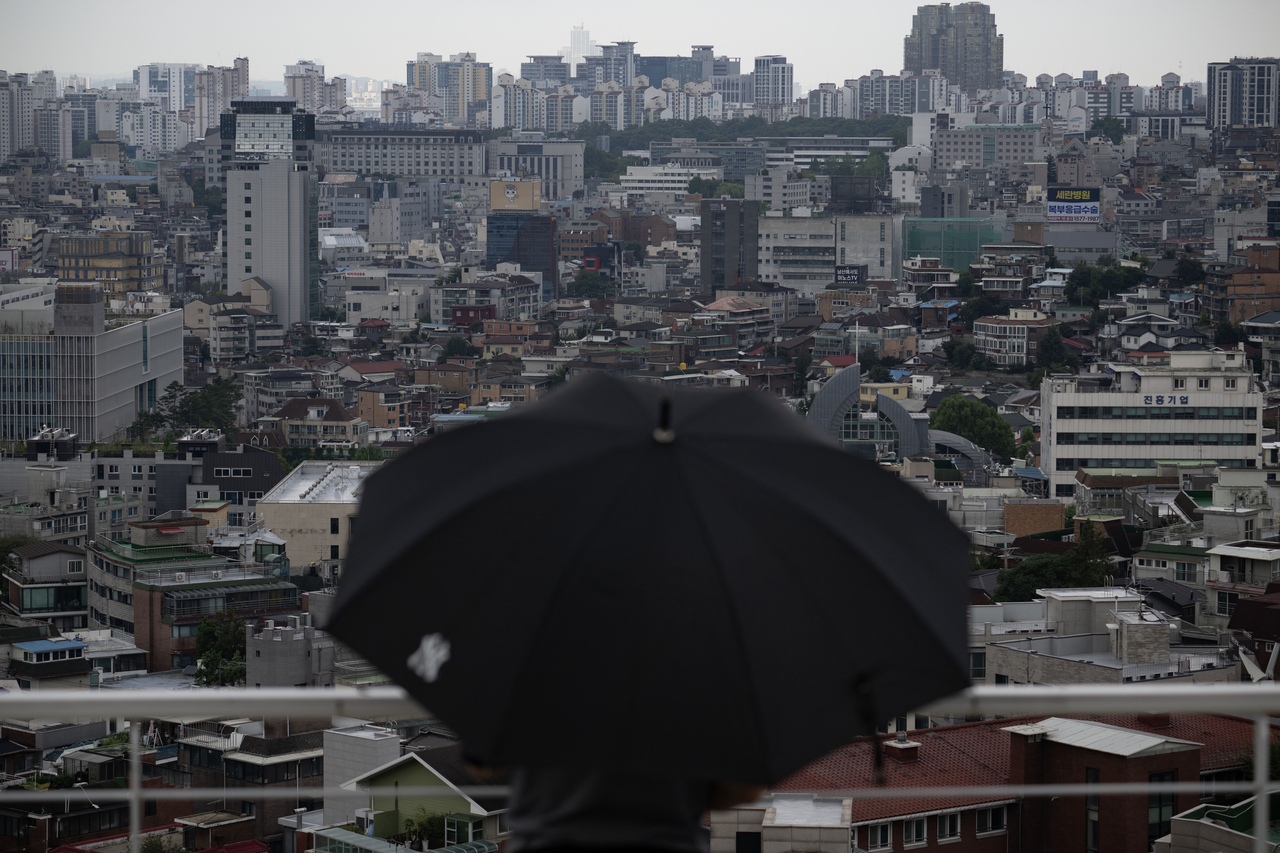
Even as the government tightens mortgage lending to curb money flowing into the real estate market, new channels for bypassing those restrictions are opening up outside the banking system. Seller financing — where a seller lends the buyer part of the purchase price — has been joined by private financial arrangements that exploit jeonse deposits. The problem, analysts say, is that financial regulators have no direct way to police such transactions and cannot even measure how large the market has become. The concern is that a balloon effect is taking hold, with home-purchase funds finding their way into the market through unregulated routes, potentially undermining the government's goal of stabilizing real estate prices.
Financial industry sources said Tuesday that consulting firms have recently appeared in the apartment subscription market in Seoul's Gangnam area, matching cash-rich investors with lottery winners who lack the funds to complete their purchases. Under one such arrangement, an investor pays a 3 billion won ($2.25 million) jeonse deposit on a unit with a market-rate jeonse value of 2 billion won, charges 20 percent annual interest on the 1 billion won excess, and secures the right to buy the property at a pre-agreed price in the future.
The structure differs from seller financing, in which the seller directly lends part of the purchase price to the buyer, but both arrangements share a defining feature: home-purchase funds are raised without going through a financial institution. Neither is subject to banking-sector lending regulations such as mortgage loan caps or the debt service ratio.
Transactions that use jeonse deposits in this way could also distort the broader rental market. If an above-market deposit is recorded as an actual transaction price, other landlords and brokers may treat it as a benchmark for surrounding jeonse rates — a so-called anchoring effect. "In Korea right now, one or two transactions can set the market price, and no one outside the parties involved can see what is really going on," said Ko Jong-wan, head of the Korea Asset Management Research Institute. "An abnormally high jeonse deposit can be taken as a new benchmark by other landlords and brokers, and that can pull prices up across the board."
Private lending between individuals is not a new phenomenon, but analysts say the incentive to use such arrangements has grown sharply as mortgage loan limits have been tightened and it has become harder to secure home-purchase financing through conventional lenders. "Even if bank lending is restricted when expectations of rising home prices are high, the demand for financing does not simply disappear," Ko said. "If anything, workarounds can multiply rapidly." The concern is that lending restrictions designed to keep money out of the real estate market may instead push that demand beyond the reach of regulators.
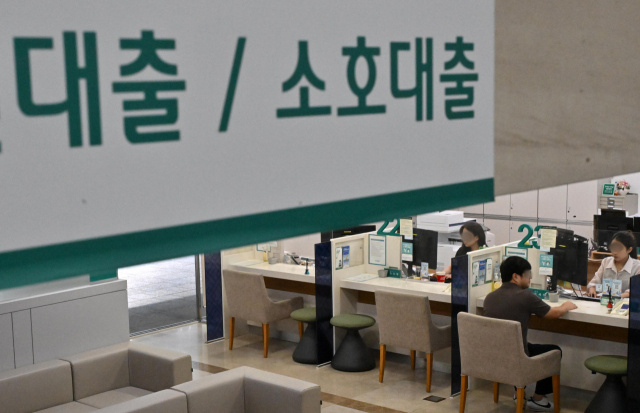
Doubts about the effectiveness of real estate policy are surfacing within the banking sector as well. "In a structure where home-purchase loans from financial institutions are strictly limited but private financing is permitted, the government's intended effect of suppressing real estate demand could be weakened," one banking industry official said. A similar controversy arose earlier over Samsung Electronics' in-house loans for home purchases, which also fell outside the scope of financial-sector household lending regulations.
Despite those concerns, financial authorities say they have no clear means of stopping such workarounds. While loans from financial institutions are subject to caps, debt service ratio requirements and other rules, peer-to-peer monetary transactions fall outside the regulatory perimeter. "Transactions in which an individual — not a financial institution — directly lends money are not subject to financial-sector lending regulations," a Financial Services Commission official said. "If interest is paid at a legally permissible rate, there is no way to block every private transaction." The position is that a transaction cannot be restricted solely because the funds are used to buy a home, as long as it complies with legal interest-rate limits and other relevant rules. Legal experts, however, note that unlike one-off private loans, arrangements involving repeated lending for profit could raise questions about registration requirements under the Moneylenders Act.
The Financial Supervisory Service acknowledges the limits of its regulatory reach but maintains that some side effects must be accepted as the price of reining in household debt growth. "Given that the government cannot afford to leave household debt unchecked, lending regulations have been tightened at a pan-government level, and the emergence of private financing arrangements is something that needs to be considered as part of that policy process," an FSS official said.
A more fundamental problem is that the scale of such workaround financing is nearly impossible to verify. The Bank of Korea's household credit statistics do not capture peer-to-peer loans that bypass financial institutions. While the source of funds in individual transactions can be checked through real estate acquisition financing plans, there is no way to separately track seller financing or jeonse-based private financial arrangements, or to monitor outstanding balances and delinquency rates on an ongoing basis. As a result, analysts warn, it is difficult to gauge the extent of the balloon effect from lending restrictions — and even if private debt accumulates, early warning signs of potential default risk may go undetected.
"The growth of shadow lending is a matter of trust," said Ko Joon-seok, a professor at Yonsei University's Sangnam School of Management. "The more financial transactions expand outside the regulated system, the larger the gaps in the financial authorities' management of household debt." Ko added that the situation could also weigh on foreign investors' confidence in South Korea's financial markets.
rim@heraldcorp.com