Third-quarter report analysis
Dependence on Samsung Electronics drops from 42% (2019) to 24% (2026)
High-performance MLCCs and semiconductor substrates gain traction on AI boom
Diversification away from Samsung Electronics-heavy structure bears fruit
4.3 trillion won AI substrate factory breaks ground in Sejong
Samsung Electro-Mechanics' revenue dependence on Samsung Electronics has fallen to an all-time low of 24%, driven by surging demand for high-value components used in AI servers and the company's own push to diversify its customer base.
According to a third-quarter report Samsung Electro-Mechanics filed Tuesday, sales to Samsung Electronics and its subsidiaries accounted for roughly 24% of total revenue — the first time the figure has dropped below 25%.
Despite the declining share of Samsung Electronics revenue, Samsung Electro-Mechanics posted a record quarterly performance in the third quarter. With total sales reaching 3.76 trillion won ($2.82 billion) in the period, revenue from transactions with Samsung Electronics is estimated at around 900 billion won.
As recently as 2019, Samsung Electro-Mechanics' dependence on Samsung Electronics stood at 47.1%. The share first fell below 30% in 2021, when it reached 28.6%, and has continued to decline — to 29.0% in 2024 and 27.0% in 2025.
The shift reflects a strategic pivot in the early 2020s toward high-value products targeting AI, server and automotive applications. Analysts say the benefits of that transition are now materializing rapidly, propelled by the AI boom.
In earlier years, Samsung Electro-Mechanics was best known for supplying camera modules for Samsung Electronics' Galaxy smartphones, and the performance of each new Galaxy model had an outsized effect on its earnings.
More recently, however, AI-critical components such as multilayer ceramic capacitors (MLCCs) and semiconductor substrates have risen to prominence, reshaping the company's business mix.
In 2019, when Samsung Electronics accounted for nearly half of Samsung Electro-Mechanics' revenue, the optical solutions division — which makes camera modules — contributed 41.7% of total sales, outpacing the component solutions division (40.0%), which handles MLCCs. The package solutions division, responsible for substrates, made up just 18.3%.
By the third quarter of this year, the component solutions division had climbed to 47.4% of total revenue and the package solutions division to 23.4%, while the optical solutions division's share had fallen to 29.3%.
This year Samsung Electro-Mechanics has signed a series of long-term supply agreements with major global technology companies — including Nvidia, AMD, Broadcom and Amazon — covering MLCCs and high-performance flip-chip ball grid array (FC-BGA) semiconductor substrates for AI servers.
Because most of these contracts run through December 2027, Samsung Electro-Mechanics' dependence on Samsung Electronics revenue is expected to fall further next year.
Since May, the cumulative value of long-term supply contracts for key components — including silicon capacitors, AI server MLCCs, inductors and FC-BGAs — has reached about 5.18 trillion won, based on public disclosures.
As AI semiconductor performance advances rapidly, demand for the MLCCs and FC-BGAs that support those chips is growing exponentially, and analysts expect Samsung Electro-Mechanics' customer base to diversify further.
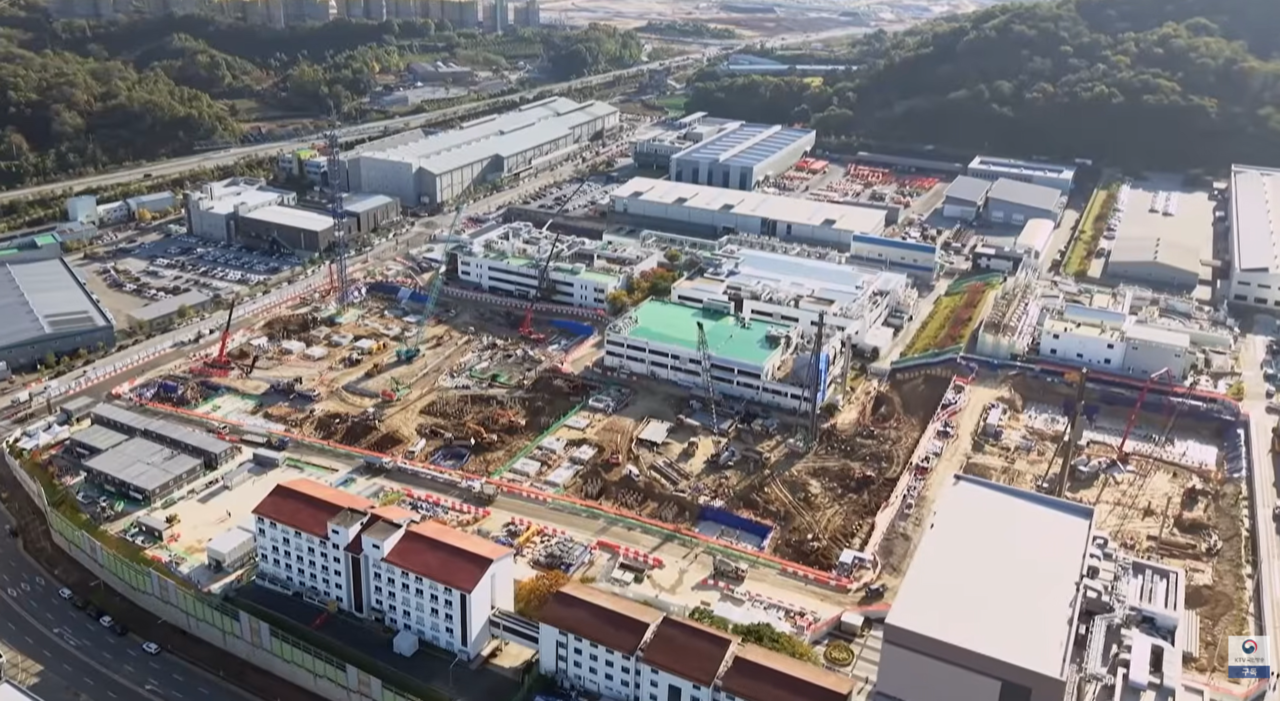
Last month, Samsung Electro-Mechanics broke ground on a high-performance package substrate production facility at its Sejong campus, committing about 4.03 trillion won to the project. To meet supply requests from global big-tech customers, the company has set an aggressive construction schedule targeting mass production by September 2028.
Samsung Electro-Mechanics, which plans to invest a total of 8 trillion won at the Sejong campus, announced at the "Chungcheong Region Mega-Project Groundbreaking Ceremony" on Thursday that it would acquire additional adjacent land and expand the investment beyond its original scope.
joze@heraldcorp.com