We see the world through food. Welcome to Middam, a column about delicious stories.
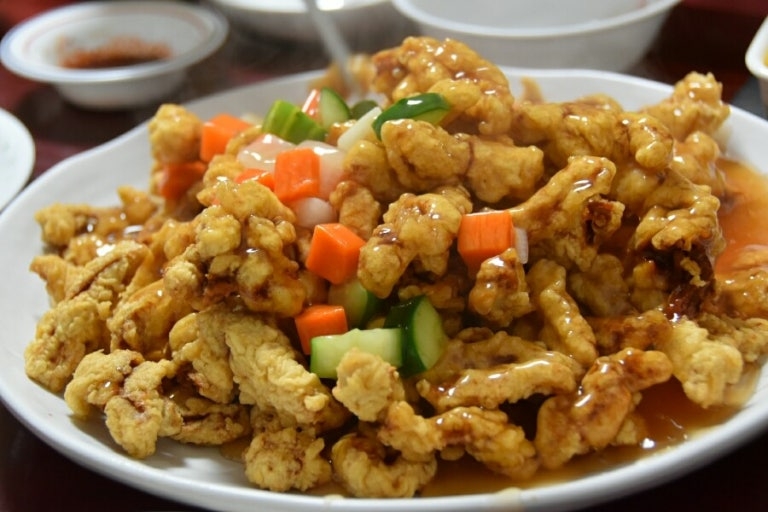
"Glutinous rice tangsuyuk is just awful."
Complaints that Chinese food in Korea has lost its flavor have been growing louder. Tangsuyuk — the sweet-and-sour pork dish that anchors the menu at virtually every Chinese restaurant in the country — is no exception. Somewhere along the way, the chewy, glutinous-rice-style version took over, and many diners are now longing for the crispy, tangy-sweet tangsuyuk of their childhood.
The tangsuyuk of earlier decades was a different dish entirely. Thick-cut pork was coated in sweet potato starch and fried to a golden, nutty crisp. The coating went soft quickly, but the rich, savory flavor it delivered was unmatched. A generous pour of sweet-and-sour sauce — built on a base of ketchup and soy sauce — finished the dish. The combination of crispy batter, bright acidity, sweetness and umami made tangsuyuk a special-occasion treat, the kind of meal reserved for birthdays and celebrations.
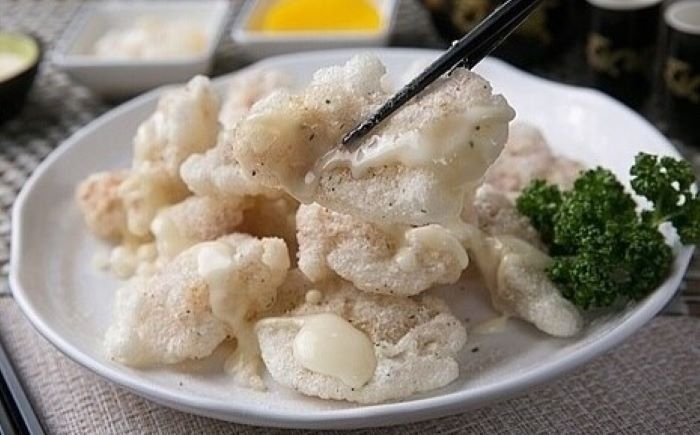
Today's tangsuyuk is so different it could almost be called a separate dish. The batter is now chewy and doughy — more like rice cake than fried coating — and diners dip rather than drench. The sauce has changed too: vinegar and corn syrup have replaced ketchup's gentle tartness, and extra starch makes it thick and sticky. Pour that sauce over the batter the old way and the result can be overwhelmingly sweet and cloying.
Koreans call this version "chapssal tangsuyuk" — glutinous rice tangsuyuk — even though it contains no glutinous rice. Multiple Chinese-cuisine chefs say its rise reflects a combination of forces: chefs seeking a differentiated texture, a restaurant industry focused on profitability, and media that amplified the trend.
The style traces its origins to the late 1990s and early 2000s, when some hotel Chinese restaurants began experimenting with potato starch to produce a chewier texture. Some chefs say the inspiration came from guobaorou, a traditional dish from China's Dongbei region. Marketed as an upscale, differentiated take on a familiar classic, the new tangsuyuk was positioned as premium Chinese dining.
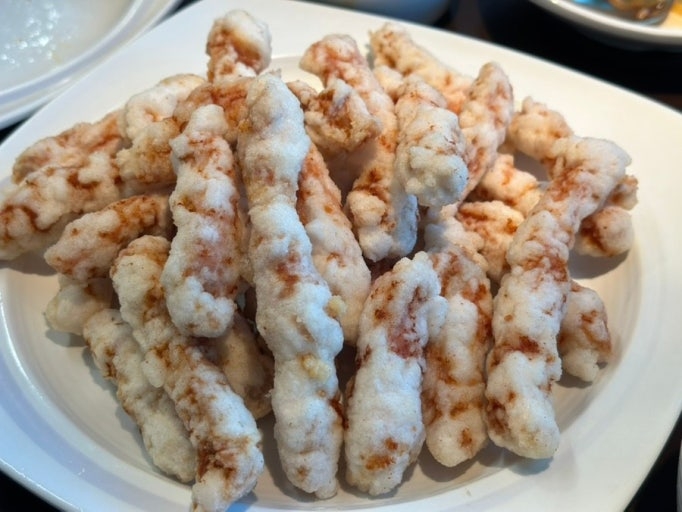
At the time, potato starch cost more than sweet potato starch — it was an ingredient used mainly in a handful of shrimp dishes. Hotel Chinese restaurants adopted it as a way to offer guests something more upscale and differentiated. The chewy texture inspired the name "chapssal tangsuyuk," even though no glutinous rice is actually used.
After 2010, media coverage billing it as "far tastier" and "premium" tangsuyuk drove a surge in mainstream popularity. Its hotel origins gave it a built-in luxury image, and an influential restaurateur's effusive praise on a television program amplified the buzz further. The name "chapssal tangsuyuk" also became firmly lodged in the public consciousness around that time.
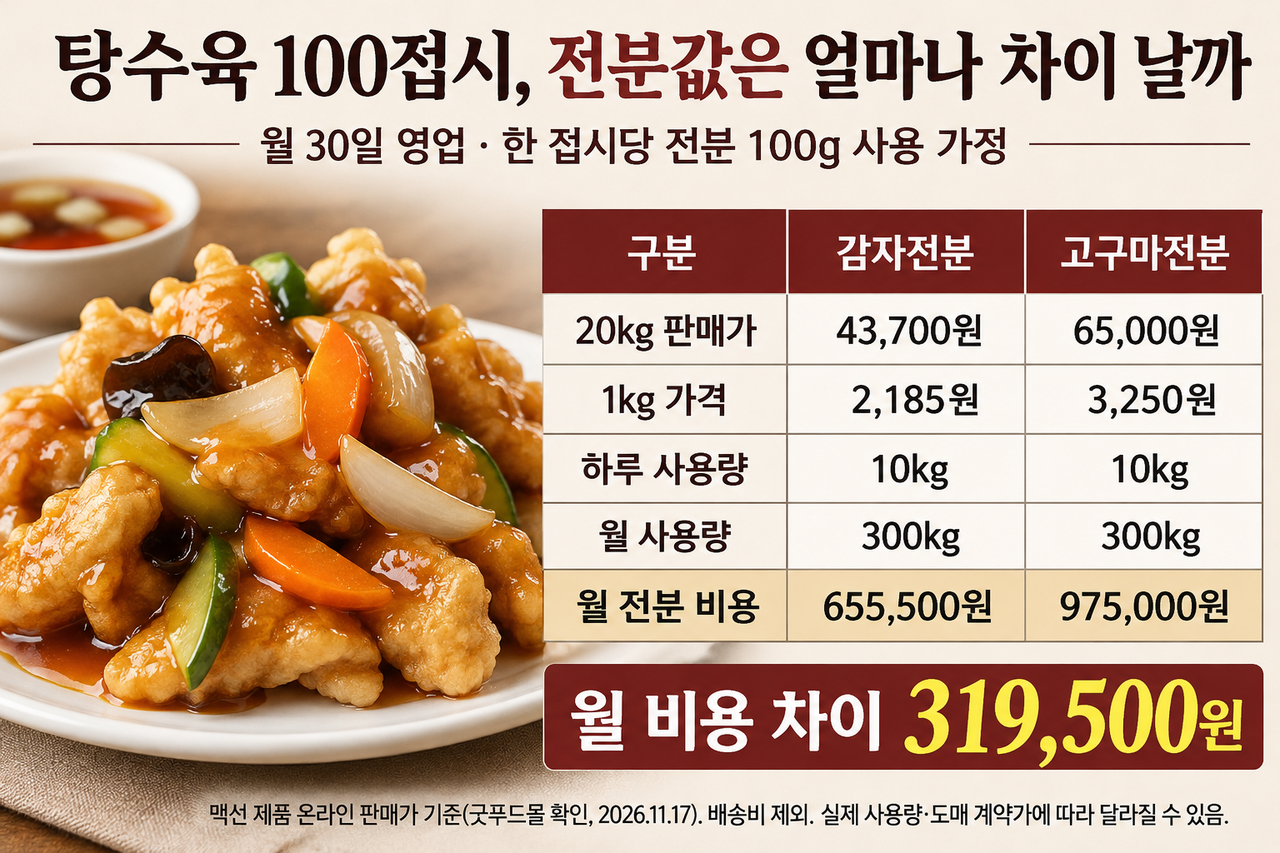
When chapssal tangsuyuk began to take off, many Chinese restaurant owners quietly celebrated. Potato starch prices had fallen below those of sweet potato starch, cutting ingredient costs. Even today, a comparison of online prices for commercial 20-kilogram bags shows potato starch selling in the 40,000-to-50,000 won ($37 to roughly $45) range, while sweet potato starch runs 50,000 to 60,000 won.
To illustrate the difference: if a 20-kilogram bag of potato starch costs 43,700 won ($33) and the equivalent bag of sweet potato starch costs 65,000 won, the per-kilogram prices work out to 2,185 won and 3,250 won respectively. A restaurant selling 100 plates a day and using 100 grams of starch per plate goes through about 300 kilograms a month. At those prices, potato starch costs 655,500 won a month versus 975,000 won for sweet potato starch — a difference of 319,500 won on a simple calculation.
Potato starch also offered a practical advantage in the kitchen. A batch par-fried in advance could be quickly finished to order and still recover its characteristic texture — ideal for high-volume operations. Sweet potato starch, by contrast, hardens when refried after sitting, meaning each order had to be fried fresh from scratch.
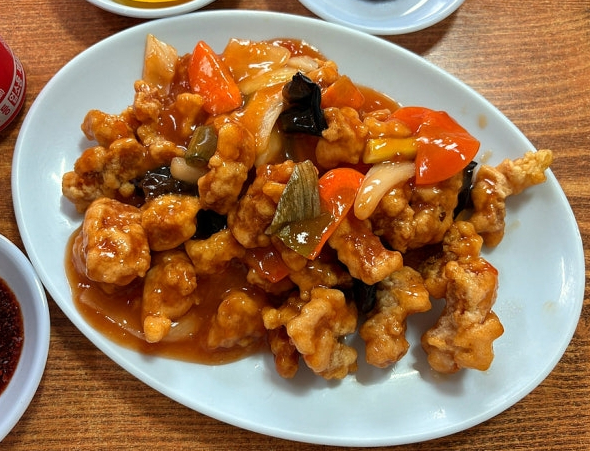
Over time, tangsuyuk made with sweet potato starch has become genuinely rare — and that scarcity has sparked a revival of interest. Diners share tips online about restaurants that still make it the old way, and the most celebrated of those spots draw lines stretching one to two hours. Part of the appeal is nostalgia, but the crowds also signal something simpler: there are still plenty of people who just find that version delicious.
Neither style is objectively superior, of course. Some diners prefer the crispy bite of sweet potato starch; others favor the chewiness that potato starch delivers. In food, there is no universal right or wrong. Still, as more people seek out the old-school tangsuyuk they thought had disappeared for good, it may be worth asking whether the restaurant industry should give consumers a wider choice.
123@heraldcorp.com