Inflation outlook lifted to 3.3% on Iran war energy shock
Germany's growth revised up sharply to 1.3% from 0.6%
France seen growing just 0.4%, with weakness persisting next year
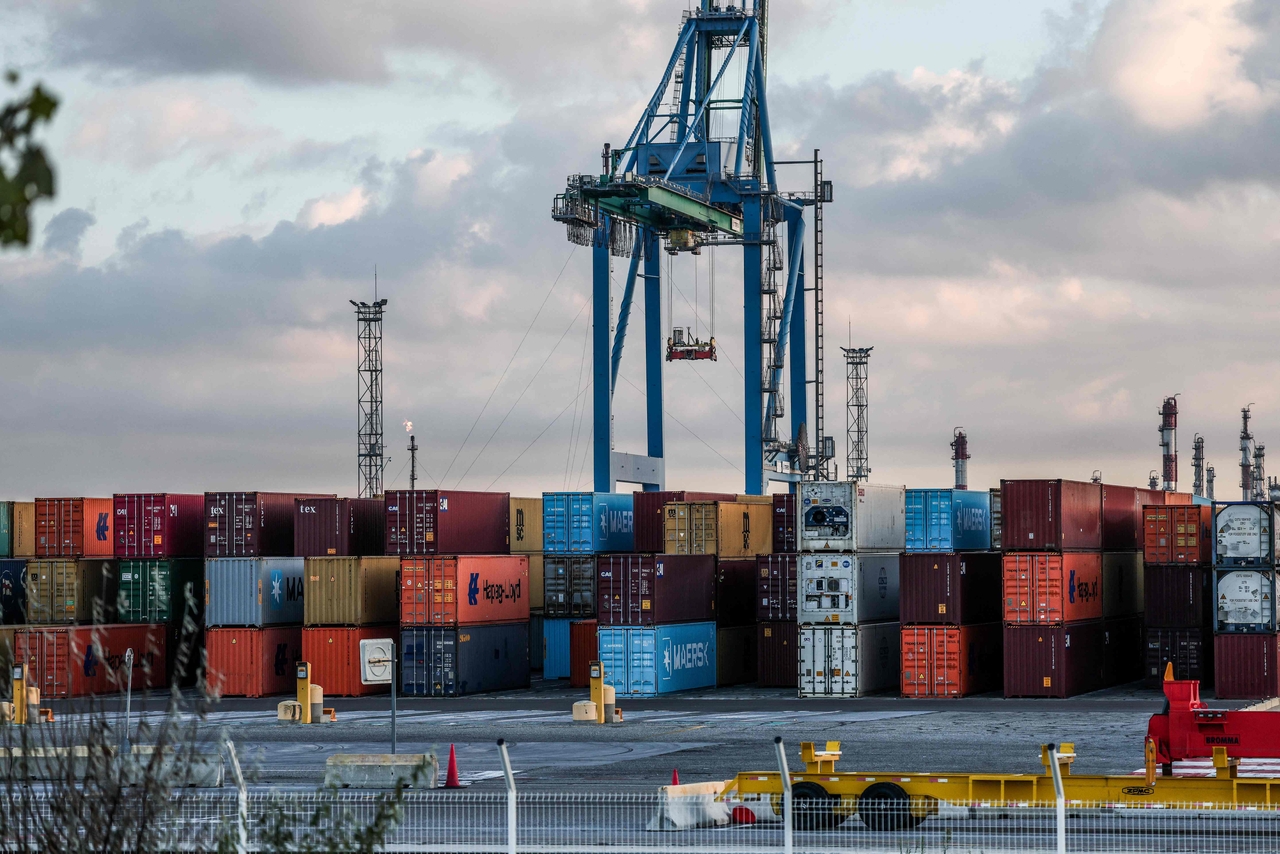
The European Union has raised its economic growth forecast for this year to 1.4%.
The European Commission upgraded its GDP growth outlook for all 27 EU member states to 1.4% in its autumn economic forecast released Tuesday (local time), up 0.3 percentage points from the 1.1% projected in May. The EU's overall growth rate is expected to hold at 1.4% next year before edging up to 1.5% in 2028.
The Commission said the upward revision reflected an AI boom and investment in electrification infrastructure that drove an export recovery, along with a stronger-than-expected rebound in the German economy.
The GDP growth forecast for the eurozone — the 21 countries that use the euro — was also revised up, from 0.9% to 1.2% for this year. The eurozone economy is projected to grow 1.2% next year and 1.3% in 2028.
Valdis Dombrovskis, the EU commissioner for economic affairs, said Europe's economy was recovering better than expected this year. "But we cannot take this for granted," he added. "We need to maintain fiscal discipline, strengthen competitiveness and build a stronger foundation for long-term growth."
Despite the improved growth outlook, the EU's inflation forecast was also revised higher as energy prices surged in the wake of the Iran war that began in February. The EU now expects annual inflation to reach 3.3% this year, above the 3.1% projected last spring. Inflation is forecast to remain elevated at 3.2% next year — well above the earlier projection of 2.4% — before easing to 2.3% in 2028. According to EU statistics, member states have spent more than 100 billion euros ($110 billion) extra on fossil fuel imports since the war began.
Meanwhile, the growth outlooks for the EU's two largest economies — Germany and France — diverged sharply.
Germany is expected to grow 1.3% this year, more than double the 0.6% forecast in May. France, by contrast, is projected to grow just 0.4%, well below the 0.8% projected last spring, as the country has been roiled by large-scale protests over deteriorating school conditions and rising prices.
The EU expects Germany to grow 1.0% next year, while France is forecast to expand by just 0.6%.
mokiya@heraldcorp.com