Collaborative spaces to bring together residents, businesses and cooperatives
Tailored projects to address care, food and employment needs
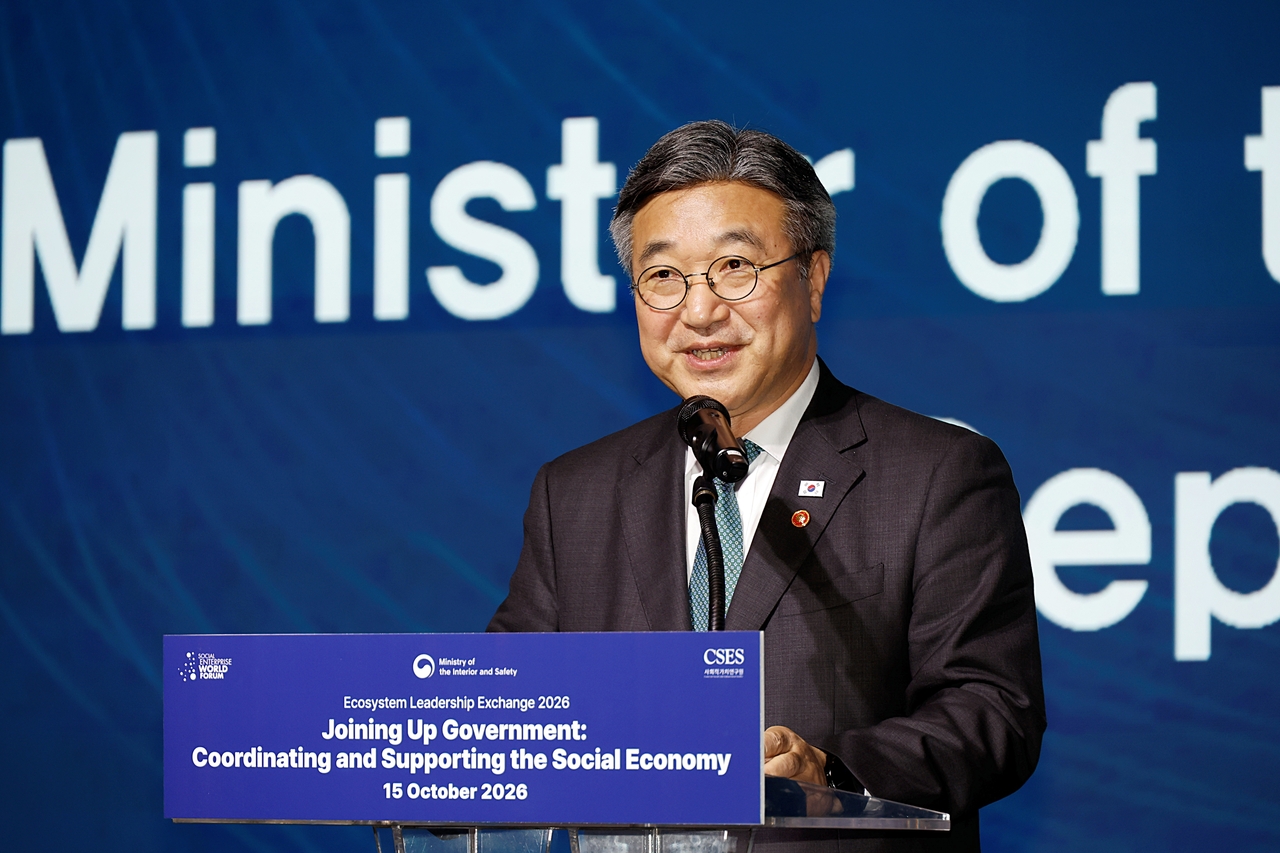
Six social solidarity economy hubs — where local residents, social enterprises and cooperatives can pool resources to solve community problems and develop new ventures — will be established across the country for the first time.
The Ministry of Interior and Safety announced Wednesday that it had selected six cities and counties for its community-based social solidarity economy innovation hub program: Goyang and Anseong in Gyeonggi Province, Cheongdo-gun and Chilgok-gun in North Gyeongsang Province, and Buyeo-gun and Hongseong-gun in South Chungcheong Province. It is the first time the government has designated social solidarity economy collaboration hubs at the basic local government level.
The innovation hubs are designed as shared spaces that connect diverse local actors to jointly address residents' problems and create new business opportunities. Unlike existing space-support programs that focused on helping individual companies move in or launch startups, the hubs serve as local-level collaboration platforms where residents, social enterprises, cooperatives and community businesses come together to plan and carry out joint projects.
Each of the six selected areas plans to build social solidarity economy models suited to its own characteristics and resources — improving everyday services and revitalizing local economies — and to establish a hub space to support those efforts.
In Goyang, care organizations, food businesses and youth groups will work together to develop services for residents and pursue food-related projects using locally grown produce. Cheongdo-gun plans to use a former public health center as its hub, where local cooperatives and social enterprises will collaborate to provide care and a range of everyday services.
Chilgok-gun will connect locally produced goods with public institutions that can purchase them on a priority basis, broadening market access for local businesses and channeling higher sales into job creation. Hongseong-gun will bring together traditional market vendors, neighborhood merchants and cooperatives to jointly sell local products and inject new energy into the local commercial district through new startups.
Anseong will allow residents to directly propose everyday inconveniences or local problems, with social enterprises and cooperatives then developing solutions into new products and services for sale. Buyeo-gun will provide accommodation and shared laboratory spaces for young people to explore various types of work while staying in the area, helping them try new ventures alongside local businesses and organizations and find pathways to entrepreneurship and permanent settlement.
Hwang Sun-jo, director general of the ministry's Social Solidarity Economy Bureau, said many communities have residents with good ideas and capable businesses, but opportunities are often lost because the two sides never connect. "This innovation hub will not simply stop at creating a space — it will serve as a starting point where diverse local actors come together to solve shared problems and build new jobs and businesses," Hwang said.
thlee@heraldcorp.com