Herald Business-Daekyung Aju forum on labor and safety law
Jeon Hye-seon of Yeolin Labor Law Firm delivers keynote
Raises concerns over expansion of prime contractor liability under yellow envelope law
'Strengthening safety management has paradoxically led to employer status recognition'
Calls for revision of Trade Union Act
Litigation spreading as companies contest labor board rulings
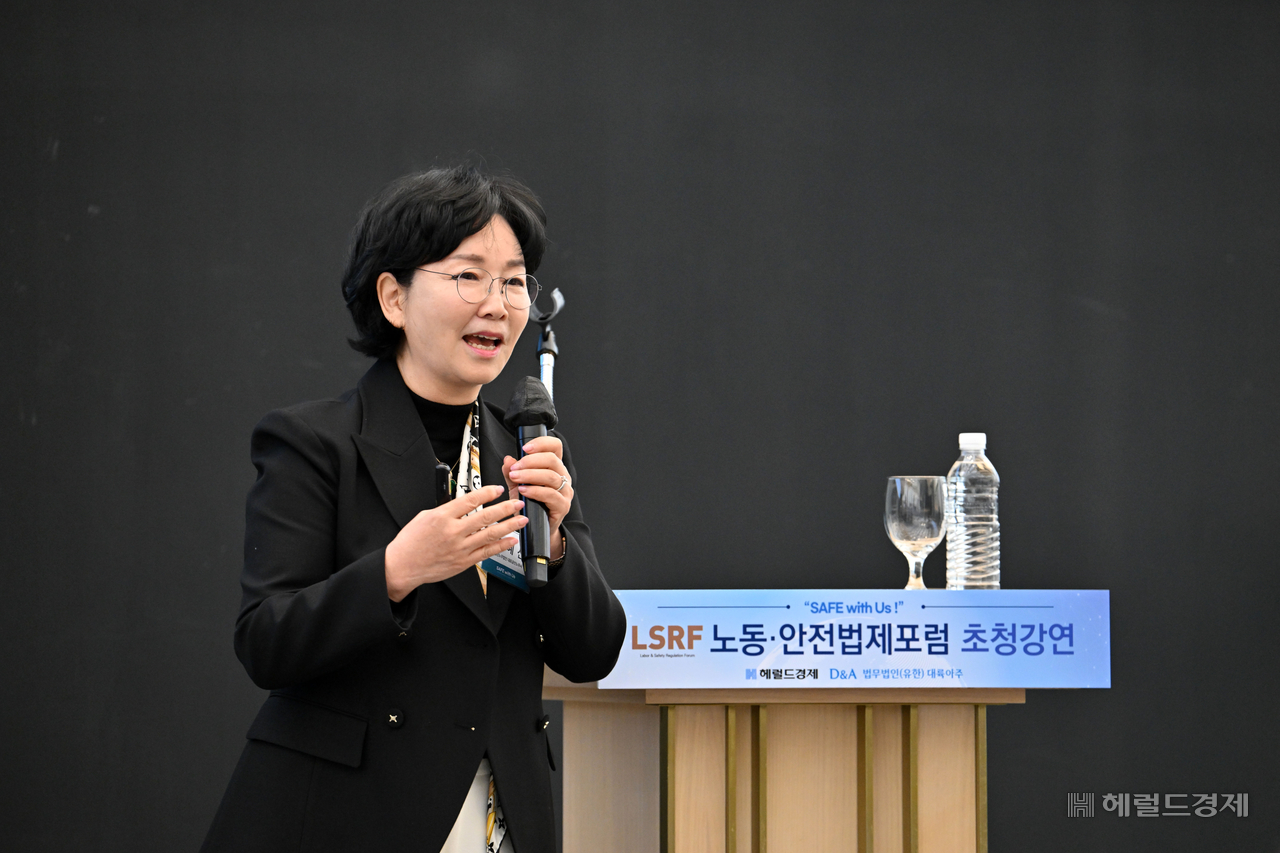
"We strengthened safety management to prevent industrial accidents, yet those very measures are now being used as grounds to recognize prime contractors as employers. Safety management obligations carried out in compliance with the law must not be treated as a basis for determining employer status under the yellow envelope law."
Jeon Hye-seon, head of Yeolin Labor Law Firm, made the remarks Wednesday at the Labor and Safety Law Forum jointly hosted by The Herald Business and law firm Daekyung Aju at Ambassador Seoul Pullman Hotel in Jung-gu, Seoul.
Jeon argued that statutory safety obligations and collective bargaining responsibilities toward subcontracted workers' unions must be treated as separate matters — and that the current paradox, in which stronger safety measures lead to broader employer liability for prime contractors, must be resolved.
Jeon has been active for more than 30 years in construction site labor management, labor-management collective bargaining and industrial accident response since opening a labor law practice in 1991. Jeon previously served as vice president of the Korea Certified Labor Attorney Association and as an outside director of the Korea Occupational Safety and Health Agency, and currently serves as a mediation committee member at the Seoul Central District Court.
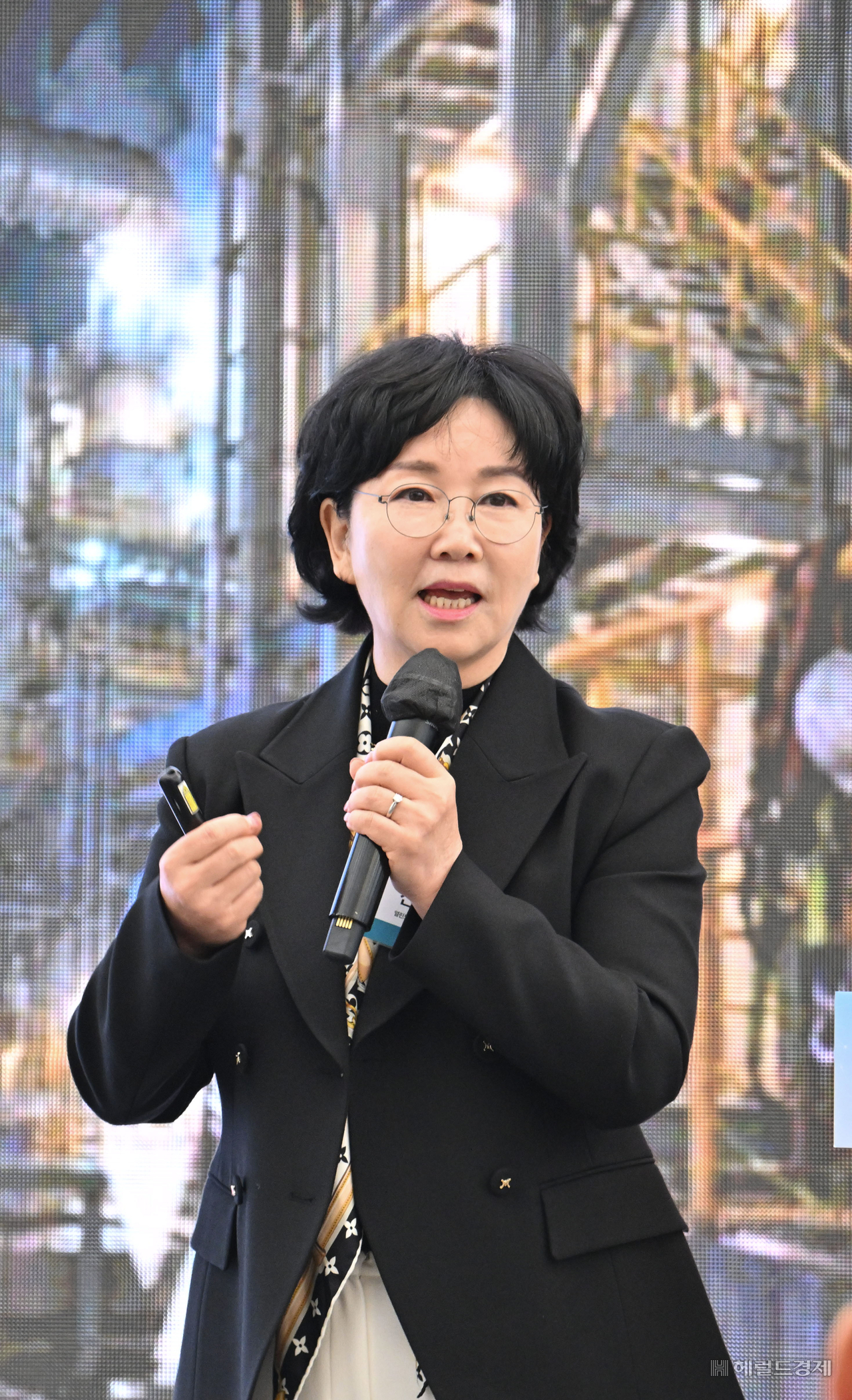
The amended Trade Union Act — commonly known as the yellow envelope law — took effect March 10 and expanded the definition of "employer" to include companies that substantially and specifically control or determine working conditions, even without a direct employment contract. The change has since fueled a series of disputes over prime contractors' collective bargaining obligations.
Safety management activities conducted on behalf of subcontracted workers have become a central flashpoint, as they are increasingly cited as evidence of employer status. However, the Ministry of Employment and Labor has said that fulfilling statutory obligations alone is not sufficient to establish employer status, and that actual decision-making authority over facilities and working conditions must be assessed separately.
"We set safety rules, conducted alcohol testing and restricted site access to ensure safety — and now those measures are being used as grounds to recognize prime contractors as employers," Jeon said. "Companies are facing considerable confusion as the number of bargaining demands has grown to 64, simply because they fulfilled their safety management obligations."
Jeon proposed as an alternative a Trade Union Act amendment introduced by People Power Party lawmaker Kim So-hee on April 30. The bill would explicitly exclude measures taken to fulfill obligations under the Occupational Safety and Health Act and the Serious Accidents Punishment Act from being treated as control or determination of working conditions.
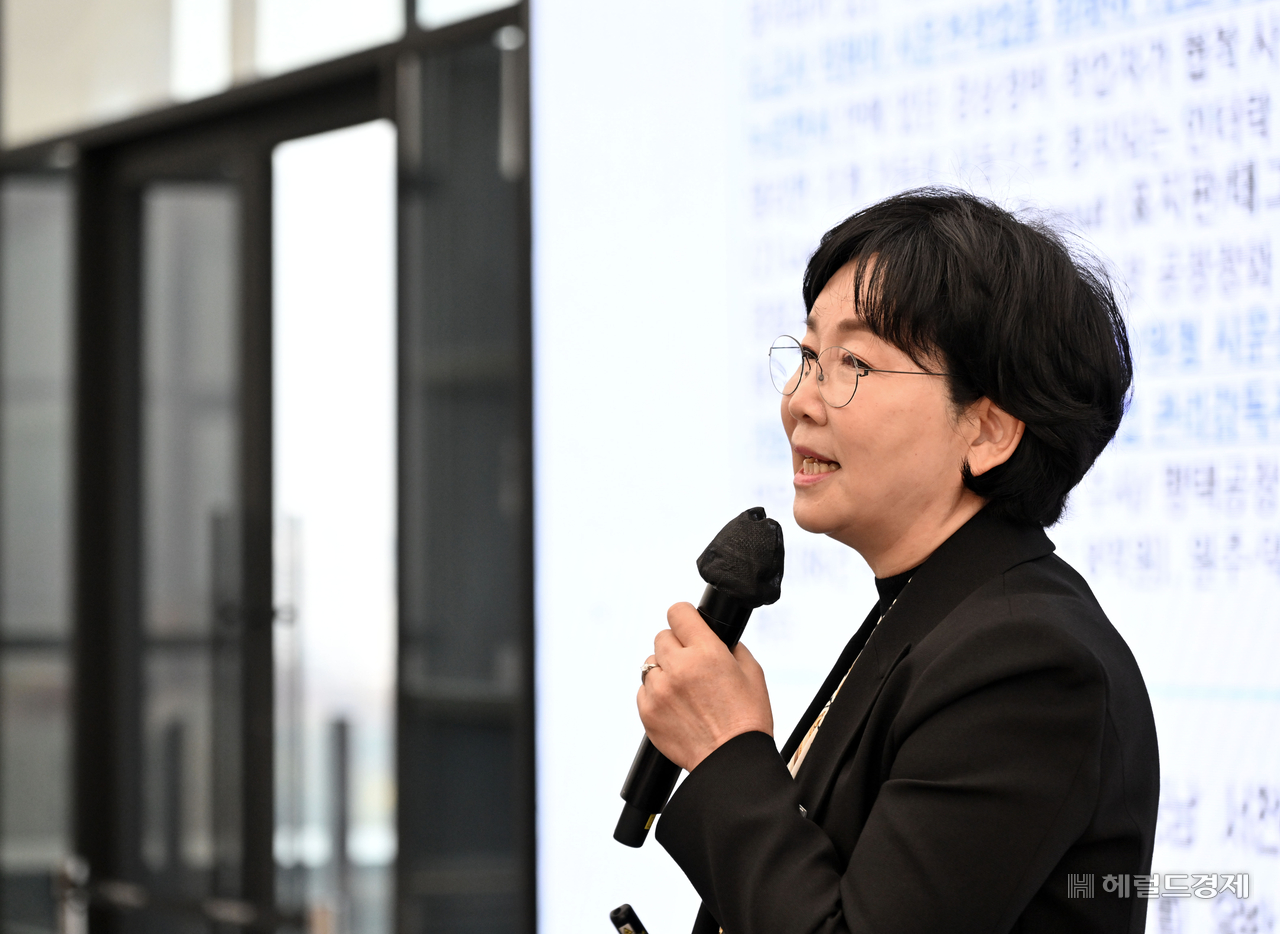
"This kind of legislative revision is necessary to genuinely secure safety at industrial sites," Jeon said. "Institutional safeguards are needed so that companies can take proactive safety measures."
Data released by lawmaker Kim's office during last month's national audit showed that prime contractor employer status was recognized in 27 of the 30 labor relations commission rulings delivered to labor and management since the yellow envelope law took effect. Industrial safety-related matters were cited as grounds in 22 of those 27 cases.
The scope of bargaining recognized also varied by case. In the Korea Zinc case, only the operation of a joint prime-subcontractor industrial safety and health committee was recognized as a subject for bargaining, while in the SK Eco Plant case, recognition extended to guaranteeing the union's right to halt work. In both cases, the provision of personal protective equipment, hazard pay and paid rest time during heat waves were excluded from the prime contractor's bargaining obligations.
"Even on similar safety-related issues, labor relations commissions are reaching different conclusions," Jeon said. "In some cases they rule that bargaining is required, while in others they decide the matter is not subject to bargaining — there is a clear lack of consistent standards."
A growing number of companies are filing administrative lawsuits and seeking injunctions against such rulings. If a prime contractor is recognized as an employer, it can face unfair labor practice liability for refusing to bargain.
"If a prime contractor is recognized as an employer, it is not simply required to engage in collective bargaining — it can also become a party to an unfair labor practice claim," Jeon said. "That is precisely why companies are choosing not to accept labor relations commission rulings and are instead pursuing administrative litigation."
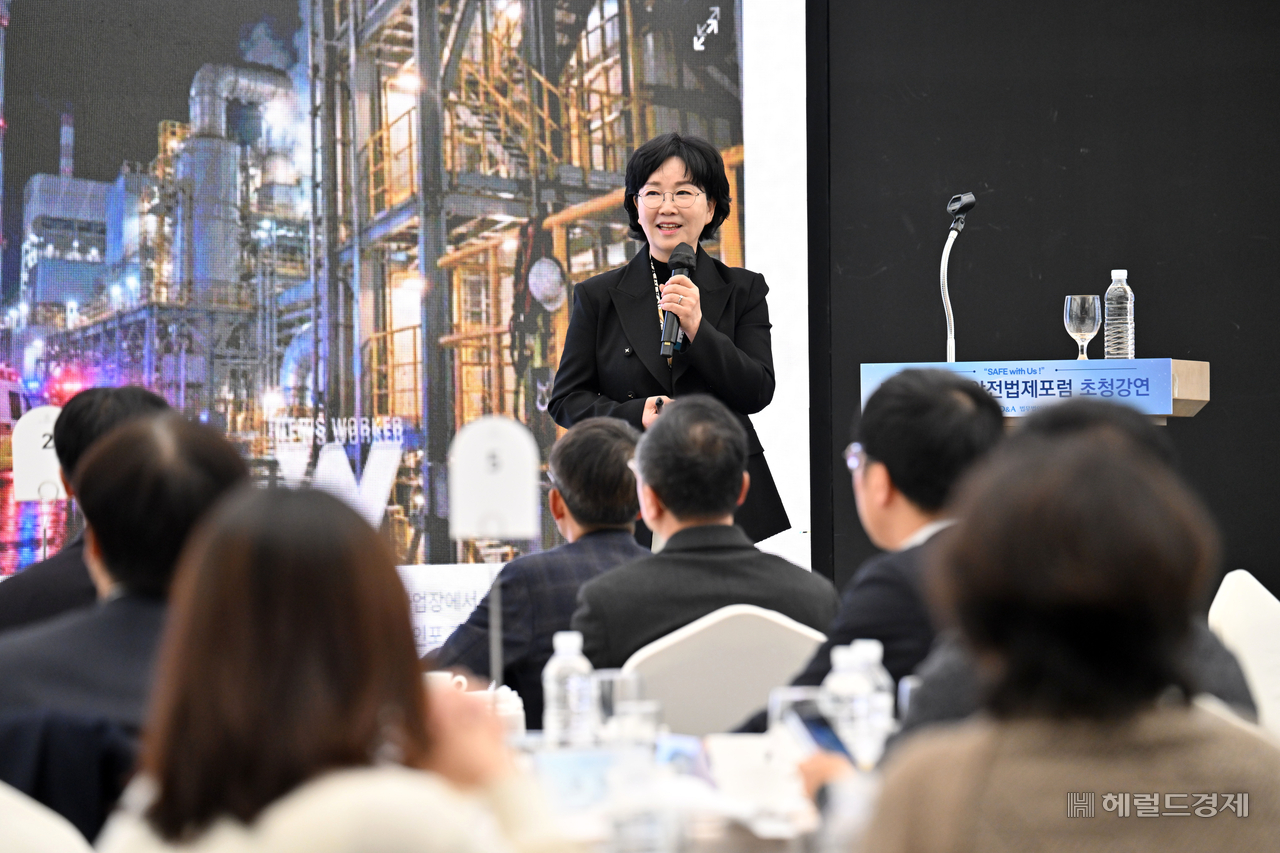
Jeon cited cases in which Donghee Auto and Posco had injunction requests granted, noting that court decisions can serve as a temporary means of relieving companies of their bargaining burden.
Jeon also referenced Supreme Court rulings issued in May in the Hyundai Heavy Industries case and in July in the CJ Logistics case, both of which involved incidents that predated the amended law. Because prime contractor employer status was not recognized in those pre-amendment cases, Jeon said companies should mount an active legal defense in future disputes as well.
"The amended law uses the phrase 'substantial control,' but specific criteria for making that determination are still lacking," Jeon said. "Given that companies are being recognized as employers under these circumstances, it is worth contesting the matter in court."
Jeon also called for prime and subcontractors to pursue a joint "safety cooperation agreement" rather than relying solely on adversarial collective bargaining to address industrial safety issues.
"Safety starts with workers on the ground following safety rules — it cannot be secured simply by issuing unilateral instructions," Jeon said. "Unions also need to include in any agreement not only demands directed at prime contractors, but also safety measures that workers themselves can practice on site."
Jeon stressed the importance of a swift initial response following a serious accident. "When an accident occurs, prime and subcontractors should prioritize reaching a settlement with the bereaved families rather than deflecting blame and engaging in legal battles," Jeon said. "Even if liability is contested through legal proceedings afterward, resolving the situation quickly at the outset is a practical way to prevent conflicts from dragging on."
kwater@heraldcorp.com