Special dialogue at Innovate Korea 2026, hosted by Herald Media Group
Leaders from media and science stress the enduring importance of humanity in the AI age
Looking back at the past decade — and forward to the next: 'Korea will show its greatness'
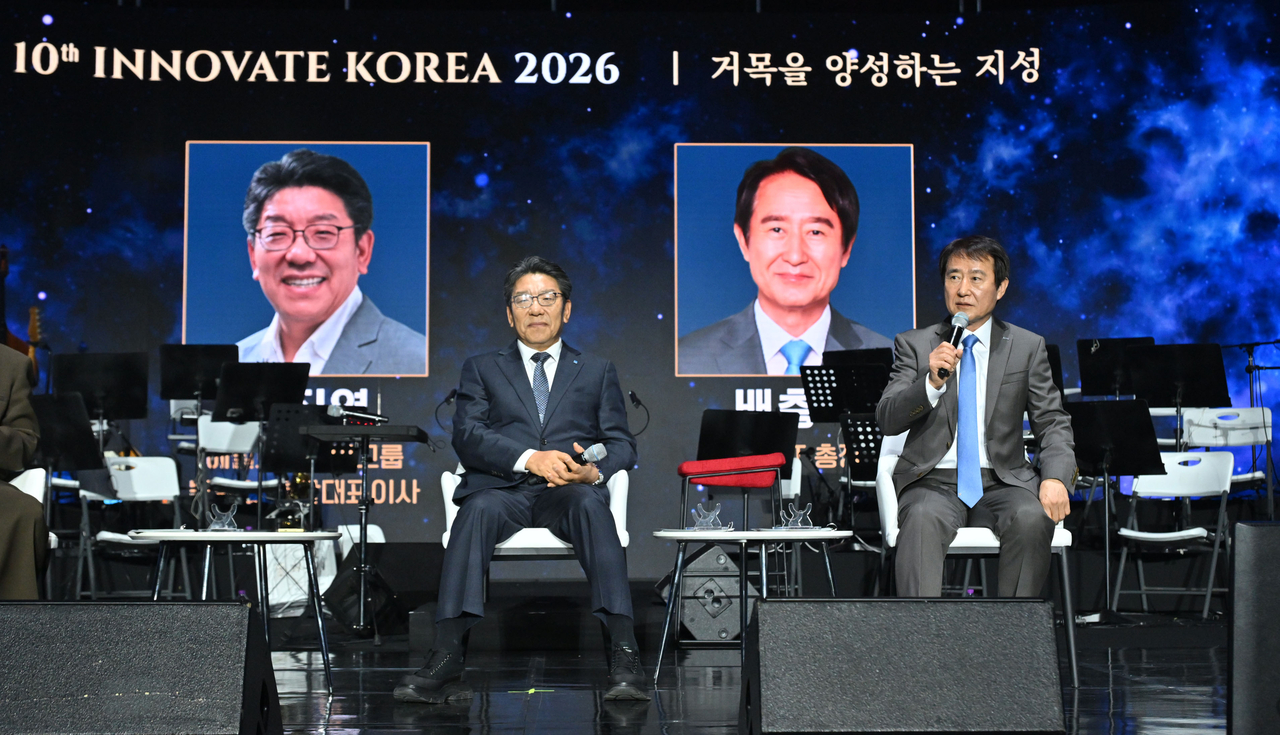
"What you need is not just coding — it's imagination. Don't be a model student. Be a pioneer." — Choi Jin-young, CEO of Herald Media Group
"AI tells you how to get there. It is humans who decide the direction." — Bae Choong-sik, president of KAIST
In an era where AI has become part of everyday life, what qualities will tomorrow's talent need? Two leading figures from the worlds of media and science — Choi Jin-young, CEO of Herald Media Group, and Bae Choong-sik, president of KAIST — offered a clear answer: "Imagine what the world has never seen before."
Their message was that while AI can map out the route to a destination, it is ultimately humans who decide where to go and who to bring along.
Both particularly stressed the irreplaceable value of human imagination, empathy and agency — qualities they said will only grow more important in the AI age. They also argued that the benefits of AI-driven innovation must reach everyone, regardless of nationality, region, gender or economic standing.
Choi and Bae shared their vision for the next decade at the 10th-anniversary special dialogue of Innovate Korea 2026, held Tuesday at the Ryu Keun-chul Sports Complex on the KAIST campus in Yuseong-gu, Daejeon. The event was co-hosted by Herald Media Group, KAIST and the National Research Council of Science and Technology.
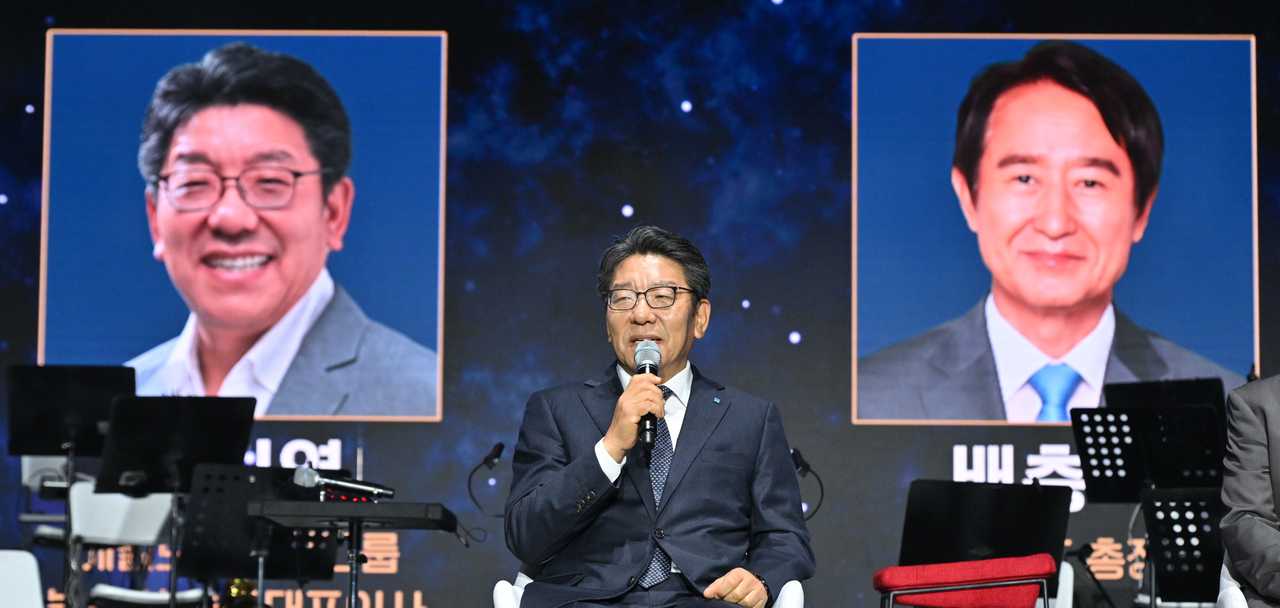
At the heart of both speakers' remarks was a shared conviction: even in the age of AI, humanity comes first. However far AI technology advances beyond human capability, they said, the philosophy, agency and emotional depth that are uniquely human will never lose their value.
"AI technology paves the road, but it is people who walk it," Choi said. "You cannot code an algorithm for sublime compassion." He added that the ability to empathize, to stand in solidarity, to share in others' pain, and to cultivate the power of reflection and insight has become more important than ever.
Bae echoed that view, stressing the human role in leading technology rather than being subordinated to it. "We must become people who use AI well, and to use it well, we must be self-directed," he said. "We need the philosophy and agency to lead AI, not just follow it."
Bae also outlined KAIST's efforts to reform education along these lines. "KAIST is building an AI-native campus, integrating education, research, administration and infrastructure," he said, emphasizing the importance of an environment that embraces AI while keeping humans firmly in the driver's seat.
Both speakers expressed strong agreement with the theme of this year's event: "The Next 10 Years — You Are the Main Character (Beyond AI, Humanity First)."
"The answer lies in humanity first," Bae said. "Joy, sorrow, hesitation, anguish — these are emotions unique to humans. AI cannot replace them, and we must not allow it to."
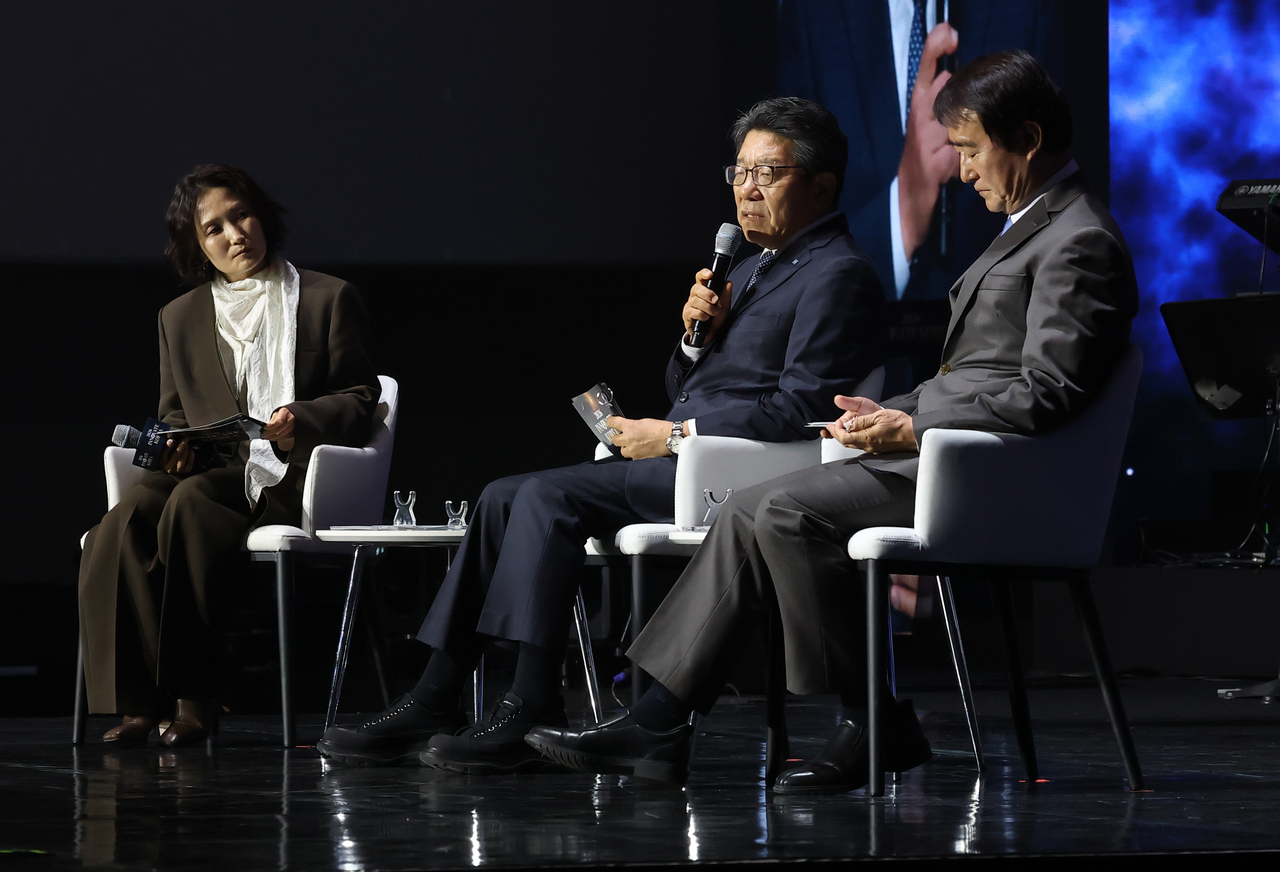
Both speakers then turned their attention to the decade ahead.
Looking beyond the scientific and technological breakthroughs of the past 10 years, they said South Korea stands at the threshold of new opportunities and expressed confidence that the country will emerge greater than before.
Two themes dominated their forward-looking remarks: the democratization of AI and physical AI. They argued that South Korea must build an environment where everyone can benefit from AI technology, while harnessing the country's manufacturing strengths by combining them with AI to secure new engines of growth.
"Making sure AI benefits are distributed broadly — across countries, institutions, companies and regions with varying AI resources — is a major challenge," Bae said. "We must achieve the democratization of AI so that everyone can use it together."
For South Korea's future competitiveness, Bae pointed to physical AI. "Our country is a full-stack nation with a well-developed manufacturing base and solid foundational capabilities," he said. "When AI is combined with that, it will open an era of efficient manufacturing, autonomous driving, robotics and physical AI."
Bae added that South Korea's prosperity would come from physical AI, expressing confidence that the country can position itself at the center of a new industrial revolution.
Choi looked beyond technological innovation to a future where humanity confronts its greatest challenges head-on. "We will find breathing room from the climate crisis and energy problems," he said. "Even as we face the reality of inter-Korean relations squarely, we will enter an era where barriers are broken down through culture and the arts."
"This year's Innovate will be the first step toward that," Choi said, expressing hope for a new decade in which technology and humanity advance in harmony.
ko@heraldcorp.com