Disclosed in quarterly report
Company aims for leading position in next-generation robot market
Demand for high-capacity, low-power LPDDR expected to rise
3D-stacked DRAM to minimize data latency
Safety and security capabilities to be enhanced for physical AI push
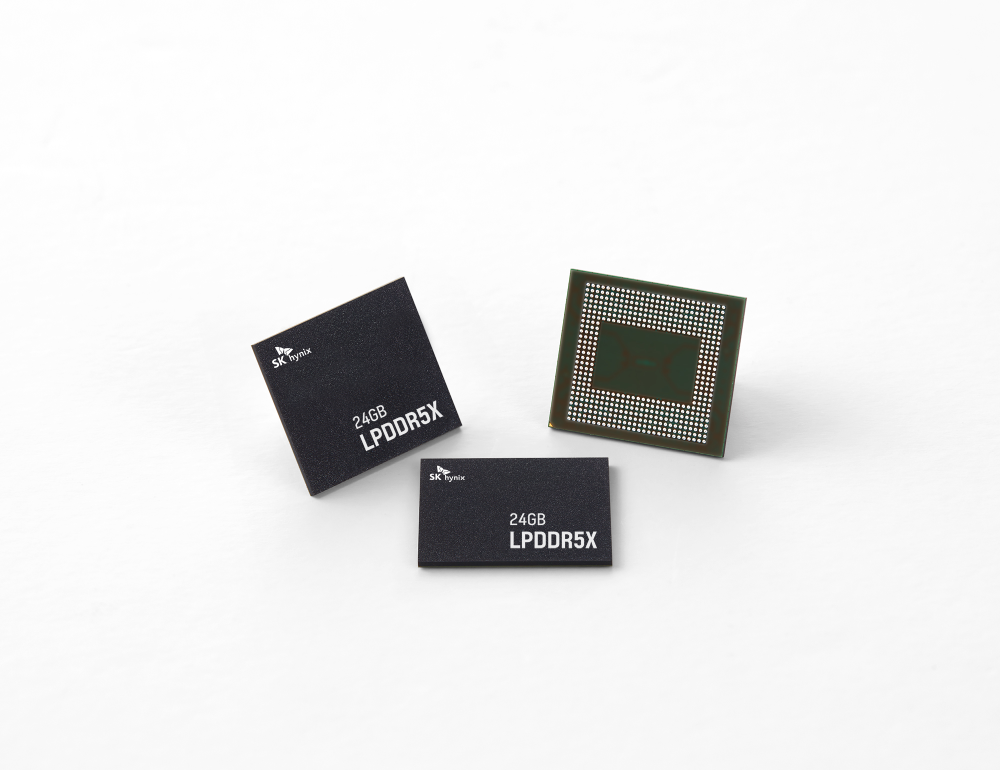
SK hynix plans to strengthen its memory portfolio for humanoid robots as it prepares for the era of physical AI, targeting the humanoid market with high-capacity, low-power memory chips and 3D-stacked DRAM currently under development.
According to the Financial Supervisory Service, SK hynix disclosed in its quarterly report Wednesday that it plans to build out an optimized memory portfolio dedicated to humanoid robots and secure a leading position in the next-generation robot market.
SK hynix said demand for high-performance memory chips to support on-device AI and real-time environmental awareness is surging alongside growth in the humanoid robot market. On-device AI refers to running AI models locally on a device without connecting to an external cloud.
Humanoid robots, which mimic human movement, require precise control and rapid processing of data from multiple sensors without delay. To meet those needs, demand is expected to grow further for LPDDR5 — a high-capacity, low-power DRAM — as well as 3D-stacked DRAM with maximized bandwidth.
LPDDR5 is a low-power DRAM designed to transfer data quickly while reducing power consumption. It is considered a suitable memory solution for humanoid robots, which must operate on batteries within limited internal space.
3D-stacked DRAM is a memory solution aimed at the future. Whereas conventional designs place memory beside a processor and move data across that gap, 3D-stacked DRAM stacks DRAM directly on top of a GPU or NPU, enabling nearly a tenfold increase in bandwidth and a reduction in power consumption — made possible by dramatically shortening the distance data must travel.
Industry observers note that improving computational performance alone will not be enough to commercialize physical AI such as humanoid robots. Robots must be able to assess situations on their own even in environments with unstable network connectivity. As a result, discussions are intensifying around where to store data and how quickly it can be moved.
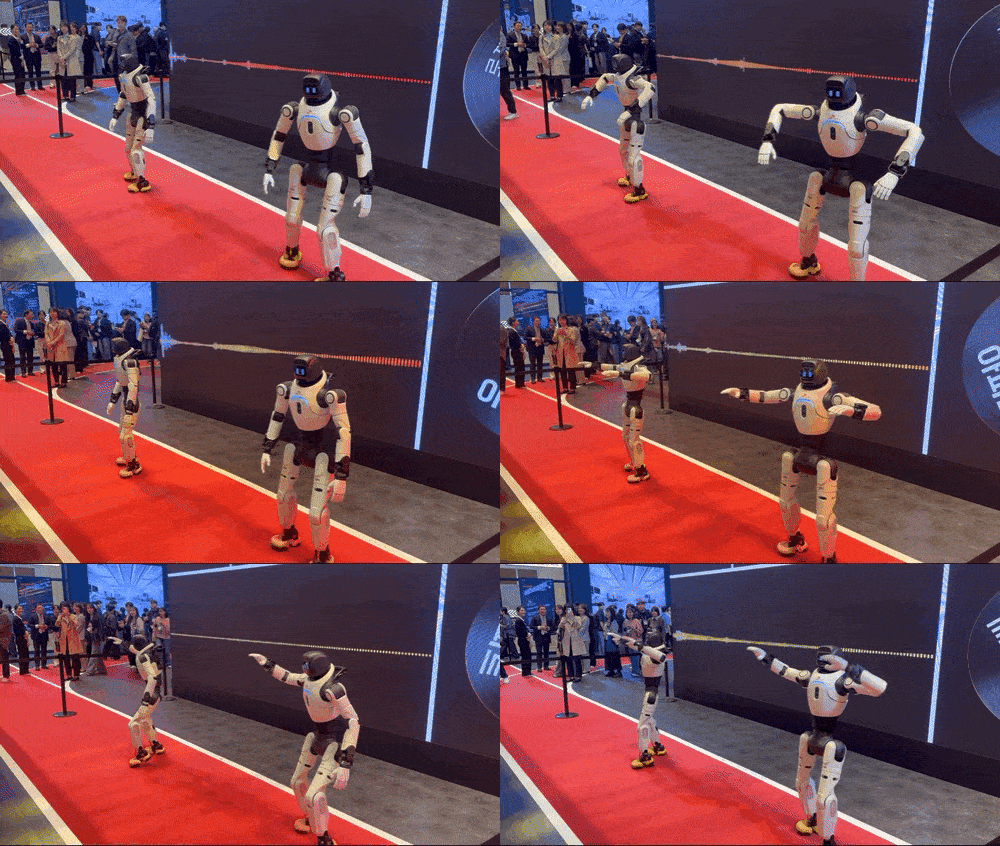
SK hynix believes that the ability to perform safe and complex tasks — going beyond data storage to enhance edge AI computing performance — will determine memory competitiveness in the humanoid era.
To that end, the company is also actively developing Processing-in-Memory technology, which performs some computations inside or near the memory chip itself to reduce unnecessary data movement.
SK hynix is also focusing on specialty product development to address future physical AI demand, much like its work on 3D-stacked DRAM. Representative examples include industrial-grade memory designed to operate reliably across a wide range of temperatures — such as those found in factories — and automotive-grade memory built to meet high reliability requirements.
The company is also stepping up safety and security capabilities for its push into the physical AI market. SK hynix recently announced that its LPDDR5X product obtained SIL 3 certification under IEC 61508, the international functional safety standard for industrial applications. SIL 3 is the highest rating achievable by a single memory semiconductor.
The company said the certification recognizes its safety capabilities for use in robot control systems that must maintain a safe state without any system shutdown. Given that robots make autonomous decisions and move independently, a malfunction can directly lead to an accident. SK hynix said it plans to leverage its functional safety capabilities to expand its market from automotive into robotics.
jeongwan@heraldcorp.com