First trial handed down 1½ years; appeals court raised sentence to 2½ years
Supreme Court rejects final appeal, finding no legal error in lower court ruling
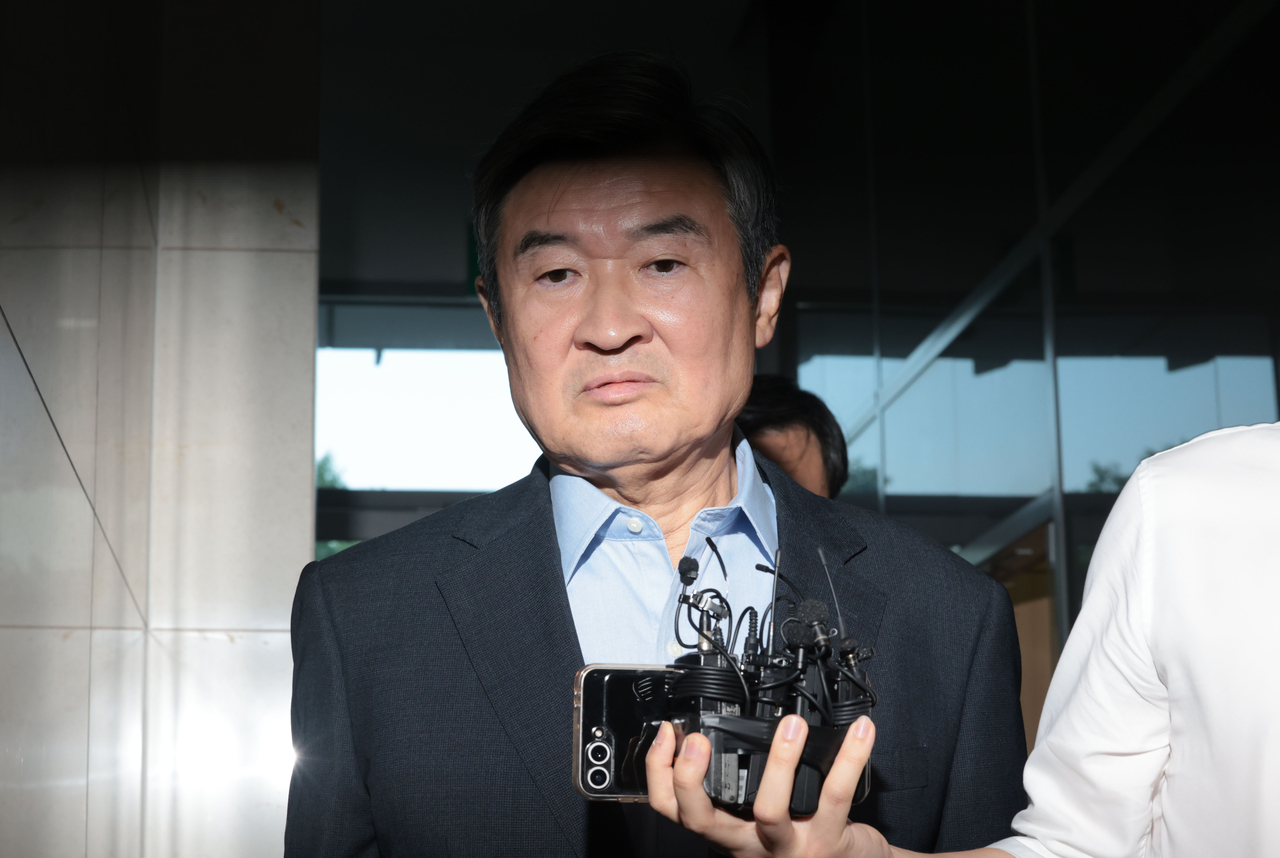
The Supreme Court has upheld a 2½-year prison sentence for former National Intelligence Service Director Jo Tae-yong, who was convicted of perjury and political interference related to the Dec. 3, 2024, emergency martial law declaration.
The Supreme Court's Third Division, presided over by Justice Oh Seok-jun, confirmed the appeals court ruling that sentenced Jo to 2½ years in prison and a 2½-year suspension of civil rights on charges including violation of the Act on Testimony and Appraisal Before the National Assembly, violation of the National Intelligence Service Act, perjury, destruction of evidence, preparation and use of false official documents, and dereliction of duty. "There is no legal error of the kind the defendant claims as grounds for appeal in the lower court's judgment," the court said.
Jo was indicted by the insurrection special prosecutor's office, led by Special Prosecutor Jo Eun-seok, on charges that included denying he had been briefed by former NIS First Deputy Director Hong Jang-won that then-President Yoon Suk-yeol had ordered the Defense Counterintelligence Command to support the arrest of prominent politicians during the Dec. 3 emergency martial law.
Jo also faced charges of spreading false claims — through press conferences, media interviews, text messages and written statements — that no order to arrest politicians had been issued, in an effort to shape public opinion against Yoon's impeachment. Jo was further accused of conspiring to delete call records from a Presidential Security Service encrypted phone used by Hong, and of giving false testimony before the National Assembly's parliamentary investigation and the Constitutional Court's impeachment trial of Yoon.
The first trial, in May, sentenced Jo to 1½ years in prison. That court found Jo guilty of giving false testimony before the Constitutional Court, where Jo denied receiving martial law-related documents from Yoon. It also found Jo guilty of submitting a false written response to the National Assembly in which Jo denied both receiving such documents and witnessing Yoon hand martial law-related documents to the foreign minister.
The first trial, however, acquitted Jo on charges of political interference through post-martial law media appearances, destruction of evidence through deletion of the encrypted phone call records, and perjury before the National Assembly for denying having been briefed on the politician arrest order. It also acquitted Jo of dereliction of duty for failing to report the arrest order to the National Assembly's intelligence committee.
The appeals court, in August, sentenced Jo to 2½ years in prison and a 2½-year suspension of civil rights, overturning much of the first trial's verdict. The appeals court found that Jo had in fact been briefed by Hong on the plan to arrest politicians and was aware that the order had come from Yoon. It also ruled that Jo's post-martial law press conferences and media interviews — in which Jo denied receiving such a briefing — constituted a violation of the NIS Act's prohibition on political interference.
The appeals court also found Jo guilty of conspiring with the head of the Presidential Security Service to delete call records from the encrypted phone used by Hong. Departing from the first trial, it further ruled that Jo's testimony before the National Assembly's parliamentary investigation — in which Jo denied being briefed on the politician arrest plan — amounted to perjury.
The appeals court also revised the perjury findings related to Jo's testimony before the Constitutional Court, overturning three acquittals from the first trial. It found Jo guilty of denying that Yoon had said at a private meeting before the martial law declaration that "emergency measures are needed — the military must step in," of denying having seen the martial law proclamation directly or witnessed it being distributed to other Cabinet members, and of denying that Hong had briefed Jo on the politician arrest plan. The appeals court did, however, overturn the first trial's guilty finding on one count — that Jo had falsely testified before the Constitutional Court that he had not received martial law-related documents — and acquitted Jo on that charge.
On the false written response submitted to the National Assembly, the appeals court found Jo guilty only of denying that Jo had witnessed Yoon hand martial law-related documents to the foreign minister. Departing from the first trial, it acquitted Jo of denying having received such documents.
The appeals court upheld the first trial's acquittal on the dereliction of duty charge — that Jo had failed to report the politician arrest order to the National Assembly's intelligence committee despite being briefed on it. It also found that the NIS's provision of closed-circuit television footage from the presidential office to People Power Party lawmakers — footage that contradicted Hong's testimony during Yoon's impeachment trial — did not constitute political interference.
A Supreme Court official explained the significance of the ruling, saying the court had used the decision to clarify the purpose of the NIS Act's prohibition on political interference, the elements and criteria for conduct prohibited under Article 11, Paragraph 2, Subparagraph 2 of the act, and to determine that Jo's press conferences and related activities from Dec. 6 through Dec. 10, 2024, constituted political interference prohibited by law.
yg@heraldcorp.com