Panel to recommend follow-up measures after reviewing fact-finding team's findings
Role set to shrink as mammoth special prosecutor team prepares to operate
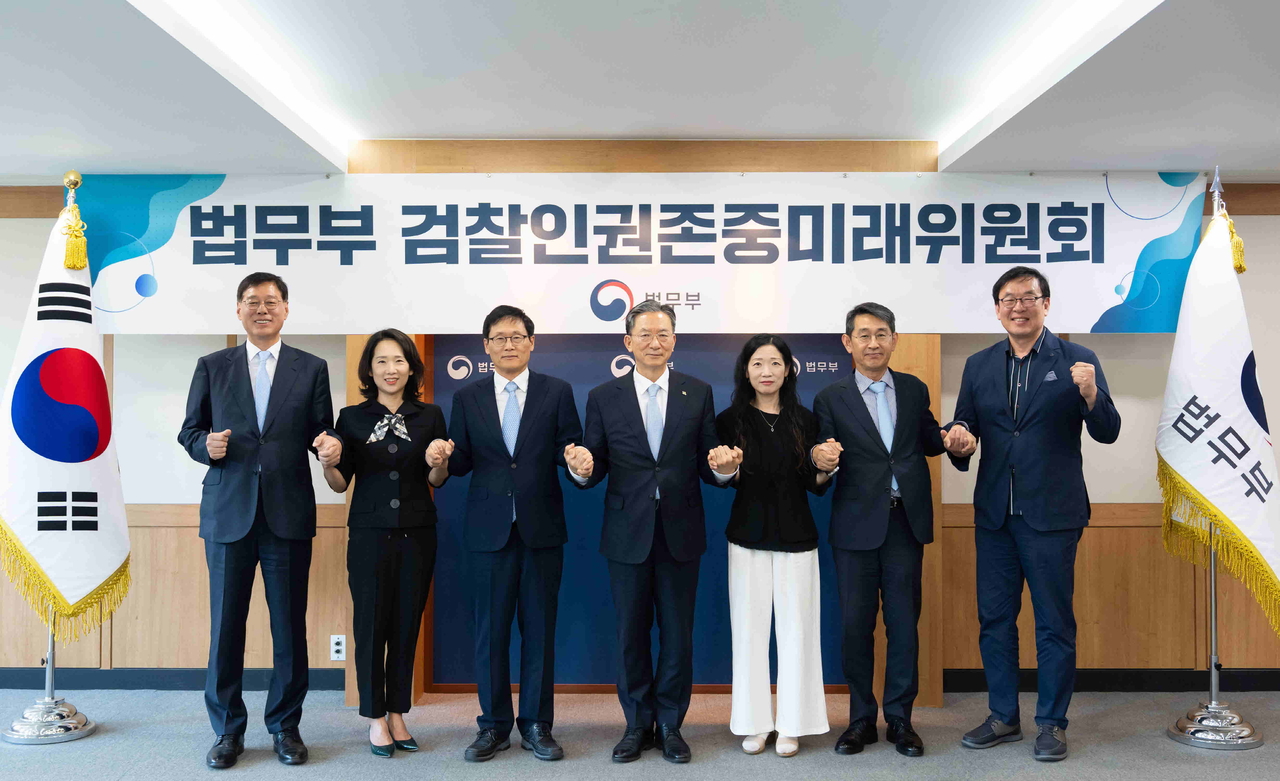
With the promulgation of the so-called "fabricated indictment" special prosecutor act clearing a Cabinet meeting, the formal launch of a special prosecutor team is expected to get underway soon. Amid this, the Justice Ministry's Prosecution Human Rights and Future Committee — established to investigate allegations of prosecutorial abuse of power — has already scheduled meetings through early January. The committee's investigation targets overlap substantially with those of the special prosecutor, including criminal cases involving President Lee Jae Myung, meaning the two probes will proceed simultaneously. Legal observers say the special prosecutor's launch, backed by far stronger legal authority, has in effect diluted the rationale for the committee's continued operation.
The committee has pre-scheduled meetings through the first week of January. The panel plans to receive reports from its fact-finding team and then recommend follow-up measures. Its next meeting is set for Friday at 10 a.m.
The Justice Ministry launched the committee in June to examine allegations of human rights violations and abuse of authority during prosecutorial investigations. It was formed with seven members, chaired by Jang Ju-yeong, a former chairman of the Lawyers for a Democratic Society. Under the committee's rules, the cases subject to investigation are those listed in a parliamentary investigation request filed in March calling for an inquiry into allegations of fabricated investigations and indictments by prosecutors under the Yoon Suk Yeol administration.
The committee selected as its investigation targets the SBW inter-Korean remittance case, the Daejang-dong case, the case involving former Democratic Research Institute Vice Chairman Kim Yong, the Wirye new town case, the shooting death of a civil servant in the West Sea, the statistics manipulation case, and the alleged false reporting defaming Yoon Suk Yeol. It subsequently added the Seongnam FC case, the Baekhyeon-dong development corruption case, and allegations of improper use of Gyeonggi Province corporate credit cards, among others. Of the 19 cases in total, six involve indictments of President Lee.
The committee asked the Justice Ministry to establish an independent body to handle the investigations, and a fact-finding team was launched in June. Last month, the fact-finding team reported back to the committee on three cases — the Wirye new town case, the statistics manipulation case, and the West Sea civil servant shooting — concluding that it had found no evidence of prosecutorial abuse of authority during the investigations.
The committee, however, has yet to reach conclusions on those three cases. After receiving the fact-finding team's report on the Wirye new town and two other cases on Oct. 15, the committee has continued to request supplementary work. This has led to speculation that there may be disagreements between the committee and the fact-finding team. The fact-finding team is expected to soon submit final reports on the three cases to the committee.
Against this backdrop, the promulgation of the Act on the Appointment of Special Prosecutors to Investigate Allegations of Fabricated Investigations and Indictments by the Prosecution Service, National Intelligence Service, Board of Audit and Inspection and Others under the Yoon Suk Yeol Administration cleared a Cabinet meeting Tuesday, making the launch of the special prosecutor team imminent.
The special prosecutor's investigation will cover alleged prosecutorial abuse of power across 12 cases: the Daejang-dong development allegations, the Wirye new town development allegations, allegations of bribery involving former Democratic Research Institute Vice Chairman Kim Yong, the Baekhyeon-dong apartment development allegations, Public Official Election Act violations related to the Daejang-dong and Baekhyeon-dong developments, allegations of third-party bribery involving Seongnam FC, alleged subornation of perjury by Kim Jin-seong, the SBW inter-Korean remittance case, the Gyeonggi Province corporate credit card allegations, the West Sea civil servant shooting, alleged statistics manipulation under the Moon Jae-in administration, and alleged defamation of former President Yoon Suk Yeol. The targets overlap substantially with those of the committee, even as debate continues over the possible withdrawal of criminal charges against President Lee.
Legal circles have raised doubts about whether the committee can sustain the momentum it had at its launch. The cases at the heart of both the committee's and the special prosecutor's work center on matters involving President Lee, and the committee's existing role will inevitably shrink once a special prosecutor team empowered to conduct compulsory investigations begins operating. The incoming special prosecutor team can be staffed with up to 309 people, including seconded prosecutors, investigators and special investigators, and may conduct its investigation for up to 200 days. It is legally larger in scale than the insurrection special prosecutor team led by Special Prosecutor Cho Eun-seok, which investigated the broader insurrection charges stemming from the Dec. 3 emergency martial law crisis.
The committee, however, maintains that its work is separate from the special prosecutor's investigation. Speaking to reporters at the committee's Nov. 5 meeting, Chair Jang said: "The special prosecutor investigates criminal charges and prosecutes when there is wrongdoing, but our committee goes beyond that — we examine improper practices, regulatory violations and deficiencies in order to establish measures to prevent recurrence and deliberate on remedies for those harmed. Our roles are different."
bell@heraldcorp.com