H1 investment balance at 55.6 trillion won, down 300 billion
EOD exposure grows from 2.08 trillion to 2.64 trillion won
Mixed-use properties account for largest share at 1.75 trillion won
South Korean financial firms' overseas real estate investment fell slightly in the first half of this year, but the volume of assets at risk of early loan recall — known as events of default, or EOD — grew, data showed. The findings underscore the need for tighter management of investment quality as uncertainty in global real estate markets persists.
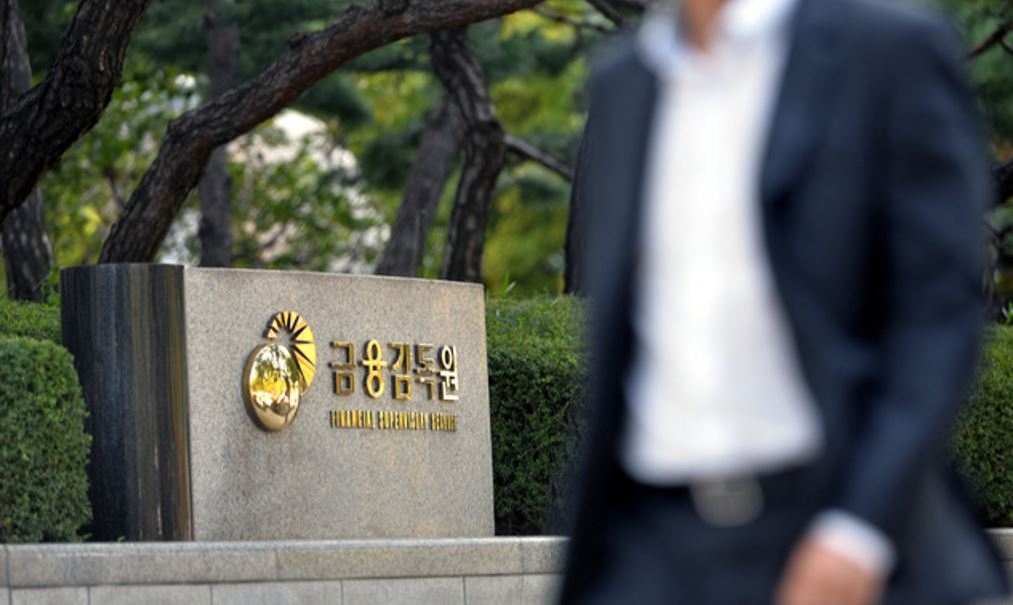
The Financial Supervisory Service released a report Thursday on financial firms' overseas real estate alternative investment as of end-June 2026. The outstanding balance of such investments stood at 55.6 trillion won ($41.5 billion) at the end of June, down 300 billion won from the end of last year, representing 0.7 percent of the financial sector's total assets of 8,453.1 trillion won.
By contrast, the volume of individual real estate project investments where an EOD event had occurred rose to 2.64 trillion won — up 560 billion won from 2.08 trillion won at the end of last year — accounting for 8.7 percent of the 30.4 trillion won invested in individual properties.
An EOD occurs when a borrower violates the terms of a loan agreement, causing the borrower to lose the right to maintain the loan until its scheduled maturity and allowing the creditor to demand early repayment. While an EOD does not automatically mean the full investment is lost, it signals a heightened risk that principal and interest may not be fully recovered.
The FSS said that while some projects that had previously triggered EOD events repaid or wound down their investments in the first half of this year, new EOD events at other projects pushed the overall figure higher.
Breaking down EOD exposure by property type, mixed-use and other facilities accounted for the largest share at 1.75 trillion won, representing 50.2 percent of the 3.5 trillion won invested in that category. Office properties recorded 710 billion won, or 4.9 percent of their investment total, while retail and industrial facilities stood at 30 billion won and 60 billion won, respectively.
Looking at the total overseas real estate investment balance by sector, insurers held the largest share at 30.8 trillion won, or 55.4 percent of the total. Banks followed at 12.2 trillion won (22.0 percent), securities firms at 7.3 trillion won (13.2 percent), mutual finance institutions at 3.3 trillion won (6.0 percent) and specialized credit finance companies at 1.8 trillion won (3.3 percent).
By region, North America accounted for the largest share at 33.9 trillion won, or 61.0 percent of the total. Europe followed at 10.7 trillion won (19.2 percent) and Asia at 3.8 trillion won (6.8 percent).
Investment maturities are set to come due in stages. A total of 6.4 trillion won will mature by the end of this year, while 35 trillion won — 62.9 percent of the total — is due by 2030.
"Although overseas real estate investment makes up a small share of the financial sector's total assets, risks remain from rising global interest rates, falling property values and reduced transaction activity," the FSS said. The regulator added that it plans to continue monitoring financial firms' overseas real estate exposure and assess how changes in external conditions affect their financial soundness.
Meanwhile, the delinquency rate on won-denominated loans at domestic banks stood at 0.59 percent at the end of September, down 0.10 percentage point from the previous month, according to the FSS. The improvement was driven by increased write-offs of overdue loans and a decline in new delinquencies, though the rate remained 0.07 percentage point above the same month a year earlier.
rim@heraldcorp.com