All-out offensive against ruling bloc after 'fabricated indictment' special prosecutor act clears cabinet
Limited political gains expected, but party eyes public opinion battle
Experts urge image overhaul and policy alternatives alongside accountability push
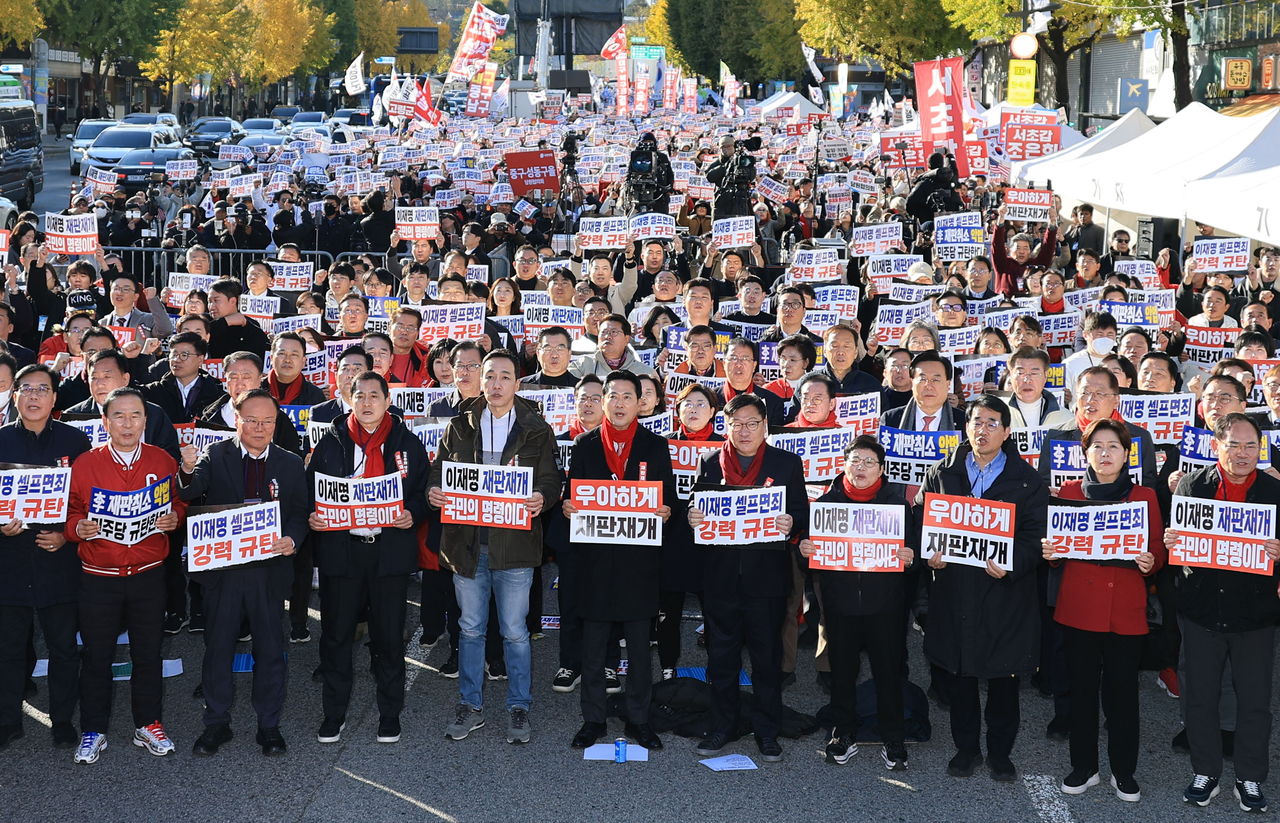
The People Power Party is intensifying its offensive against the ruling bloc, declaring it will refuse to recommend special prosecutor candidates following the cabinet's passage of the so-called "fabricated indictment" special prosecutor act, and signaling it will move to seek the dismissal of the prime minister and the education minister. Analysts say the moves are unlikely to yield tangible results — blocking the special prosecutor's launch or actually removing cabinet members — and are better understood as a strategy to rally the party's base and shape public opinion against the government.
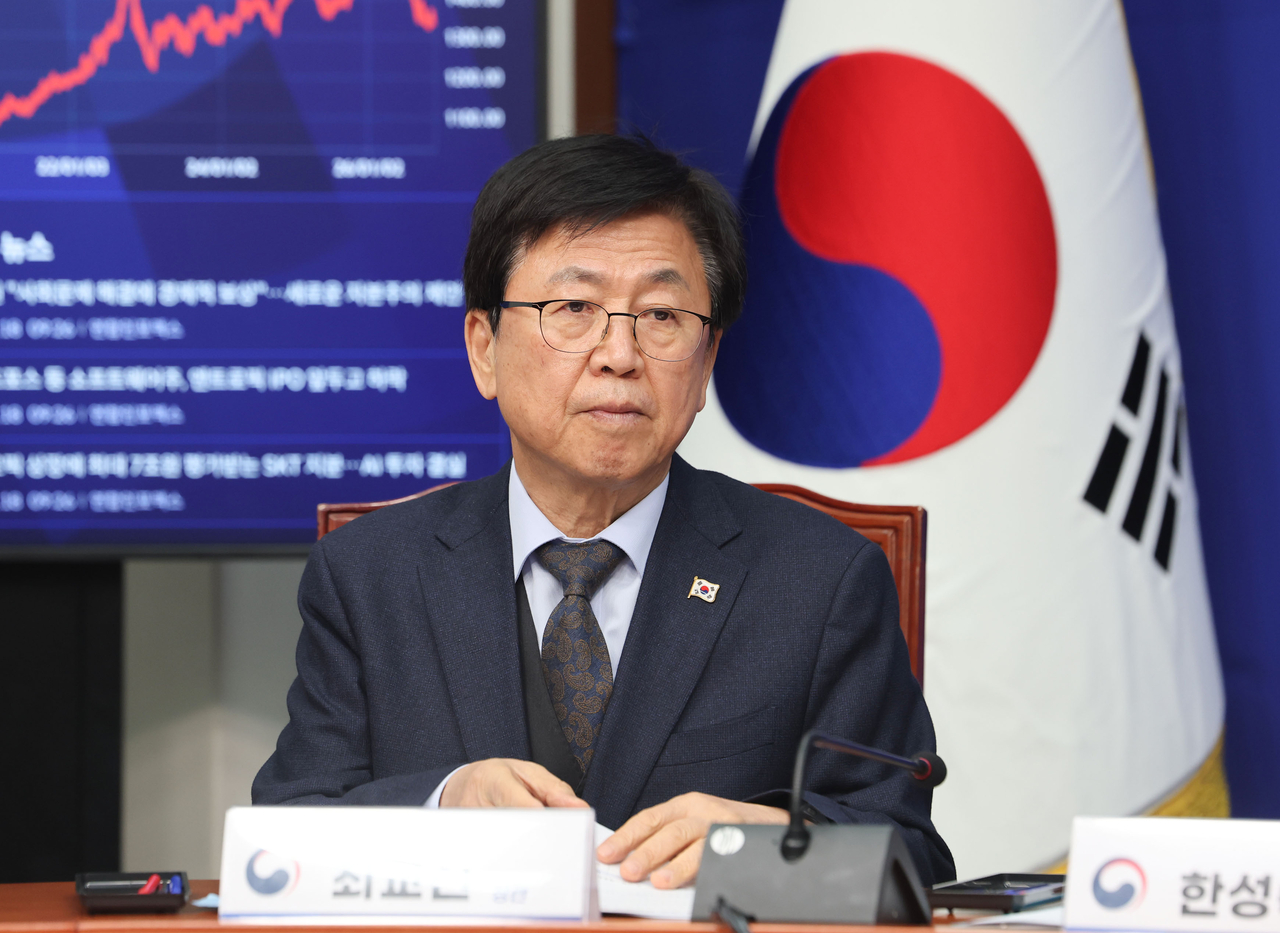
According to the PPP on Thursday, the party plans to refuse to recommend special prosecutor candidates in line with its stance of non-cooperation with the act. At a general assembly of lawmakers held Wednesday, floor leader Jeong Jeom-sik urged members to "focus on the external fight." The party also plans to submit motions to the National Assembly calling for the dismissal of Prime Minister Han Seong-suk — over her role in steering the special prosecutor act through the cabinet — and Education Minister Choi Kyo-jin, citing what it described as inadequate measures against cheating on the College Scholastic Ability Test, as soon as the exam concludes.
Analysts say the opposition's offensive is unlikely to translate into concrete political gains, making it primarily a public opinion campaign. Jeong said the party would launch a "walking campaign," with lawmakers taking to the streets to inform citizens of what he called the scheme to drop the indictment. The dismissal motions face a steep hurdle as well: while the PPP's 109 seats are sufficient to introduce the motions unilaterally, passing them is another matter. Under the Constitution, a motion to dismiss the prime minister or a cabinet minister requires the support of at least one-third of all Assembly members to be introduced and a majority vote to pass.
A senior party leadership official said the dismissal motion "does not appear likely to pass, but it is a tool to pressure" the government and ruling bloc, adding that "if cheating or a new issue arises during the CSAT, public sentiment for dismissal will grow further — and if that happens, Minister Choi may well resign."
A lawmaker in the floor leadership also described the recent offensive as "part of a public opinion campaign," saying that even if the dismissal motions fail for lack of seats, "creating public sentiment that the prime minister and education minister should step down can put pressure on the president."
Some observers interpret the moves as an effort by the PPP to consolidate its base and broaden public sympathy. A party approval rating survey conducted by Realmeter from Nov. 12 to Nov. 13, covering 1,004 eligible voters aged 18 and older nationwide, showed the PPP's support at 43 percent in the second week of November — up 3.3 percentage points from the previous week. The Democratic Party of Korea, meanwhile, fell 1.9 percentage points to 34.6 percent, pushing the gap between the two parties outside the margin of error for the first time in three weeks. Realmeter attributed the PPP's rise to its sustained pressure campaign — including calls for a veto of the special prosecutor act and outdoor rallies — as well as a spillover benefit from internal strife within the Democratic Party.
Experts, however, cautioned that while the PPP has ample justification to wage a public opinion battle, its reach beyond its existing base may be limited. Shin Yul, a professor of political science and diplomacy at Myongji University, said both the special prosecutor act and the response to CSAT cheating "provide sufficient grounds for a public opinion campaign," but added that "some citizens may feel uncomfortable with the party leadership's hardline image."
Experts also called for substantive policy alternatives to accompany the accountability push. Lee Jae-muk, a professor of political science and diplomacy at Hankuk University of Foreign Studies, said holding officials accountable is necessary, but argued the party "should pair it with policy alternatives rather than just venting frustration. It can afford to wait until the CSAT is over and the admissions process has largely wrapped up before launching accountability proceedings."
raining@heraldcorp.com