Xi presents four-pillar cooperation vision at APEC summit in Shenzhen
'Digital economy and AI are engines of innovative growth,' he says, stressing cross-border data flows
China pledges $20 million for APEC cooperation, to establish Asia-Pacific community research center in Shenzhen
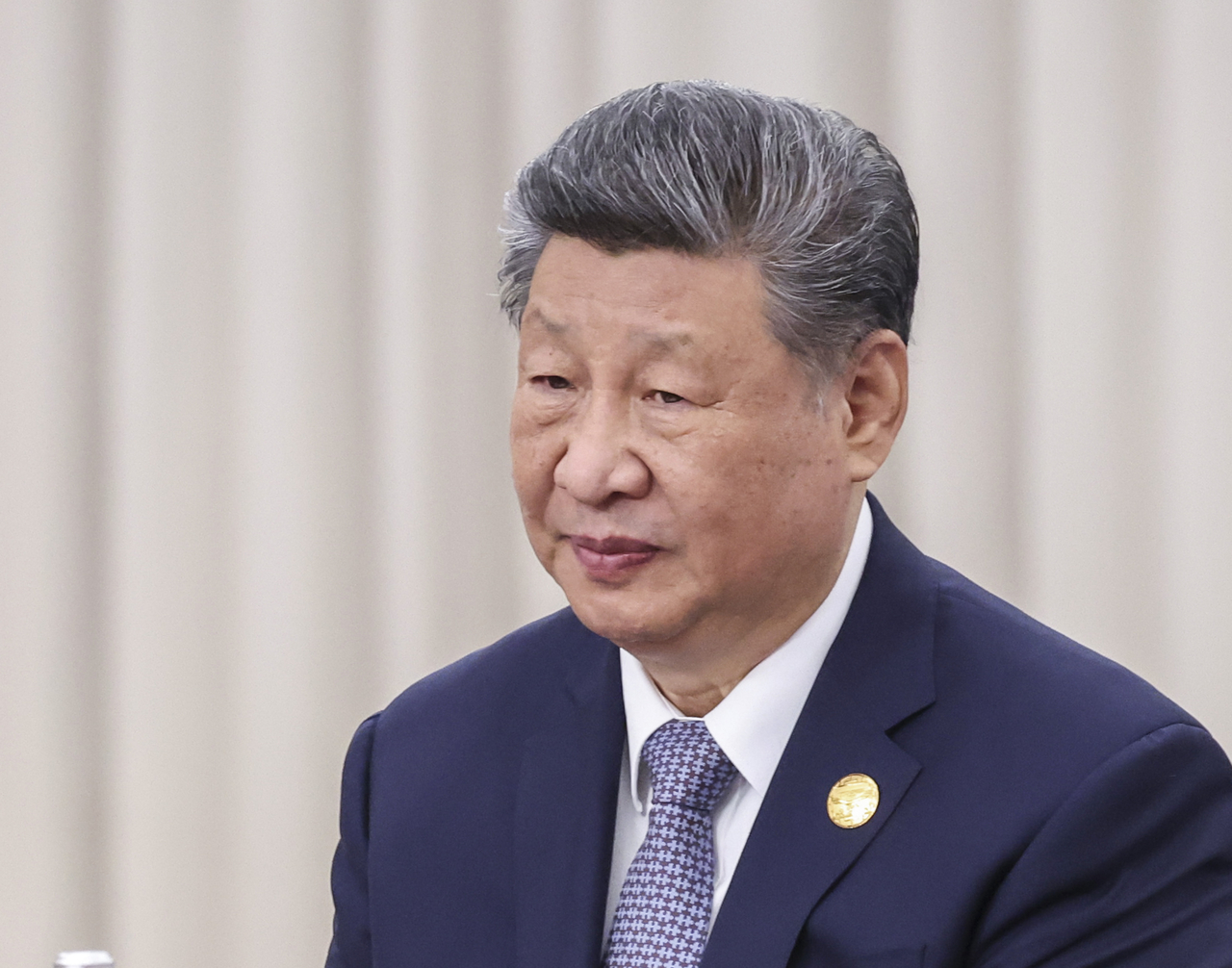
Chinese President Xi Jinping called for the removal of trade barriers and expanded AI cooperation in the Asia-Pacific region at the APEC leaders' summit Thursday, presenting the Free Trade Area of the Asia-Pacific as a shared blueprint for member economies and pledging $20 million to support regional cooperation, along with plans to establish an Asia-Pacific community research center in China.
Xi chaired the APEC leaders' summit at the Shenzhen International Exchange Center in Guangdong Province Thursday (local time), delivering a speech titled "Build an Asia-Pacific Community and Continue Writing New Chapters in the Asia-Pacific Miracle."
Xi proposed building the foundation for an Asia-Pacific community around four areas of cooperation: trade and the economy, connectivity, innovation, and development.
On trade and the economy, Xi said the Free Trade Area of the Asia-Pacific "is the shared blueprint of APEC member economies" and called for its steady advancement to create a higher level of openness.
He said regional economic and trade agreements should be better linked and that trade and investment procedures should be made more convenient and digital. Xi particularly urged the removal of trade and investment barriers and called for expanded policy dialogue and technology cooperation related to the FTAAP, so that all economies can participate in a high-standard economic and trade regime.
Xi also identified strengthening regional connectivity as a key priority, calling for improvements to infrastructure networks and the development of smart customs and transportation systems, while expanding institutional linkages and people-to-people exchanges.
On AI and the digital economy, Xi stressed the need to secure new growth drivers through technological innovation. "The digital economy and AI are engines of innovative growth," he said, adding that digital infrastructure must be strengthened and that regional data governance and cooperation must be improved.
He called for "efficient, convenient and secure cross-border data flows" and proposed promoting the broad application of AI technology to drive industrial transformation and upgrading.
On development, Xi urged expanded cooperation centered on energy and food security. "Faced with unceasing global challenges, we must strengthen our capacity and advance regional cooperation on energy and food security," he said. He also stressed the need for joint action against cross-border corruption.
Xi also unveiled plans for China to directly fund and build a research foundation to expand APEC cooperation. "China will always support Asia-Pacific cooperation," he said. "We will provide $20 million to support substantive APEC cooperation."
He announced that China would establish an Asia-Pacific community research center in Shenzhen to conduct policy research and exchanges and provide intellectual support. Xi added that China would create cooperative bodies in areas including digital technology, cross-border data flows, clean energy and support for small and medium-sized enterprises to promote innovation and green growth.
Xi noted that the geopolitical environment is changing rapidly and that scientific and technological innovation is accelerating, saying the Asia-Pacific region must also adapt the way it cooperates.
"Asia-Pacific cooperation must adapt to the new situation, take new steps and open new horizons," he said, urging members to "build an Asia-Pacific community that cooperates, communicates openly, and pursues innovation and inclusive development."
He said Asia-Pacific member economies "are all in the same boat" and that to weather the storms of the Pacific, they must "join hands, respond to difficulties and challenges together, and continuously strengthen their sense of community."
Closing his speech, Xi referenced Shenzhen's nickname "Pengcheng" — City of the Peng — and expressed hope that Asia-Pacific cooperation would soar as far as the mythical great bird of Chinese legend, a metaphor for lofty ambitions and a boundless future.
sjy@heraldcorp.com