Korea-China FTA services and investment talks reach breakthrough after 8 years, 8 months
Films and games to receive most-favored-nation treatment; content stocks rally on market-opening hopes
Korean travel agencies to be allowed to recruit visitors in China, boosting airline load factor and fare outlook
Entertainment and game companies eye re-entry into Chinese market as share prices climb
Analysts caution full lifting of hallyu ban remains distant; earnings improvement still unconfirmed
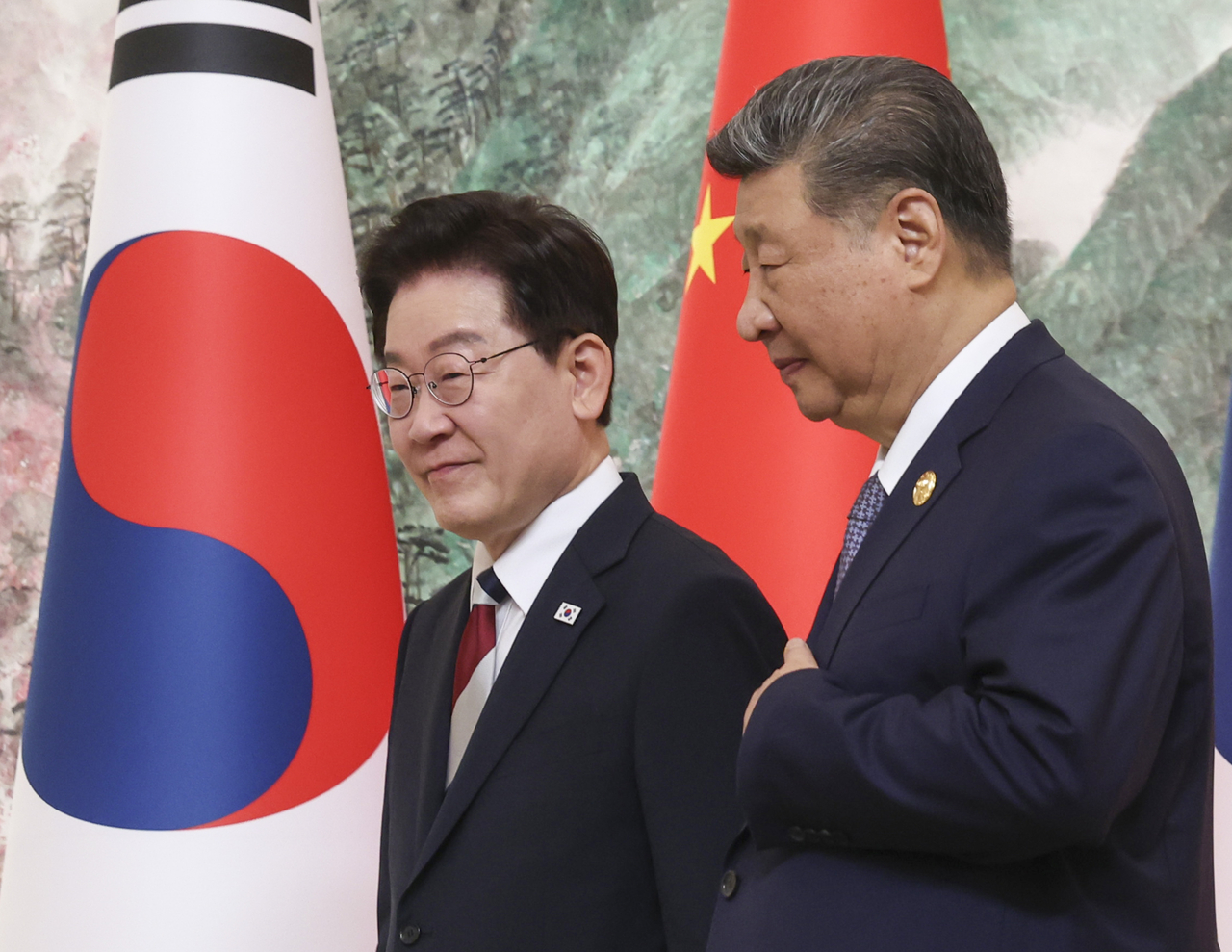
South Korean stocks tied to the so-called hallyu ban — China's decade-long restrictions on Korean cultural content — surged Thursday after Seoul and Beijing announced a breakthrough in follow-up negotiations under their free trade agreement covering services and investment. The deal raised hopes that game, entertainment, and tourism and aviation companies, which have faced barriers to the Chinese market since the THAAD missile defense system deployment in 2016, could soon find new growth opportunities.
However, analysts cautioned that the agreement does not amount to a full lifting of the hallyu ban, and said it remains to be seen whether the opening will translate into actual market access and improved earnings for Korean companies.
South Korea and China declared a substantive conclusion to the Korea-China FTA services and investment follow-up negotiations on Wednesday, on the sidelines of the Asia-Pacific Economic Cooperation summit, according to the financial investment industry. The talks had begun in March 2018, making the breakthrough 8 years and 8 months in the making.
Among the sectors expected to benefit most immediately is tourism and aviation. The agreement includes provisions allowing Korean travel agencies to recruit tourists directly in China, raising expectations that demand for Chinese visitors to Korea could expand.
In the aviation sector in particular, analysts said that if passenger demand rises while capacity expansion on China routes remains limited, load factors and fares could climb simultaneously.
"The additional Korea-China FTA conclusion means Korean travel agencies can now recruit Chinese travelers in major regions of China," An Do-hyeon, a researcher at Hana Securities, wrote in a report Thursday. "In an environment where capacity additions are limited, rising demand is likely to push up both load factors and fares."
Among carriers, Korean Air and Asiana Airlines hold the most China traffic rights, while Jeju Air leads among low-cost carriers, An said.
Jeju Air is particularly well positioned, with China inland routes accounting for roughly 8 percent of its sales — the highest share among major carriers. The airline is also set to launch new services on the Beijing route it was recently allocated, which is expected to push its China revenue share even higher.
Hana Securities maintained its buy rating on Jeju Air and raised its target price from 7,500 won to 10,000 won, forecasting the airline's operating profit next year will reach 140 billion won ($105 million), a 40 percent increase from this year.
Jeju Air shares opened Thursday up 9.07 percent at 8,180 won from the previous session and continued to extend gains.
Optimism about China's market opening is also spreading through the entertainment and media sectors. Companies that have been restricted from distributing content and staging performances in China under the hallyu ban are drawing particular attention as potential beneficiaries.
"Expectations for the opening of the Chinese market to entertainment and media are growing," said Jang Ji-hye, a researcher at DS Investment Securities. Drama production companies in particular could secure additional sales in a short period if they are able to resume licensing existing titles that were previously unsellable in China.
Jang noted that Studio Dragon and similar companies had been selling broadcast rights for their libraries to global OTT platforms excluding China. If sales to China become possible, even older productions could offer room to improve profitability. Studio Dragon opened Thursday up 29.75 percent at 30,750 won, hitting the daily upper limit.
Entertainment companies could also look to expand their intellectual property businesses — concerts, albums and merchandise — by tapping their large fandoms if performances and local activities on the Chinese mainland are eventually permitted.
The game industry also views the agreement as a development that reduces uncertainty around entering the Chinese market. Korean game companies have long struggled to gain a foothold there due to restrictions on the issuance of game licenses, known as "panho," by Chinese authorities.
Seon Yu-jin, a researcher at LS Securities, described the agreement as "a breath of fresh air amid a supply drought — a partial easing of the hallyu ban," adding that institutional safeguards have been put in place for domestic companies seeking to enter the Chinese market.
The deal introduces most-favored-nation treatment and a non-discrimination principle, as well as a ratchet clause preventing China from reimposing regulations once they have been relaxed — measures analysts said significantly improve regulatory predictability for companies eyeing the Chinese market.
Shift Up was identified as the biggest beneficiary within the sector. "The top beneficiary in the industry from this issue is Shift Up," said Im Hui-seok, a researcher at Mirae Asset Securities, pointing to a new subculture game project being co-developed with Tencent called Project Spirit.
"The improved environment for game license issuance raises the likelihood of minimizing the release gap between global and Chinese markets," Im added. Shift Up opened Thursday up 4.52 percent at 25,450 won and was moderating its gains in the 3 to 4 percent range in early trading.
Analysts nonetheless cautioned that significant hurdles remain before the optimism generated by the deal translates into actual earnings improvements for companies.
Most notably, explicit permission for Korean singers to perform on the Chinese mainland — a top priority for the entertainment industry — was not included in the agreement. "Expectations for the opening of the Chinese market to entertainment and media have grown, but prerequisite conditions for tangible benefits remain," Jang said.
The same caution applies to the game sector. Most-favored-nation treatment means only that Korean games will not be treated less favorably than those from other countries — it does not eliminate China's regulations on foreign games altogether. "Whether the follow-up negotiations lead to a genuine expansion of exports to China and improved earnings for game companies still needs to be confirmed," Seon said.
Lee Gi-hun, a researcher at Hana Securities, also said that while the easing of hallyu ban expectations stemming from the agreement is meaningful, its limits are clear.
"The segments of Korean content with the most global fandoms are K-pop and drama series," Lee said. "Aside from some deregulation in dramas, what has been announced is largely deregulation in areas — games, films and travel — where Chinese domestic companies are already well equipped to compete." Lee added that even with deregulation in those areas, the pool of stocks that stand to benefit in a meaningful way is in fact limited.

th5@heraldcorp.com